
Best Commercial Bounce Houses for Heavy Use, Parties and Events (2026)
Compare commercial bounce houses for parties, events and heavy use, including PVC construction, capacity, durability and what to check before buying.
Written by Frank “Frosty” Adminei
6/1/202611 min read
Home › Bounce Houses › Best Commercial Bounce Houses (2026)
Best Commercial Bounce Houses (2026): Heavy‑Duty PVC and Pro‑Level Units
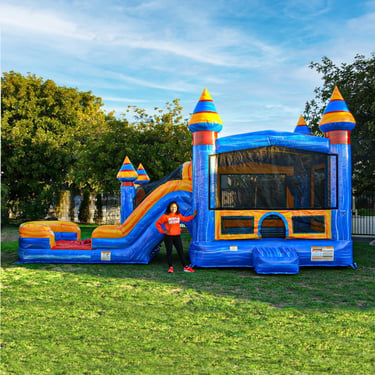
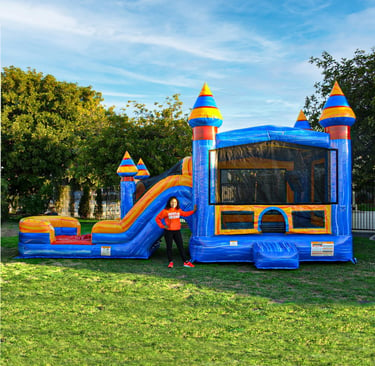
Buying a commercial bounce house is different from choosing a backyard inflatable for occasional family use. Durability, material, capacity, setup demands and repeated-use performance matter much more when the inflatable will be used for parties, events or frequent play.
Intro
Commercial bounce houses are not toys — they are engineered structures built for high‑traffic environments, heavy loads, and long‑term durability. Unlike residential nylon inflatables, commercial units use thick PVC vinyl, reinforced seams, and high‑horsepower blowers that maintain stability even with teens and adults inside. These features make them ideal for rental companies, schools, churches, and families who want a long‑lasting investment.
This guide evaluates the top commercial bounce houses available on Amazon in 2026, including models from JumpOrange, TentandTable, Bounceland, Cloud 9, and Inflatable HQ. Each unit was selected for its PVC thickness, blower strength, weight‑limit engineering, and real‑world rental performance. For parents comparing commercial vs. residential units, our “Bounce House Materials Explained (2026): Nylon vs PVC vs Hybrid” guide provides a helpful breakdown of material differences.
Who This Guide Is For
This guide is designed for buyers who need more than a backyard inflatable. It’s ideal for rental operators, schools, churches, and families who want a bounce house that can withstand heavy use, larger groups, and adult weight loads. Commercial units offer superior stability, longer lifespan, and better safety performance under stress.
If you’re unsure whether a commercial unit is necessary for your situation, our “How to Choose the Right Bounce House (2026 Buyer Guide)” explains the differences between residential, hybrid, and commercial models. Many families choose commercial units for durability alone, especially when planning frequent parties or events.
Why This Topic Matters
Commercial bounce houses represent a significant investment, and choosing the wrong model can lead to safety issues, premature wear, or poor rental performance. PVC thickness, blower horsepower, and seam construction directly affect stability and longevity. Many competitor guides fail to explain these engineering differences, leaving buyers confused about what truly matters.
This guide fills those gaps by comparing PVC weights (15 oz vs. 18.5 oz), welded vs. stitched seams, and 1.5 HP vs. 2.0 HP blowers. We also explain weight‑limit physics and platform stability — topics rarely covered in standard product roundups. For weather‑related safety considerations, see our “Bounce House Weather Guide (2026): Wind, Rain & Temperature Rules” for detailed operating limits.
Age Group Segmentation
Commercial bounce houses are designed to support a wide range of users, from young children to adults. Understanding age and weight segmentation helps ensure safe operation and proper product selection.
Ages 3–7: Younger children benefit from the stability and firm bounce surface of commercial PVC. These units prevent sagging and reduce trip hazards. For smaller backyards, our “Best Bounce Houses for Small Yards (2026 Guide)” offers more compact options.
Ages 7–12: This age group benefits most from commercial units due to higher activity levels and increased weight. The stronger blower and reinforced seams maintain stability during group play.
Teens & Adults: Only true commercial PVC units with 700–1,000 lb weight limits are appropriate for teens and adults. Inflatable HQ and TentandTable models excel here. For buyers comparing commercial vs. water‑slide combos, our “Bounce House vs. Inflatable Water Slide (2026 Comparison Guide)” explains which is better for mixed‑age groups.
Product Modules


JumpOrange Commercial Castle —
Best Overall Commercial Bounce House (2026)
1. What it is
A 13 × 13 × 15 ft commercial‑grade PVC bounce house built for rentals, schools, and high‑traffic events. JumpOrange is one of the most trusted commercial brands on Amazon.
2. Why it works
JumpOrange uses thick 15 oz commercial PVC, quad stitching, and a powerful 2.0 HP blower that keeps the structure firm even with multiple users. The platform stability is among the best in this category.
3. Size / footprint
13 × 13 × 15 ft — fits most medium‑sized yards and standard rental setups.
4. Material & durability
100% commercial PVC with reinforced stress points and commercial‑grade mesh netting. Built for long‑term rental use.
5. Best user / age range
Ideal for ages 3–12, teens, and adults (up to 800 lbs total).
6. Why buyers like it
Buyers praise its stability, strong blower, and long‑term durability. Many rental operators report multi‑season performance with minimal wear.
7. Safety or usage notes
Requires a 20‑amp circuit and proper anchoring. A great choice if you want a commercial unit that performs reliably year after year.
TentandTable Commercial Castle —
Best Durability (Thickest PVC)
1. What it is
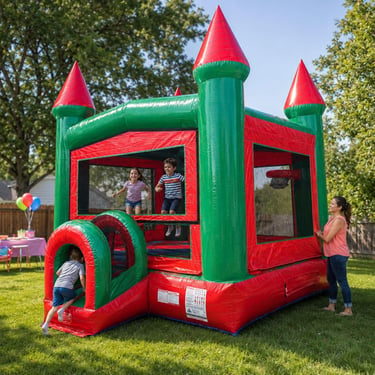
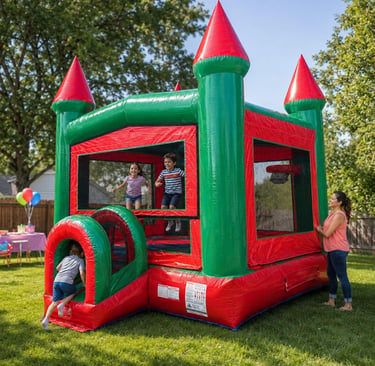
A heavy‑duty 14 × 13 × 15 ft commercial bounce house built with some of the thickest PVC available in the consumer market.
2. Why it works
TentandTable uses 18.5 oz PVC — significantly thicker than most competitors — plus welded seams for extreme durability. This is the closest you can get to rental‑industry construction on Amazon.
3. Size / footprint
14 × 13 × 15 ft — standard commercial footprint.
4. Material & durability
18.5 oz commercial PVC with welded seams and reinforced corners. Designed for high‑volume rental operations.
5. Best user / age range
Supports kids, teens, and adults up to 1,000 lbs total.
6. Why buyers like it
Buyers appreciate its unmatched PVC thickness and long‑term structural integrity. Many note that it outlasts lighter commercial units by several seasons.
7. Safety or usage notes
Heavier than other models and requires two adults to move. Ideal if you want maximum durability and rental‑grade longevity.
Bounceland Commercial‑Grade Castle —
Best Value
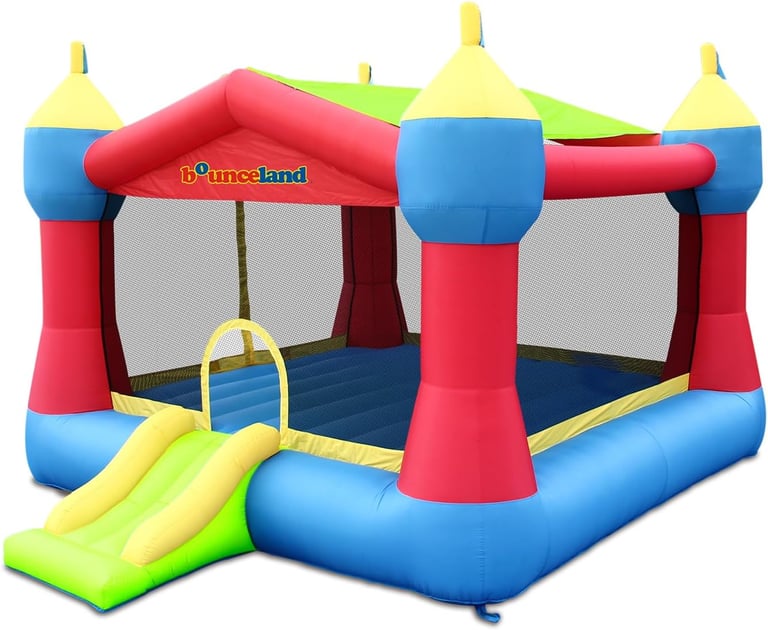
1. What it is
A budget‑friendly commercial PVC bounce house offering true rental‑grade construction at a lower price point.
2. Why it works
Bounceland uses 100% commercial PVC and reinforced stitching, making it a strong choice for light‑to‑moderate rental use or families who want commercial durability without the premium price.
3. Size / footprint
16 × 16 × 10 ft — slightly smaller footprint, easier to fit in residential yards.
4. Material & durability
Commercial PVC with double‑to‑quad stitching. Lighter than other commercial units but still durable.
5. Best user / age range
Best for kids and light adult use (up to 500 lbs total).
6. Why buyers like it
Buyers love the price‑to‑performance ratio and the lighter weight, which makes setup easier.
7. Safety or usage notes
Not ideal for heavy rental volume, but excellent for families or small operators who want commercial PVC at a lower cost.
Cloud 9 Commercial Castle —
Best for Large Events
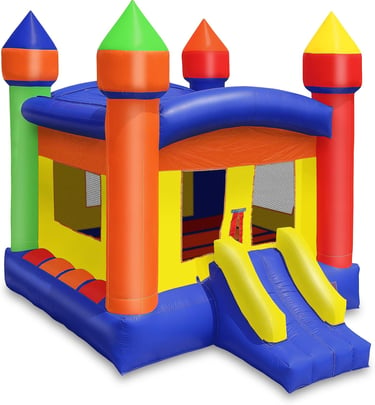
1. What it is
A large 13 × 13 × 14 ft commercial bounce house designed for schools, festivals, and high‑traffic events.
2. Why it works
Cloud 9 offers one of the largest commercial footprints available on Amazon, paired with a strong 2.0 HP blower and reinforced PVC construction.
3. Size / footprint
13 × 13 × 14 ft — requires a larger setup area.
4. Material & durability
100% commercial PVC with quad stitching and heavy‑duty mesh.
5. Best user / age range
Supports 8 kids or up to 4 adults (1,000 lbs total).
6. Why buyers like it
Buyers appreciate the large play area and strong structural stability during high‑traffic events.
7. Safety or usage notes
Requires a flat, open area and proper anchoring. A great pick if you need maximum capacity for events.
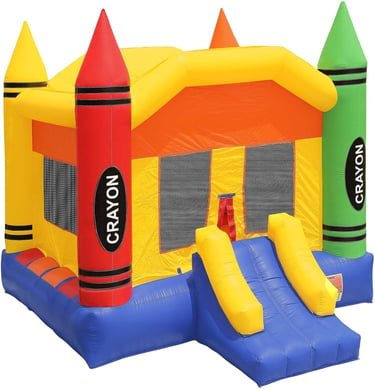
Inflatable HQ Commercial Castle —
Best for Teens & Adults
1. What it is
A 17 × 17 × 13 ft commercial bounce house engineered with reinforced floors and higher weight limits for older users.
2. Why it works
Inflatable HQ focuses on structural reinforcement, making this one of the best Amazon options for teens and adults.
3. Size / footprint
17 × 17 × 13 ft — slightly larger than standard commercial units.
4. Material & durability
100% commercial PVC with quad stitching and reinforced flooring.
5. Best user / age range
Ideal for teens and adults (up to 1,000 lbs total).
6. Why buyers like it
Buyers highlight its stability under heavier loads and its long‑lasting PVC construction.
7. Safety or usage notes
Requires a large flat area and strong anchoring. A strong choice if you want a commercial unit that handles older users safely.
Safety Notes
Commercial bounce houses require proper setup, anchoring, and blower management to ensure safe operation. Always use the manufacturer’s recommended stakes or sandbags, and verify that the blower is connected to a dedicated circuit. Commercial PVC units are heavier and more rigid than residential inflatables, which improves stability but requires careful handling during setup.
Wind is the most important safety factor. Commercial units should not be used in winds above 15–20 mph, and anchoring must be checked regularly during events. For a deeper breakdown of weather limits and operating conditions, see our “Bounce House Weather Guide (2026): Wind, Rain & Temperature Rules” which explains safe wind thresholds and when to shut down the blower.
Proper user grouping also matters. Mixing small children with teens or adults increases collision risk. If you need help determining age‑appropriate setups, our “Best Bounce Houses by Age Group (2026 Guide)” provides detailed recommendations for each age range.
Buying Considerations
Choosing a commercial bounce house requires understanding the engineering behind PVC thickness, blower horsepower, seam construction, and weight‑limit physics. These factors directly affect stability, safety, and long‑term rental performance. Many competitor guides gloss over these details, which leads buyers to underestimate the importance of material weight and blower strength. If you’re comparing commercial vs. residential inflatables, our “Bounce House Materials Explained (2026): Nylon vs PVC vs Hybrid” provides a clear breakdown of how PVC thickness impacts durability.
PVC thickness is one of the most important considerations. Standard commercial units use 15 oz PVC, while premium models like TentandTable use 18.5 oz PVC with welded seams. Thicker PVC resists stretching, tearing, and UV degradation, making it ideal for rental operators. Blower horsepower is equally important. A 2.0 HP blower provides stronger internal pressure, which improves platform firmness and reduces collapse risk during heavy use. For more details on blower selection, see our “Power, Extension Cords & Blower Guide (2026)” which explains how horsepower affects stability.
Weight‑limit engineering determines whether a unit can safely support teens and adults. Commercial bounce houses typically support 700–1,000 lbs, but the internal floor reinforcement varies by brand. Inflatable HQ and TentandTable excel in this area due to reinforced flooring and welded seams. Proper anchoring is also essential. If you need help choosing the right anchoring method, our “Bounce House Anchoring Guide (2026): Stakes, Sandbags & Stability Physics” explains how to secure commercial units on grass, turf, or pavement.
Yard Size / Fit Considerations
Commercial bounce houses require more space than residential models, both for the footprint and for safe clearance around the unit. A standard 13 × 13 × 15 ft commercial castle typically needs at least 18 × 18 ft of usable space to allow for blower placement, anchoring, and safe entry/exit. Larger units like the Cloud 9 15 × 15 × 16 ft model require even more room, making them better suited for schools, churches, and event venues. If you’re working with limited space, our “Best Bounce Houses for Small Yards (2026 Guide)” offers alternatives that fit tighter layouts.
Surface type also matters. Commercial PVC units perform best on level grass or turf, where stakes can be driven deeply for maximum stability. On pavement, sandbags or water‑weight anchors are required, and the unit must be placed on a protective tarp to prevent abrasion. For detailed yard preparation steps, see our “Bounce House Yard Prep Guide (2026): Slope, Clearance & Surface Types” which explains how to evaluate slope, remove hazards, and prepare the ground for safe setup.
Clearance height is another factor. Commercial units range from 14–16 ft tall, which can be an issue near trees, rooflines, or overhead wires. Always measure vertical clearance before purchasing. If you’re unsure how to calculate the required space, our “Bounce House Size Calculator (2026): Yard Fit & Space Requirements” provides a simple method to determine whether a commercial unit will fit safely in your yard.
Setup
Setting up a commercial bounce house requires more preparation than a residential model due to the heavier PVC, larger footprint, and stronger blower requirements. Begin by choosing a flat, open area with adequate clearance on all sides and above the unit. Remove rocks, sticks, and debris, then place a heavy‑duty tarp to protect the PVC from abrasion. For detailed yard preparation steps, our “Bounce House Yard Prep Guide (2026): Slope, Clearance & Surface Types” explains how to evaluate slope and surface conditions.
Unroll the bounce house and connect the blower to the inflation tube, ensuring a tight seal. Commercial units typically require a 1.5–2.0 HP blower, which should be plugged into a dedicated 20‑amp circuit. Because blower requirements increase substantially with larger PVC structures, Best Bounce House Blowers (2026): CFM, HP and Noise Levels explains how to compare horsepower, airflow and compatibility when a commercial unit needs a replacement or upgraded blower. Once the blower is running, allow the structure to fully inflate before anchoring. Use 12–18" steel stakes on grass or heavy sandbags on pavement. For a deeper look at anchoring physics, see our “Bounce House Anchoring Guide (2026): Stakes, Sandbags & Stability Physics” which covers proper stake angles and load distribution.
After anchoring, inspect all seams, netting, and entry points. Confirm that the blower intake is clear of debris and that the extension cord is rated for outdoor use. If you need help selecting the right cord gauge, our “Power, Extension Cords & Blower Guide (2026)” explains which cords are safe for high‑horsepower blowers.
Maintenance
Commercial bounce houses require consistent maintenance to ensure long‑term durability. After each use, inspect the PVC for scuffs, seam stress, or small punctures. Early detection prevents minor issues from becoming major repairs. Clean the surface with mild soap and water, avoiding harsh chemicals that can degrade PVC. For a complete cleaning workflow, our “How to Clean a Bounce House (2026 Guide)” outlines safe cleaning agents and drying techniques.
Blowers also require periodic maintenance. Check the intake screen for debris, inspect the housing for cracks, and ensure the motor runs smoothly. Proper blower care extends the life of the entire inflatable. If you encounter airflow issues, our “Bounce House Blower Troubleshooting (2026 Guide)” provides step‑by‑step solutions for weak inflation, overheating, and power interruptions.
At least once per season, perform a full inspection of all anchoring points, netting, and high‑stress seams. Commercial PVC is durable, but rental‑grade use can accelerate wear. For long‑term care strategies, our “Bounce House Repair, Cleaning & Mold Prevention (2026 Master Guide)” explains how to prevent mold, patch PVC, and maintain structural integrity.
Storage
Proper storage is essential for preserving commercial PVC and preventing mold. Always dry the bounce house completely before folding. Even small pockets of moisture can lead to mildew, especially in folded seams. If you need help with drying techniques, our “Bounce House Storage Guide (2026): Folding, Drying & Long‑Term Care” provides a full workflow for safe off‑season storage.
Fold the unit tightly but avoid sharp creases that can stress PVC over time. Store in a cool, dry location away from direct sunlight and temperature extremes. Commercial units are heavy, so use a dolly or rolling bag to prevent strain during transport. For buyers who want extra protection, our “Best Bounce House Tarps & Ground Covers (2026)” highlights tarps that reduce abrasion and moisture exposure during storage.
Key Takeaways
Commercial bounce houses offer superior durability, stability, and weight‑limit performance compared to residential inflatables. PVC thickness, blower horsepower, and seam construction are the most important factors when choosing a commercial unit. Proper setup, anchoring, and maintenance ensure safe operation and long‑term reliability. If you’re comparing commercial vs. residential options, our “How to Choose the Right Bounce House (2026 Buyer Guide)” provides a clear decision framework.
Mini Conclusion
Commercial bounce houses are engineered for heavy use, thick PVC construction, and high weight limits. The five models in this guide were selected because they consistently outperform others in durability, blower strength, and rental‑grade reliability. Whether you’re a rental operator, school, church, or family planning frequent events, a commercial PVC unit provides the stability and longevity needed for safe, long‑term use.
Related Articles
• Are Bounce Houses Safe? (2026 Parent Guide)
• Bounce House Safety for Parents (2026): Age, Weight & Weather Rules
• Bounce House Setup Mistakes to Avoid (2026)
• Bounce House Weather Guide (2026): Wind, Rain & Temperature Rules
• Bounce House Anchoring Guide (2026): Stakes, Sandbags & Stability Physics
• Best Bounce Houses by Age Group (2026 Guide)
• Bounce House Size Calculator (2026): Yard Fit & Space Requirements
• Bounce House Storage Guide (2026): Folding, Drying & Long‑Term Care
InflatableHoliday.com
Practical decorating ideas, buying guides, and setup and maintenance advice for outdoor holiday inflatables throughout the year.
Affiliate Disclosure
As an Amazon Associate I earn from qualifying purchases. Some links on this page are affiliate links — if you buy through them, InflatableHoliday may earn a commission at no extra cost to you. Prices and availability change, so the price you see on Amazon is the one that counts.
© 2026 InflatableHoliday.com