
Home › Bounce Houses › Bounce House Repair, Cleaning & Mold Prevention (2026 Master Guide)
Bounce House Repair, Cleaning and Mold Prevention (2026 Master Guide)
Learn how to repair holes, tears, seams, and blower tubes in any bounce house — nylon, hybrid, or PVC. Frosty explains patching methods, vinyl welding, adhesive selection, mold prevention, deep cleaning, drying, and long term maintenance for 2026.
By Frank “Frosty” Adminei
5/31/20265 min read
Bounce House Repair, Cleaning & Mold Prevention (2026 Master Guide)
INTRO
A bounce house is only as safe as its weakest seam — and most failures come from small issues that were ignored too long. A tiny pinhole becomes a soft wall. A loose seam becomes a collapse risk. A damp interior becomes a mold colony. And a poorly cleaned slide becomes a safety hazard.
I’ve repaired hundreds of inflatables in the field — nylon backyard units, hybrid models, and full PVC commercial inflatables. I’ve patched blower tubes in the rain, welded PVC seams in cold weather, and restored units that were nearly ruined by mold.
This guide gives you the exact repair and cleaning methods I use professionally, including:
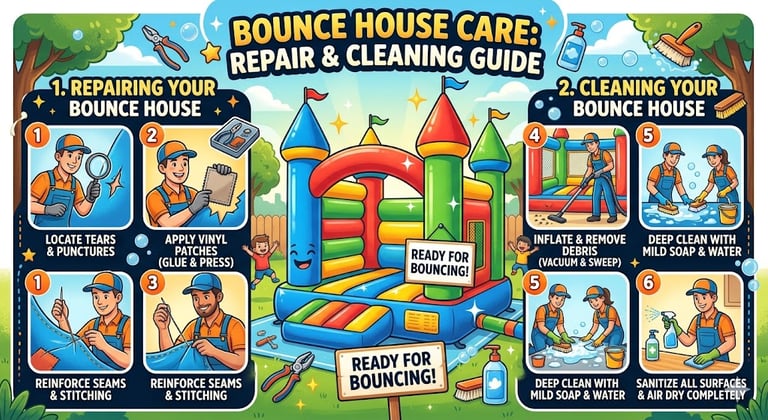
Patching holes and tears
Reinforcing seams
Fixing blower tubes
Repairing slides
Cleaning dirt, mildew, and algae
Preventing mold growth
Drying methods for every climate
Material‑specific repair rules
Throughout this guide, you’ll find internal links to deeper resources like the Bounce House Cleaning Guide (2026) and Bounce House Anchoring Guide (2026) so you can reinforce every repair with proper setup and maintenance.
WHO THIS GUIDE IS FOR
This master repair guide is designed for:
Parents repairing backyard bounce houses
Homeowners dealing with holes, tears, or soft walls
Anyone fighting mold or mildew
Owners of nylon, hybrid, or PVC units
Small rental operators maintaining their fleet
Anyone who wants safe, long‑lasting repairs
If you haven’t cleaned your bounce house yet, start with: How to Clean a Bounce House (2026 Step‑By‑Step Guide).
WHY REPAIR & CLEANING MATTER (THE REAL REASON)
Repair and cleaning affect:
Wall stability
Air retention
Slide performance
Material lifespan
Mold resistance
Safety during play
Most repair‑related accidents happen because:
Holes were patched incorrectly
Wrong adhesive was used
Seams were ignored
Blower tubes weren’t secured
Mold weakened the material
Units were stored damp
Cleaning chemicals damaged nylon or PVC
This guide eliminates those risks.
MATERIAL‑SPECIFIC REPAIR BEHAVIOR
Different materials require different repair methods.
⭐ Nylon (Residential)
Requires fabric or TPU patches
Adhesives must be flexible
Heat welding is NOT recommended
Dries quickly
Mold grows fast if stored damp
⭐ Hybrid (Nylon + PVC)
Requires mixed repair methods
Nylon patches for walls
PVC patches for slides and bases
Stronger adhesives needed
⭐ PVC (Commercial)
Requires PVC patches
Heat welding is ideal
Heavy‑duty adhesives
Most resistant to mold
Slowest to dry
For material comparisons, see Bounce House Materials Explained (2026): Nylon vs PVC vs Hybrid.
SMALL HOLE REPAIR (PINHOLES & MICROTEARS)
Small holes cause slow leaks → soft walls → collapse risk.
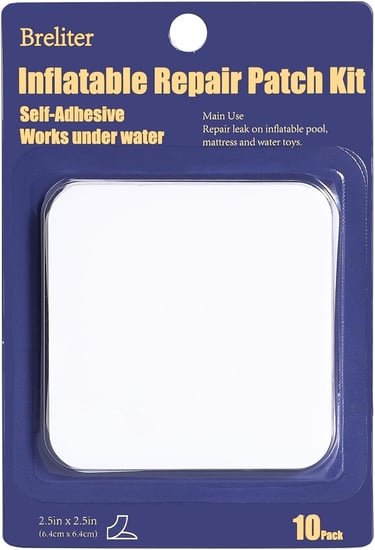
⭐ Best Amazon Product for This Repair
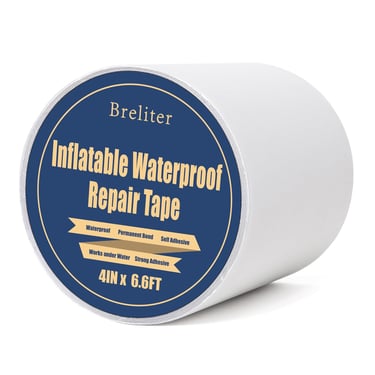
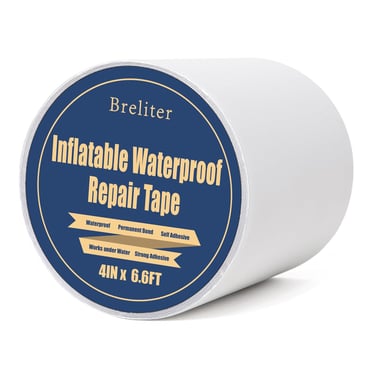
Breliter Inflatable Waterproof Repair Tape – TPU Patch Repair Kit
Transparent TPU
Waterproof
Ideal for nylon, TPU, and vinyl
Perfect for pinholes and microtears
Steps:
Clean area with alcohol
Cut rounded patch
Apply TPU tape
Press firmly
Cure 4–6 hours
Material Notes:
Nylon: TPU tape works extremely well
PVC: TPU tape works for small holes, but PVC cement is stronger
TEAR REPAIR (1–6 INCHES)
Tears require reinforced patches.
⭐ Best Amazon Product for Nylon & TPU Surfaces
GEYYANG Inflatable Patch Repair Kit (TPU)
Waterproof
Flexible
Great for nylon bounce houses
⭐ Best Amazon Product for PVC Surfaces
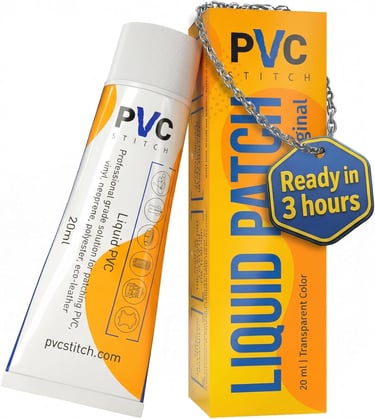
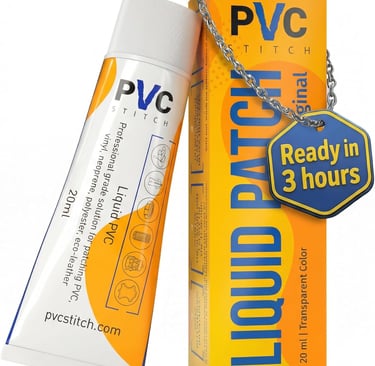
PVC Stitch Liquid Patch (Heavy‑Duty PVC/PU Glue)
Waterproof
3‑hour cure
Ideal for PVC bounce houses
Steps:
Align torn edges
Apply adhesive under edges
Apply patch 2–3 inches larger than tear
Press firmly
Cure fully
LARGE TEAR REPAIR (6–12 INCHES)
Large tears require double‑patching.
⭐ Best Amazon Product for Large PVC Tears
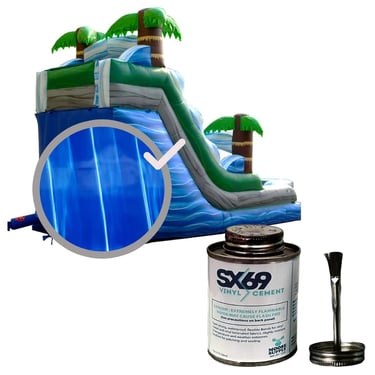
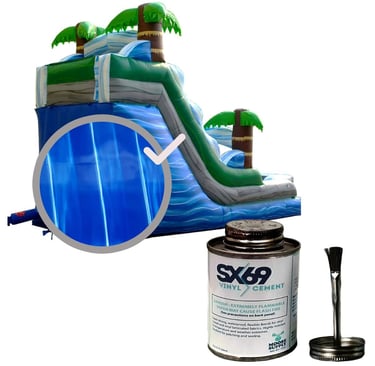
Moose Supply SX69 Vinyl Repair Kit (Blue Marble PVC Roll + Adhesive)
12" × 60" heavy‑duty PVC
Includes fast‑drying adhesive
Commercial‑grade
Steps:
Apply internal patch (inside surface)
Apply external patch (outside surface)
Roll out bubbles
Cure 24 hours
When to Retire the Unit:
Tears > 12 inches
Tears across load‑bearing seams
SEAM REPAIR (HIGH‑RISK AREA)
Seams fail due to stress, age, or improper storage.
⭐ Best Adhesive for PVC Seam Repair
Fast drying
Waterproof
The Standard others are compared to
⭐ Best Patch Material for Nylon Seams
Flexible
Waterproof
PVC Seam Repair Steps:
Apply SX69 cement
Press seam together
Reinforce with PVC patch strip
Cure 12–24 hours
Nylon Seam Repair Steps:
Apply flexible adhesive
Press seam
Reinforce with TPU patch strip
BLOWER TUBE REPAIR
A damaged blower tube = unstable airflow.
⭐ Best Product for Tube Holes (Nylon or PVC)
⭐ Best Product for PVC Tube Rebuilds
Fix:
Patch holes
Reinforce stitching
Re‑adhere Velcro
Use PVC cement for PVC tubes
SLIDE SURFACE REPAIR (PVC ONLY)
Slides take the most friction and require PVC‑specific materials.
⭐ Best Amazon Product for Slide Repair
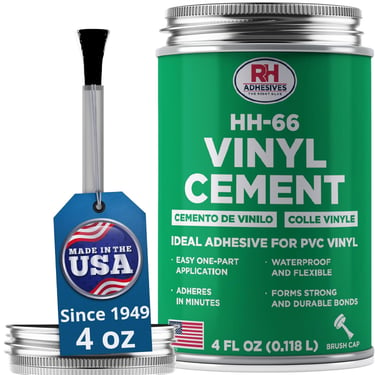
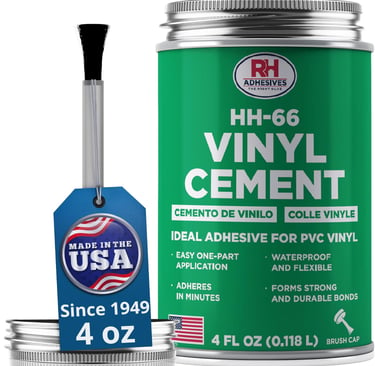
HH-66 Vinyl Repair Kit (PVC Roll + Adhesive)
Steps:
Clean with alcohol
Apply PVC cement
Press patch
Cure 24 hours
CLEANING CHEMICALS (SAFE FOR NYLON & PVC)
Cleaning incorrectly causes fading, weakening, or chemical burns.
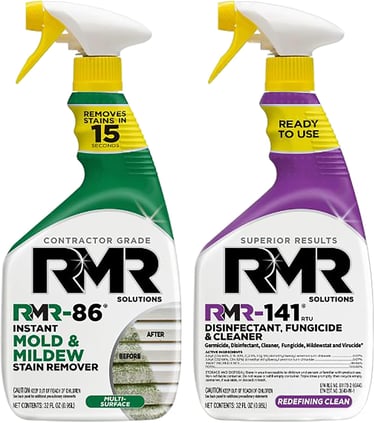
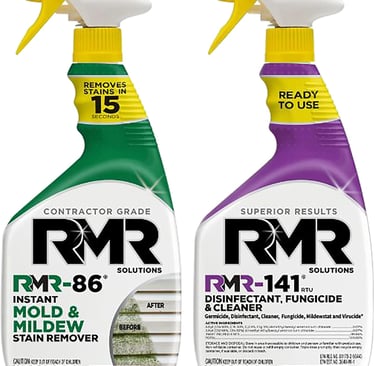
⭐ Best Amazon Mold & Stain Remover
RMR86 Instant Mold & Mildew Stain Remover
Extremely effective
Safe for PVC
Use lightly on nylon
Safe Cleaners:
Mild dish soap
Vinegar + water
Non‑bleach disinfectants
Avoid:
Bleach
Alcohol on PVC
Harsh degreasers
MOLD PREVENTION (THE MOST IMPORTANT SECTION)
⭐ Best Amazon Product for Mold Removal
RMR86 Instant Mold & Mildew Stain Remover
Prevention Rules:
Always dry fully
Store in low‑humidity area
Clean after every use
Avoid folding when damp
DRYING METHODS (CLIMATE‑SPECIFIC)
⭐ Hot & Dry Climates:
Air‑dry outdoors
Flip halfway
Use blower
⭐ Humid Climates:
Use fans
Use blower continuously
Dry indoors if possible
⭐ Cold Climates:
Use blower
Dry in garage/basement
HIGH‑RISK REPAIR SITUATIONS (STOP & ASSESS)
These conditions require immediate evaluation — sometimes retirement of the unit.
Tears longer than 12 inches
Seam separation on load‑bearing walls
Mold covering 20%+ of interior
Blower tube detaching from body
PVC slide lane delamination
Nylon fabric fraying across structural seams
If any of these occur → stop, assess, and consider professional repair or retirement.
COMMON REPAIR MISTAKES (AND THE RIGHT PRODUCT INSTEAD)
❌ Mistake 1 — Using duct tape
Peels instantly.
Use instead: TPU Inflatable Patch Repair Kit.
❌ Mistake 2 — Using fabric glue on PVC
Fails under pressure.
Use instead: Moose Supply HH66 Vinyl Repair Kit.
❌ Mistake 3 — Using PVC cement on nylon
Stiffens fabric → cracks later.
Use instead: Tear‑Aid A / TPU Patch Kits.
❌ Mistake 4 — Patching without cleaning first
Oil/dirt prevents adhesion.
Fix: Clean with alcohol wipes before patching.
❌ Mistake 5 — Folding bounce house while damp
Guaranteed mold.
Fix: Use blower + fans for full drying.
KEY TAKEAWAYS
TPU patches (Zonon, Hungdao, YEFEI) are best for nylon & general repairs.
HH66 vinyl cement kits (Moose Supply) are mandatory for PVC slides & seams.
Large tears require double‑patching using PVC rolls (Moose Supply SX69).
Mold prevention is more important than mold removal.
Drying is the #1 factor in long‑term bounce house lifespan.
Never mix adhesives across materials (nylon ≠ PVC).
Always clean before patching — adhesion depends on it.
RELATED ARTICLES
Before repairing or cleaning your bounce house, you may want to explore these related guides to ensure your setup, anchoring, blower performance, and weather decisions are fully optimized:
InflatableHoliday.com
Practical decorating ideas, buying guides, and setup and maintenance advice for outdoor holiday inflatables throughout the year.
Affiliate Disclosure
As an Amazon Associate I earn from qualifying purchases. Some links on this page are affiliate links — if you buy through them, InflatableHoliday may earn a commission at no extra cost to you. Prices and availability change, so the price you see on Amazon is the one that counts.
© 2026 InflatableHoliday.com