
Best Bounce Houses for Small Yards (2026 Guide)
Blog post description.
By Frank “Frosty” Adminei
5/15/20266 min read
Best Bounce Houses for Small Yards (2026 Guide)
By Frank “Frosty” Adminei
INTRO
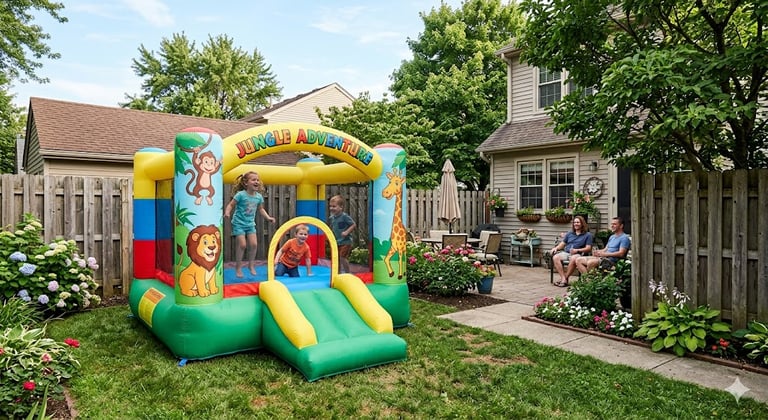
Small yards can absolutely handle a bounce house — you just need the right one. The 2026 models are smarter, safer, and more space‑efficient than ever, giving families more options than previous years. Whether you’re a parent planning weekend fun or a renter working with a tight patch of grass, there’s a compact inflatable that fits your space and your budget.
Quick tip: Review the Bounce House Setup Mistakes to Avoid (2026) before inflating anything. It’s the fastest way to avoid the most common small‑yard errors.
WHY SMALL YARDS NEED SPECIALIZED BOUNCE HOUSES
Standard inflatables don’t fit small yards well.
Most are too long, too wide, or require more clearance than a tight yard can safely provide.
Compact models solve this with smarter design:
Smaller footprints
Vertical play zones
Efficient blower placement
Reinforced seams for stability
Safer entry/exit layouts
Safety margins shrink in small yards, so the inflatable must be designed to stay stable even when airflow or space is limited.
If you want to measure your yard accurately before buying, use the Bounce House Size Calculator (2026): Yard Fit & Space Requirements — it prevents 90% of sizing mistakes.
WHAT MAKES A BOUNCE HOUSE GOOD FOR SMALL YARDS
Compact inflatables maximize fun per square foot.
They use taller mesh walls, tighter bounce zones, and smart layouts that keep kids active without requiring a huge footprint.
Key features to look for:
Footprints under 12 feet
Efficient blower systems
Strong mesh and stitching
Low‑profile slides
Stable anchoring points
Material strength matters more in tight spaces, because airflow and stability must remain consistent even when the inflatable is close to fences or landscaping.
For deeper stability tips, check out the Bounce House Anchoring Guide (2026): Stakes, Sandbags & Stability Physics.
A smaller footprint does not always mean the cheapest option, especially when stronger materials or more efficient layouts are involved. How Much Does a Bounce House Cost? (2026 Pricing Guide) explains how size, materials, blower requirements and construction affect what you should expect to spend.
BEST SMALL‑YARD BOUNCE HOUSES BY AGE GROUP
Toddlers (2–4 years)
Ultra‑compact footprints (6–8 feet)
Soft landings
Low entry points
Gentle bounce surfaces
Kids (5–7 years)
Slightly taller walls
8–10 foot footprints
Better mesh visibility
Small slides or climbing features
Older kids (8–10 years)
Reinforced seams
Stronger materials
Higher energy play zones
If you want a full breakdown by age, explore the Best Bounce Houses by Age Group (2026 Guide) for detailed recommendations.
BEST PRODUCTS
Little Tikes Jump ’n Slide Inflatable Bouncer
1. What it is
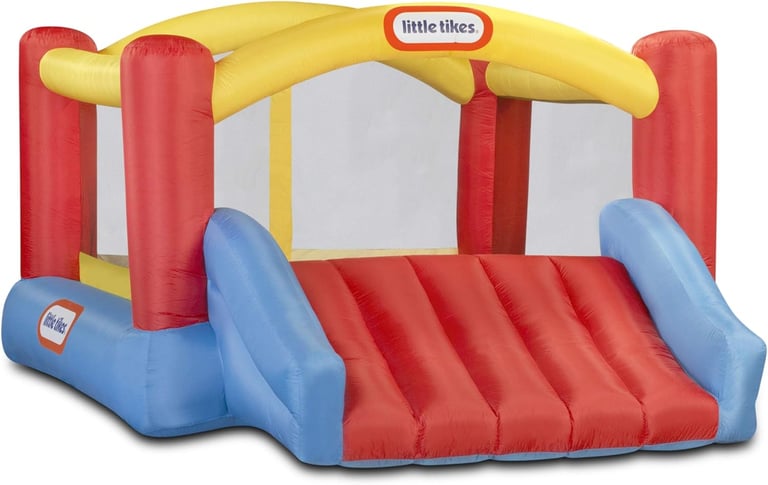
A compact 12' x 9' inflatable with a wide slide and a generous bounce area.
2. Why it works in small yards
The footprint stays tight while still offering enough bounce space for multiple kids.
3. Footprint & layout
Short slide, low profile, and a rectangular layout that fits most narrow yards.
4. Material & durability
Reinforced seams and thick mesh walls hold up well to repeated weekend use.
5. Best age range
Ideal for ages 3–7.
6. Why parents like it
Fast setup, reliable performance, and a design that doesn’t overwhelm small spaces.
7. Safety notes
Anchor all four corners and keep at least three feet of clearance at the slide exit.
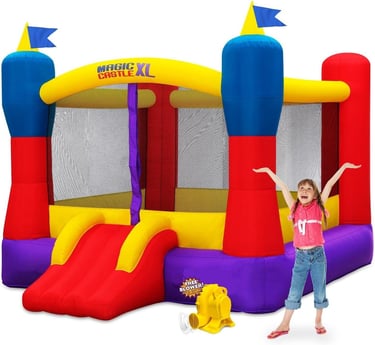
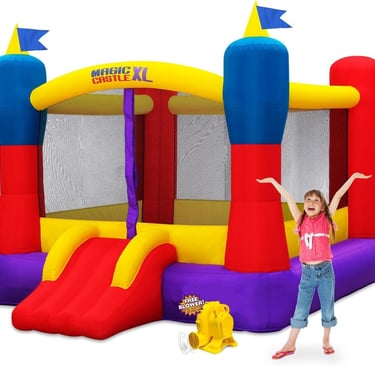
Blast Zone Magic Castle Inflatable Bouncer
1. What it is
An 11' x 8.5' compact castle‑style bouncer with commercial‑grade stitching.
2. Why it works in small yards
The narrow footprint and tall mesh walls maximize bounce space without requiring depth.
3. Footprint & layout
A tight rectangular layout that fits well in side yards and smaller lawns.
4. Material & durability
Blast Zone’s stitching and fabric quality are noticeably stronger than most compact models.
5. Best age range
Ages 3–8.
6. Why parents like it
It feels premium, stable, and secure — even in tighter spaces.
7. Safety notes
Ensure the blower intake stays unobstructed and anchor all points firmly.
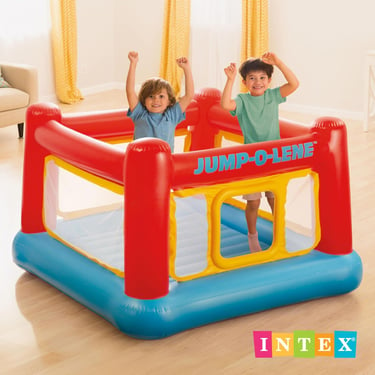
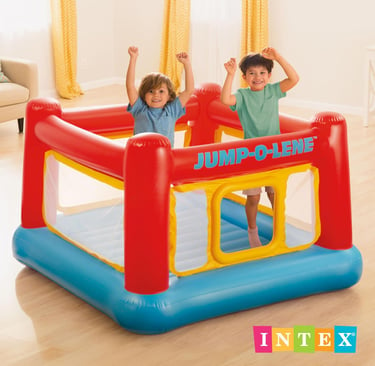
Intex Jump‑O‑Lene Castle Bouncer
1. What it is
A super‑compact 69" x 69" inflatable designed for toddlers and ultra‑small yards.
2. Why it works in small yards
It fits where other inflatables simply can’t — patios, tiny lawns, and indoor spaces.
3. Footprint & layout
Square layout with soft, low‑impact bounce zones.
4. Material & durability
Lightweight vinyl designed for gentle toddler play.
5. Best age range
Ages 2–4.
6. Why parents like it
It’s affordable, easy to store, and perfect for renters or small homes.
7. Safety notes
Not suitable for older kids; supervise closely due to lightweight construction.
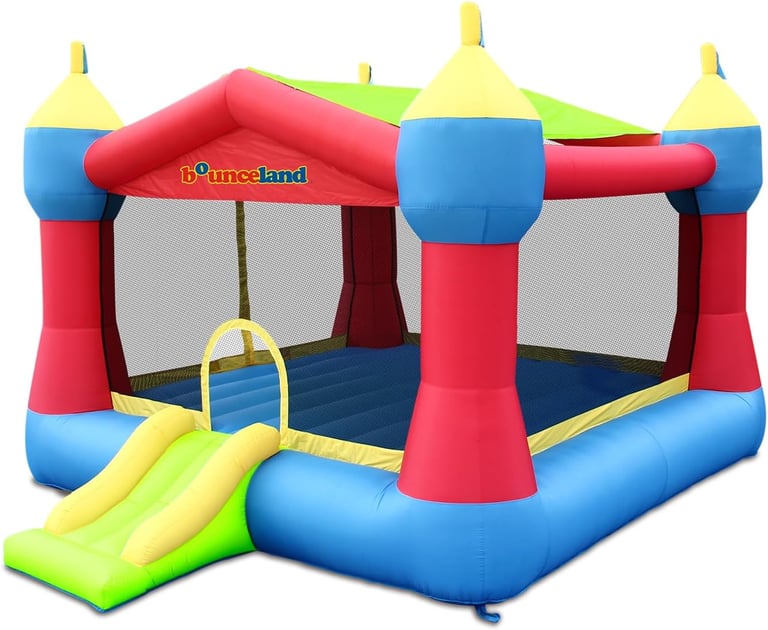
Bounceland Royal Palace Bounce House
1. What it is
A 12' x 9' compact play structure with tall mesh walls and a small slide.
2. Why it works in small yards
It delivers a “full playset” feel without requiring a large footprint.
3. Footprint & layout
Efficient rectangular layout with a front‑facing slide that saves space.
4. Material & durability
Strong Oxford fabric and reinforced seams for higher‑energy play.
5. Best age range
Ages 3–9.
6. Why parents like it
It feels substantial and exciting while still fitting comfortably in modest yards.
7. Safety notes
Keep the slide exit clear and avoid use in windy conditions.
BUYING CONSIDERATIONS
What matters most in small yards
Choosing the right bounce house requires more than checking dimensions. You need to consider how the layout interacts with your yard shape, blower placement, and safety zones.
Key factors to evaluate:
Material strength
Blower requirements
Weight limits
Entry/exit layout
Mesh height and visibility
Compact inflatables often use reinforced seams and efficient airflow systems to stay stable in tight areas. For a deeper look at materials, see Bounce House Materials Explained (2026).
YARD SIZE & FIT CONSIDERATIONS
Small yards demand precision.
You’ll want to measure your space carefully and account for blower placement, clearance zones, and safe entry/exit paths.
What to measure:
Total available length
Total available width
Clearance around all sides
Blower location and cord reach
Ground slope or uneven areas
Even compact inflatables need room for airflow and safe movement. For a step‑by‑step prep guide, see Bounce House Yard Prep Guide (2026).
SAFETY NOTES
Safety becomes even more important in tight spaces.
Younger kids need lower entry points and softer landing zones, while older kids require stronger materials and taller mesh walls.
Key safety considerations:
Follow weight and capacity limits
Anchor all points securely
Keep blower intake unobstructed
Maintain clear exit zones
Avoid overcrowding
For age‑specific safety rules, see Bounce House Safety for Parents (2026): Age, Weight & Weather Rules.
SETUP
Small‑yard setup requires careful planning.
Start by measuring your space, laying down a protective ground cover, and positioning the inflatable so the blower has unobstructed access to power.
Setup checklist:
Ground cover in place
Blower positioned safely
Anchors ready before inflation
Clear entry/exit paths
No overhead hazards
For a full walkthrough, see How to Set Up a Bounce House Safely (2026).
MAINTENANCE
Regular maintenance keeps your bounce house safe and long‑lasting.
Inspect seams, mesh, and blower connections after each use, and clean high‑contact areas to prevent dirt buildup.
Maintenance essentials:
Check seams for stress
Clean bounce surface
Inspect blower tube
Dry thoroughly before storage
Rotate setup location occasionally
For deeper care tips, see Bounce House Repair, Cleaning & Mold Prevention (2026).
STORAGE
Proper storage protects your investment.
Always dry the inflatable completely before folding to prevent mold and mildew.
Storage tips:
Use a sealed storage bin
Keep indoors when possible
Avoid damp basements
Fold tightly to save space
For a full walkthrough, see Bounce House Storage Guide (2026).
KEY TAKEAWAYS
Small yards can absolutely support bounce houses.
You just need the right footprint, proper anchoring, and a model designed for tight spaces.
What matters most:
Footprints under 10–12 feet
Strong materials and stitching
Safe entry/exit zones
Efficient blower placement
Age‑appropriate design
Proper anchoring
Accurate yard measurements
If you want to double‑check your yard fit before buying, use the Bounce House Size Calculator (2026): Yard Fit & Space Requirements — it prevents most sizing mistakes.
MINI CONCLUSION
A small yard doesn’t limit your ability to create a fun, safe bounce‑house experience — it just requires smarter choices. With the right footprint, proper setup, and a model designed for compact spaces, you can give your kids a reliable play zone that fits your home and your lifestyle. The 2026 lineup offers more compact, durable, and efficient options than ever, making this the perfect year to upgrade your backyard fun.
RELATED ARTICLES
Bounce House Size Calculator (2026): Yard Fit & Space Requirements
A quick tool that helps you measure your yard and match it to the right inflatable size.
Bounce House Anchoring Guide (2026): Stakes, Sandbags & Stability Physics
A practical guide to keeping your bounce house stable in any yard or weather condition.
Bounce House Setup Mistakes to Avoid (2026)
Covers the most common errors parents make during setup — and how to avoid them.
Best Bounce Houses by Age Group (2026 Guide)
Breaks down the best inflatables for toddlers, young kids, and older children.
Bounce House Yard Prep Guide (2026)
Shows you how to prepare your yard for safe, stable bounce‑house use.
Bounce House Materials Explained (2026)
A simple breakdown of PVC, Oxford cloth, and hybrid fabrics so you know what you’re buying.