
Home > Bounce Houses > Best Bounce House Blowers (2026): CFM, HP and Noise Levels
Best Bounce House Blowers (2026): CFM, HP and Noise Levels
Compare bounce house blowers by CFM, horsepower, inflatable size and noise so you can choose the right replacement or upgrade for your bounce house.
By Frank “Frosty” Adminei
5/24/202614 min read
Best Bounce House Blower Motors (2026): CFM, HP and Noise Levels Explained
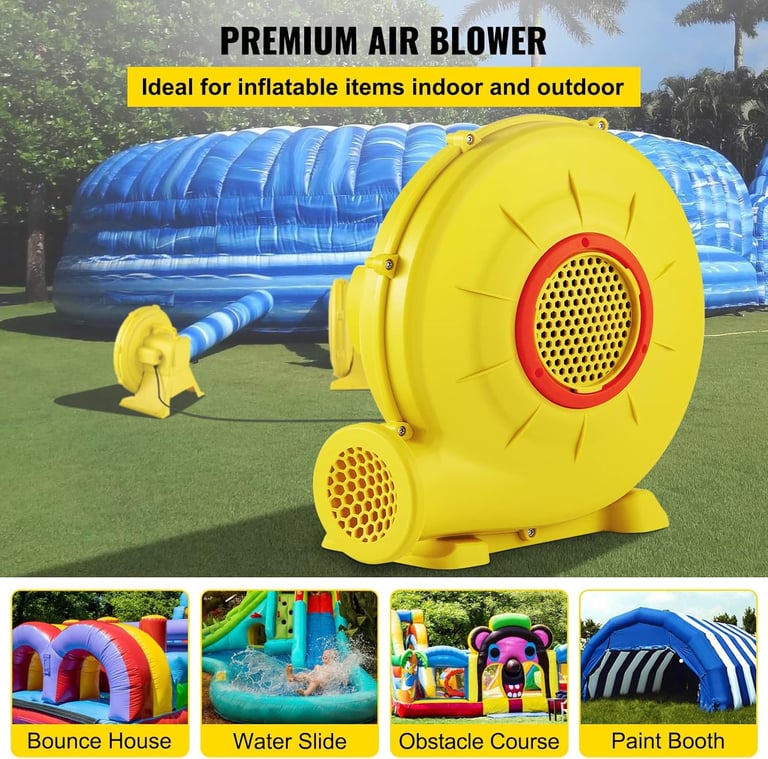
The right bounce house blower depends on the inflatable's size, airflow requirements and manufacturer specifications. More horsepower is not automatically better — the goal is a blower that provides the airflow your inflatable was designed to use.
TOC
Intro
A bounce house blower motor is one of the most overlooked parts of inflatable ownership — until it fails. When that happens, many owners quickly discover that replacing a blower is not as simple as buying the first model that looks similar online.
Choosing the wrong blower can create problems like poor inflation pressure, excessive noise, overheating, electrical overloads, or shortened inflatable lifespan. That is especially true for larger combo units, water slides, and commercial PVC inflatables that require continuous high airflow.
In this guide, we break down the best bounce house blower motors for 2026 while also explaining:
what CFM actually means
how horsepower affects airflow
realistic noise expectations
residential vs commercial blower differences
how to safely replace an existing blower
when upgrading blower power helps — and when it causes problems
Many buyers searching for replacement blowers are also troubleshooting larger setup issues. If your inflatable struggles to stay firm or loses pressure during use, our "Bounce House Blower Troubleshooting (2026 Guide)" and "Power, Extension Cords & Blower Guide (2026)" articles can help diagnose common airflow and electrical problems before you buy a replacement motor.
Unlike many generic “top 10” lists, this guide focuses heavily on compatibility, real-world ownership, and safe blower sizing so you can confidently choose the right blower for your inflatable.
Who This Guide Is For
This guide is designed for:
homeowners replacing a failed blower motor
parents upgrading underpowered residential inflatables
buyers purchasing a second backup blower
commercial rental operators
owners of combo bounce houses and inflatable water slides
shoppers trying to reduce blower noise
users confused about CFM, horsepower, or tube sizing
It is especially helpful for buyers who are unsure whether they should:
match their original blower exactly
increase blower power
switch to a quieter blower
upgrade to a commercial-grade model
Many inflatable owners also underestimate how much proper anchoring and setup affect blower performance and inflatable stability. Our "Bounce House Anchoring Guide (2026): Stakes, Sandbags & Stability Physics" explains how airflow pressure and anchoring work together to keep inflatables safe during operation.
Why This Topic Matters
Modern bounce houses rely on continuous airflow systems. Unlike sealed-air inflatables, bounce houses constantly lose small amounts of air through seams and pressure points during operation. The blower motor continuously replaces that lost air to maintain structure and bounce performance.
That means blower quality directly affects:
inflation firmness
bounce consistency
slide performance
noise levels
electrical load
operating safety
long-term inflatable wear
Unfortunately, many buyers accidentally purchase:
underpowered blowers
oversized commercial blowers
incompatible tube diameters
unsafe electrical setups
low-quality generic imports
This often leads to:
weak inflation
overheating motors
loud operation
breaker trips
shortened blower lifespan
Commercial inflatable owners face even greater challenges because larger PVC units and obstacle courses require significantly higher airflow volumes than standard backyard bounce houses.
Buyers comparing inflatable types should also review our "Bounce House Materials Explained (2026): Nylon vs PVC vs Hybrid" guide since inflatable material thickness greatly affects blower airflow requirements.
Understanding blower sizing before buying can save money, improve safety, and dramatically improve the overall ownership experience.
Understanding CFM, HP & Noise Levels
Understanding CFM, horsepower, and noise levels is the key to choosing a blower that keeps your inflatable firm, safe, and consistently pressurized. These three specs determine how much air your blower can move, how efficiently it can maintain pressure under load, and how loud it will sound in a real backyard. As the article notes, “Choosing the wrong blower can create problems like poor inflation pressure, excessive noise, overheating, electrical overloads, or shortened inflatable lifespan.”
CFM: The Real Measure of Airflow Volume
CFM (cubic feet per minute) tells you how much air the blower pushes into the inflatable every minute. Because bounce houses constantly leak small amounts of air through seams and pressure points, the blower must replace that air continuously to maintain firmness.
Higher CFM means:
firmer walls and bounce surfaces
better slide and climbing performance
faster inflation
more stability under active play
Typical CFM ranges:
400–700 CFM → small toddler inflatables
800–1200 CFM → standard backyard bounce houses
1200–1600+ CFM → large combos and water slides
1600–2200+ CFM → commercial PVC inflatables
If you want to explore airflow deeper, you can jump into CFM basics or compare airflow requirements.
Horsepower (HP): Motor Strength, Not Airflow
Horsepower measures the motor’s strength, but it does not directly tell you how much air the blower moves. Two blowers with the same HP can produce very different CFM depending on impeller design, housing shape, and motor efficiency. This is why the article emphasizes that “CFM is more important than horsepower alone.”
General HP guidance:
0.5–0.6 HP → toddler inflatables
0.8–1.0 HP → standard backyard bounce houses
1.5 HP → large combos and slides
2–3 HP → commercial obstacle courses
If you want to understand the relationship between power and airflow, explore HP vs CFM or learn about motor efficiency.
Noise Levels (dB): What They Actually Sound Like
All blowers make noise because they move large volumes of air at high speed. Noise increases with airflow, motor RPM, and impeller size. The article notes that “blower noise increases with power,” and commercial units are the loudest because they prioritize airflow over sound reduction.
Here are realistic noise equivalents:
55–65 dB → similar to a dishwasher or normal conversation
65–72 dB → similar to a vacuum cleaner
70–78 dB → similar to a hair dryer or busy street
75–82 dB → similar to a shop vac or leaf blower
Real‑world factors that increase perceived noise:
fences and walls reflecting sound
blower placed in a corner or tight yard
restricted intake airflow
higher CFM output
If noise is a concern, explore noise‑reduction options or compare quiet blower choices.
How CFM, HP & Noise Work Together
These three specs are interconnected. Increasing airflow usually requires a stronger motor, and stronger motors typically produce more noise. The goal isn’t to buy the most powerful blower—it’s to buy the correctly matched blower for your inflatable. As the article states, “The safest blower is not always the most powerful one — it is the correctly matched blower for your specific inflatable size, usage duration, and electrical setup.”
Balanced blower selection means:
CFM provides the airflow your inflatable needs
HP ensures the motor can maintain that airflow under load
Noise level stays manageable for your yard and neighbors
Bounce House Size & Blower Power Segmentation
Small Residential Bounce Houses
Typical inflatable size:
8x8 to 10x10 feet
Recommended blower size:
0.5–0.6 HP
400–700 CFM
Typical usage:
toddler inflatables
lightweight nylon bounce houses
indoor play setups
Noise expectations:
generally quieter
approximately 55–65 dB
These smaller blowers are easier on household circuits and usually work well for occasional family use.
If you are still selecting an inflatable size, our "Bounce House Size Calculator (2026): Yard Fit & Space Requirements" can help match your yard dimensions to appropriate blower power levels.
Standard Backyard Bounce Houses
Typical inflatable size:
11x11 to 13x13 feet
Recommended blower size:
0.8–1.0 HP
800–1200 CFM
Typical usage:
standard residential bounce houses
combo bounce-and-slide units
medium backyard parties
Noise expectations:
moderate operational hum
approximately 65–72 dB
This is the most common blower category for homeowners.
These units typically provide the best balance between:
airflow
affordability
electrical compatibility
portability
Our "How to Choose the Right Bounce House (2026 Buyer Guide)" explains how inflatable size, occupancy limits, and slide features influence blower requirements.
Large Combo Units & Water Slides
Typical inflatable size:
15+ feet
larger combo inflatables
inflatable slides
Recommended blower size:
1.5 HP
1200–1600+ CFM
Typical usage:
heavy-duty residential use
larger PVC inflatables
taller water slides
Noise expectations:
noticeably louder
approximately 70–78 dB
Water slides and combo units lose more air during operation because of:
larger surface area
climbing sections
slide exits
higher pressure demands
This is one reason oversized extension cords and dedicated circuits become more important on larger inflatables.
Commercial Inflatables & Obstacle Courses
Typical inflatable size:
large commercial PVC structures
obstacle courses
dual-lane slides
Recommended blower size:
2–3 HP
1600–2200+ CFM
Typical usage:
rental companies
schools
churches
event companies
Noise expectations:
loud continuous airflow
approximately 75–82 dB
Commercial blowers prioritize:
airflow volume
continuous runtime durability
outdoor reliability
They are usually heavier, louder, and more power-hungry than residential units.
Commercial inflatable owners should also review our "Best Commercial Bounce Houses (2026): Heavy-Duty PVC & Pro-Level Units" guide for compatibility and setup considerations between PVC inflatables and high-output blower systems.
Product Modules (Best Bounce House Blower Motors for 2026)
Below are carefully selected, real-market blower motors commonly used for bounce houses and inflatable setups. These options are grouped by real-world use case so you can match airflow, size, and noise level to your inflatable correctly.
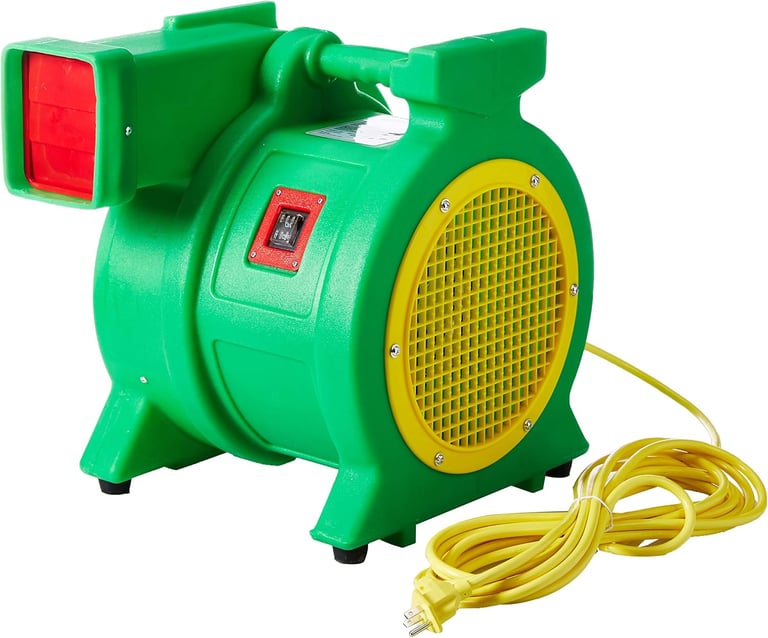
B-Air Kodiak 1.5 HP Inflatable Blower
(Best Overall for Large Backyard & Light Commercial Use)
1. What it is
A heavy-duty inflatable blower widely used in both residential and commercial bounce house setups.
2. Why it works
It delivers strong, consistent airflow suitable for large bounce houses and combo inflatables without struggling under continuous use.
3. Size / footprint
Medium-to-large unit with a stable housing design for outdoor placement.
4. Material & durability
High-impact plastic housing designed for repeated rental-style use and extended runtime.
5. Best user / age range
Ideal for homeowners with large inflatables or small rental operators.
6. Why buyers like it
It is known for reliable inflation performance and fewer overheating issues compared to lower-cost generic blowers.
7. Safety / usage notes
Works best on a dedicated circuit for larger inflatables, especially during extended parties or commercial use. A dependable choice if you want consistent inflation without constant monitoring.
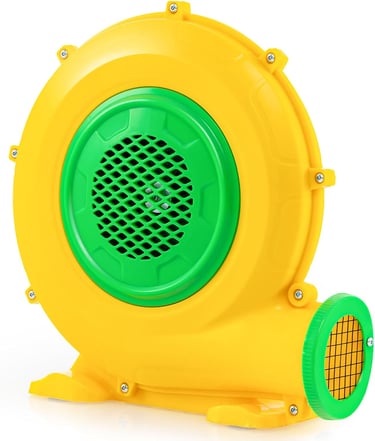
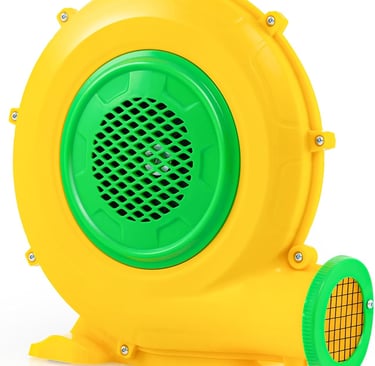
COSTZON 680W Bounce House Blower
(Best Value Residential Option)
1. What it is
A mid-range residential blower commonly used for standard backyard bounce houses.
2. Why it works
Balanced airflow output makes it suitable for most 11x11 to 13x13 inflatables.
3. Size / footprint
Compact and lightweight, easy to transport and store.
4. Material & durability
Durable molded housing designed for occasional to moderate use.
5. Best user / age range
Homeowners hosting occasional parties or weekend inflatable use.
6. Why buyers like it
Strong price-to-performance ratio with enough power for most residential inflatables.
7. Safety / usage notes
Best used with proper extension cord sizing and outdoor-rated outlets for safe, consistent performance during parties.
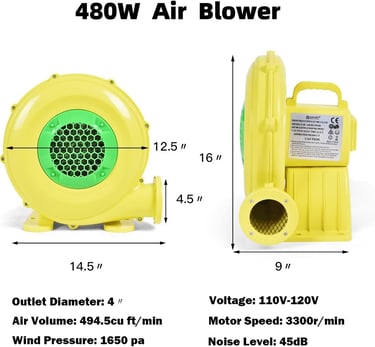
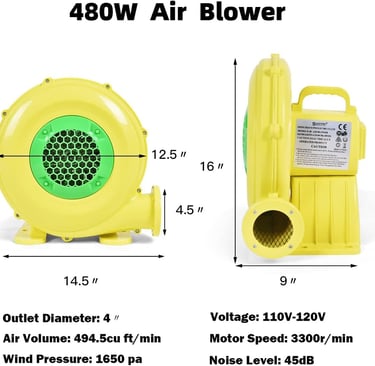
Costway 480W Bounce House Blower
(Best for Small Inflatables & Budget Buyers)
1. What it is
A lightweight blower designed for smaller bounce houses and toddler inflatables.
2. Why it works
Lower wattage output provides sufficient airflow for compact inflatables without excessive power draw.
3. Size / footprint
Very compact and easy to carry, ideal for indoor or backyard setups.
4. Material & durability
Basic durable plastic housing designed for light residential use.
5. Best user / age range
Parents with small children’s inflatables or indoor-safe bounce houses.
6. Why buyers like it
Affordable entry point and simple plug-and-play operation.
7. Safety / usage notes
Best matched to small inflatables only—overloading larger bounce houses can reduce firmness and performance.
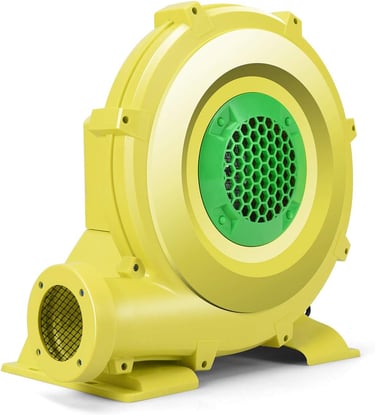
Costzon 950W Inflatable Blower
(Best Upgrade / High-Output Residential Use)
1. What it is
A higher-output blower designed for large backyard inflatables and combo units.
2. Why it works
Provides stronger airflow for inflatables that lose air quickly or have taller structures.
3. Size / footprint
Larger than standard residential blowers with reinforced base stability.
4. Material & durability
Heavy-duty housing suitable for frequent seasonal use.
5. Best user / age range
Users upgrading from underpowered 480W–680W units.
6. Why buyers like it
Noticeably stronger inflation performance for larger bounce houses and slides.
7. Safety / usage notes
Should be paired with properly rated extension cords and monitored circuits for safe operation during long events.
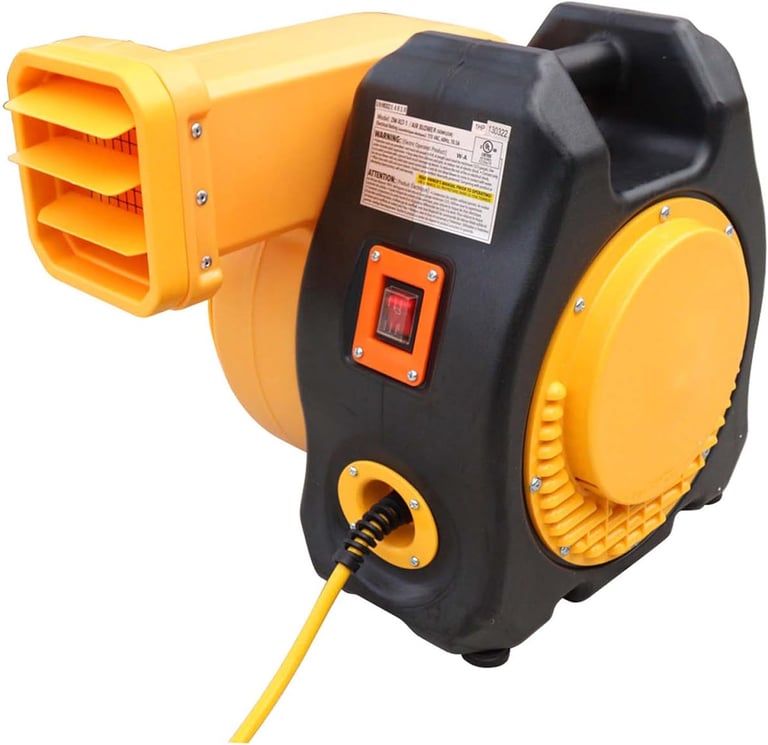
Zoom Blowers 1HP Commercial Grade Inflatable Blower
(Best for Water Slides & Large Combos)
1. What it is
A high-output blower commonly used for large inflatables, especially water slides and combo units.
2. Why it works
Provides sustained airflow needed for taller and more air-demanding structures.
3. Size / footprint
Larger footprint designed for outdoor commercial placement.
4. Material & durability
Reinforced housing built for extended runtime and event use.
5. Best user / age range
Event hosts, schools, and users with large inflatable water slides.
6. Why buyers like it
Reliable performance under heavier airflow demands without noticeable drop-off.
7. Safety / usage notes
Ideal when paired with heavy-duty anchoring systems to maintain stability in high-airflow inflatables.
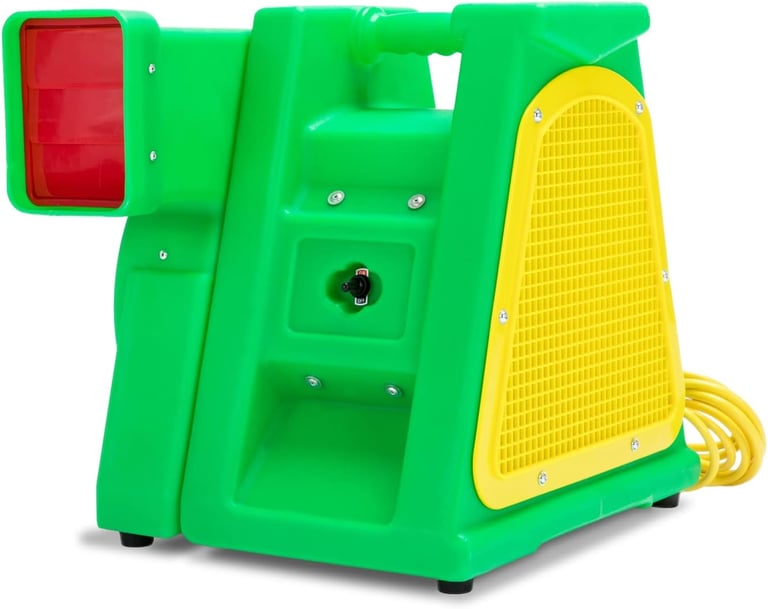
B-Air Grizzly 2–3 HP Commercial Inflatable Blower
(Best Commercial-Grade Option)
1. What it is
A true commercial blower designed for rental companies and large inflatable structures.
2. Why it works
Extremely high airflow capacity supports obstacle courses, dual-lane slides, and oversized inflatables.
3. Size / footprint
Large, heavy-duty unit intended for ground-level commercial setups.
4. Material & durability
Industrial-grade housing built for repeated rental cycles and long runtime hours.
5. Best user / age range
Commercial operators and high-volume event businesses.
6. Why buyers like it
Exceptional durability and airflow consistency under continuous use conditions.
7. Safety / usage notes
Best used with dedicated power circuits and proper outdoor protection to ensure long-term motor reliability.
Safety Notes
Choosing the correct blower is only part of safe inflatable operation. Electrical setup, airflow matching, and environmental conditions all play a critical role in performance and safety.
⚡ Electrical Safety & Power Requirements
Always use outdoor-rated extension cords
Avoid undersized cords (can cause voltage drop and overheating)
Larger blowers (1.5 HP+) should ideally use dedicated circuits
Never daisy-chain multiple extension cords
Poor electrical setup is one of the most common causes of:
blower overheating
breaker trips
reduced inflation pressure
For deeper guidance, see "Power, Extension Cords & Blower Guide (2026)".
🌬️ Airflow Compatibility Matters
Using the wrong blower size can cause:
Under-inflation (soft bounce surface)
Overworking the motor
Excessive seam stress on inflatables
Increased noise and vibration
Always match blower output (CFM/HP) to inflatable size and design.
🔊 Noise Considerations
Blower noise increases with power:
Small residential blowers: lower noise, backyard-friendly
Medium blowers: moderate hum
Commercial blowers: loud continuous airflow
If noise sensitivity is a concern, avoid over-sizing your blower unnecessarily.
🌧️ Weather & Placement Safety
Keep blower intake dry at all times
Avoid operating in standing water or heavy rain
Ensure blower has airflow clearance (never block intake vents)
Secure blower housing on flat, stable ground
For full weather safety rules, see "Bounce House Weather Guide (2026): Wind, Rain & Temperature Rules".
🧠 Key Safety Principle
The safest blower is not always the most powerful one — it is the correctly matched blower for your specific inflatable size, usage duration, and electrical setup.
Buying Considerations Before Replacing a Bounce House Blower
Replacing a blower motor is one of those purchases where “close enough” often leads to disappointment. The safest and most cost-effective choice is almost always the one that matches your inflatable’s airflow requirements and electrical setup—not simply the most powerful or cheapest option.
🔄 Match the Original Blower First (When Possible)
The easiest replacement path is identifying the original blower specs on the label:
Look for:
HP (horsepower)
Watts (W)
Voltage (usually 110–120V in the U.S.)
Amperage (A)
CFM rating (if listed)
If your original blower was:
680W → replace with similar 680W class blower
950W → stay in 950W or verified compatible range
1.5 HP → do NOT downgrade unless inflatable is small
Undersizing a blower is more problematic than slightly oversizing in most residential setups.
⚖️ Upgrade vs Replace Decision Rule
Upgrade makes sense when:
inflatable feels under-inflated during use
seams collapse under heavier use
adding a slide or extension section
using in colder climates (air density reduces lift)
original blower is noisy or inefficient
Stay the same size when:
inflatable is already firm and stable
electrical system is borderline capacity
blower was recently replaced and works correctly
Avoid upgrading when:
breaker trips already occur
extension cords are long or thin gauge
inflatable is small or toddler-sized
🔌 Electrical Compatibility Check (Critical)
Before purchasing a blower, confirm:
Outlet type (standard 120V household circuit)
Breaker capacity (typically 15A or 20A)
Extension cord gauge (minimum 12–14 gauge recommended for mid/high blowers)
Total load on circuit (avoid shared high-draw appliances)
For full safety details, see "Power, Extension Cords & Blower Guide (2026)".
🌬️ Airflow Compatibility (CFM Reality Check)
CFM (cubic feet per minute) is more important than horsepower alone.
General guidance:
Low CFM = small inflatables only
Medium CFM = most backyard bounce houses
High CFM = combo units and commercial inflatables
A mismatch in airflow leads to:
weak bounce performance
inflated but “soft” structure
premature blower wear
🔊 Noise vs Performance Trade-Off
Higher airflow generally means higher noise.
If noise is a concern:
choose a slightly lower CFM blower within safe range
position blower farther from guests
use natural barriers (fences, shrubs)
If performance is priority:
accept higher noise levels for commercial-grade airflow
🧱 Tube Diameter Compatibility
One of the most overlooked issues is physical fit:
Check:
blower nozzle diameter
inflatable intake tube size
secure fastening method (strap vs Velcro vs sleeve)
A mismatched tube connection can cause:
air leaks
unstable inflation
motor strain
Yard Size / Fit Considerations
While blower motors don’t directly depend on yard size, real-world setup space heavily influences performance, safety, and noise distribution.
📏 Blower Placement Space
Always ensure:
at least 2–3 feet of clearance around blower intake
flat, stable ground surface
no grass clippings, leaves, or debris near intake
Restricted airflow = overheating risk.
🏡 Yard Size Impact on Blower Choice
Small yards:
prioritize quieter, lower CFM blowers
avoid commercial units unless necessary
noise reflection is more noticeable
Medium yards:
standard residential blowers work best
good balance of airflow and noise dispersion
Large yards:
can safely support high-output blowers
easier noise dissipation
better for commercial-grade inflatables
🔊 Noise Reflection in Tight Spaces
In smaller yards:
fences amplify blower noise
walls reflect sound back toward guests
neighbors may perceive louder operation
This is why oversizing a blower for a small inflatable often creates unnecessary discomfort.
⚡ Distance From Power Source
Longer distances introduce:
voltage drop risk
need for heavier gauge extension cords
reduced blower efficiency if improperly sized cords are used
For safe setups, follow guidance in "Bounce House Yard Prep Guide (2026): Slope, Clearance & Surface Types".
🌤️ Environmental Layout Considerations
Avoid placing blowers:
in puddle-prone areas
under sprinkler zones
in direct path of heavy foot traffic
near sharp landscaping edges
Optimal placement:
shaded but ventilated area
minimal debris exposure
stable, dry ground
Setup
Proper setup is where most blower problems actually begin—not in the blower itself, but in how it’s deployed. Even a high-quality motor will underperform if airflow is restricted, power delivery is unstable, or placement is incorrect.
⚙️ Step-by-Step Blower Setup
1. Position the blower correctly
Place on flat, dry ground
Ensure intake vents face open air
Keep 2–3 feet of clearance around intake
Restricted airflow is one of the fastest ways to cause overheating.
2. Connect inflatable intake tube securely
Fully attach blower nozzle to inflatable sleeve
Tighten straps or Velcro system
Ensure no gaps or twists in tubing
Air leaks = soft bounce surface and motor strain.
3. Run proper power supply
Plug directly into outdoor-rated outlet when possible
Use heavy-duty extension cord (12–14 gauge recommended)
Avoid multi-plug adapters or power strips
For deeper electrical load rules, see "Power, Extension Cords & Blower Guide (2026)".
4. Test inflation before use
Allow 1–3 minutes for full inflation
Check firmness across all bounce zones
Listen for air leaks or pressure drop
5. Secure inflatable immediately
Anchor stakes or sandbags before allowing entry
Re-check tension after full inflation
Ensure blower remains stable during operation
For anchoring best practices, see "Bounce House Anchoring Guide (2026): Stakes, Sandbags & Stability Physics".
⚠️ Common Setup Mistakes
Blocking blower intake with grass or debris
Using undersized extension cords
Letting inflatable partially inflate before anchoring
Placing blower in wet or muddy areas
Running blower without secure tube connection
Maintenance
Bounce house blowers are simple machines, but they still require basic care to maintain airflow efficiency and prevent premature failure.
🧼 Keep Intake Vents Clean
Remove dust, leaves, and grass clippings regularly
Check intake screen before every use
Avoid storing blower in dirty outdoor areas
Clogged intakes reduce airflow and increase motor heat.
🔧 Inspect Power Cord & Housing
Before each use:
Check for cracks in casing
Inspect cord for fraying or cuts
Ensure plug prongs are not bent or loose
Damaged cords are a major safety risk and should be replaced immediately.
🌬️ Monitor Airflow Performance
Signs of declining performance:
inflatable feels softer than usual
longer inflation time
louder-than-normal motor sound
noticeable vibration changes
These symptoms may indicate internal wear or airflow restriction.
🔊 Watch for Noise Changes
Increased noise often signals:
bearing wear
airflow obstruction
motor strain
improper voltage supply
Ignoring noise changes can shorten blower lifespan significantly.
Storage
Proper storage extends blower lifespan more than most users realize.
📦 Dry Storage Is Essential
Always allow blower to fully dry before storing
Moisture leads to internal corrosion and motor failure
Avoid sealed plastic bags immediately after use
🧊 Avoid Extreme Temperatures
Do not store in freezing garages if possible
Avoid direct sunlight exposure for long periods
Heat cycling can warp housing over time
🧹 Clean Before Storing
Wipe exterior housing
Remove debris from intake
Check cord for tangles or stress points
📍 Ideal Storage Setup
Dry shelf or storage bin
Cord loosely coiled (not tightly wrapped)
Upright position to prevent housing stress
Key Takeaways
Matching blower size to inflatable type is more important than buying the most powerful unit
CFM and airflow consistency matter more than horsepower alone
Electrical safety (cords, circuits, load) is a major failure point in real-world setups
Noise increases significantly with blower size—balance is important
Most blower issues come from setup mistakes, not manufacturing defects
Replacement blowers should generally match original specs unless upgrading intentionally
Proper storage and intake maintenance significantly extend blower lifespan
Mini Conclusion
Choosing the right bounce house blower motor is ultimately about balance—airflow strength, inflatable compatibility, electrical safety, and real-world usage conditions all matter more than raw power alone.
For most homeowners, a properly matched residential blower will outperform an oversized commercial unit simply because it is easier to manage, safer to operate, and better suited to the inflatable’s design.
If your goal is consistent inflation, lower maintenance issues, and better long-term reliability, focus less on maximum power and more on correct sizing.