
Browse all Inflatable Setup guides, tips & ideas.
⭐ INTRO
Setting up outdoor inflatables the right way makes a huge difference in how they look, how long they last, and how safely they operate. Whether you’re decorating for the holidays or creating a seasonal yard display, proper placement, anchoring, and surface preparation ensure your inflatable stands tall and stays secure. This page brings together our most helpful guides on setup techniques, surface‑specific tips, stability fixes, and solutions for common problems. Use these resources to build a display that looks great from day one.
⭐ FAQ SECTION
Frequently Asked Questions About Inflatable Setup
Why won’t my inflatable stand up straight This is usually caused by uneven ground, loose anchors, or blocked airflow. Check the blower intake, adjust the tie‑downs, and add weight if needed.
Can I set up an inflatable on concrete Yes. Use sandbags, weighted bases, or water‑filled anchors instead of stakes. Make sure cords are routed safely.
How do I keep inflatables stable in windy areas Use all anchor points, add extra weights, and position the inflatable near wind‑blocking structures. If winds are strong, temporarily deflate and store it.
What’s the best way to set up inflatables on grass Clear the area of debris, inflate fully, and use deep stakes at all anchor points. Add sandbags for extra stability.
How do I prevent cords from becoming tripping hazards Run cords along edges, behind decorations, or under protective covers. Avoid placing inflatables directly in walkways.
Why does my inflatable take longer to inflate sometimes Cold temperatures, partial blockages, or weak power sources can slow inflation. Check the blower, cords, and airflow.
ESSENTIAL SETUP BASICS
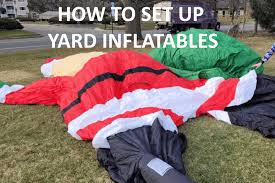
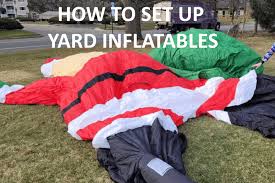
Every inflatable setup starts with a clean, level surface and a clear understanding of how the blower, stakes, and tie‑downs work together. Before inflating, remove sticks, rocks, and debris that could damage the fabric. Make sure the blower has plenty of airflow and that the inflatable is fully unrolled with no twists in the fabric. Once inflated, adjust the position before anchoring so the inflatable stands straight and faces the direction you want. These simple steps create a strong foundation for any display.
SETTING UP ON DIFFERENT SURFACES
Inflatables behave differently depending on where they’re placed. Grass is the easiest surface because stakes can be driven deep for stability. On mulch or soft soil, additional weights or sandbags help prevent shifting. Concrete and pavement require weighted bases, sandbags, or water‑filled anchors since stakes cannot be used. For decks and patios, secure tie‑downs to railings or heavy objects. Matching your setup method to the surface ensures your inflatable stays upright and secure.
HOW TO SECURE INFLATABLES ON CONCRETE
Concrete setups require a different approach since you can’t use stakes. Weighted bases, sandbags, or gym‑style weight plates are the most reliable options. Place weights over the inflatable’s built‑in anchor loops or attach them to the tie‑down straps. Make sure cords are routed safely along edges or behind decorations to avoid tripping hazards. With the right weight distribution, inflatables stay stable even without ground stakes.
SETTING UP IN HIGH‑TRAFFIC AREAS
If your inflatable sits near walkways, driveways, or gathering spaces, placement and safety become even more important. Keep cords tucked away, avoid blocking paths, and choose inflatables with narrow bases if space is limited. Make sure the inflatable is anchored securely so it cannot tip or shift if someone brushes against it. High‑traffic setups benefit from extra weights and careful cord management to keep the area safe and clutter‑free.
FIXING INFLATABLES THAT WON’T STAND UP STRAIGHT
Leaning or sagging inflatables are usually caused by uneven surfaces, loose anchors, blocked airflow, or internal fabric folds. Start by checking the blower intake for debris and ensuring the zipper is fully closed. Adjust the tie‑downs evenly on both sides and add weight if needed. If the inflatable still leans, reposition it on a flatter surface or rotate it slightly to improve balance. Small adjustments often restore full stability.
PRE‑SEASON AND DAY‑OF SETUP TIPS
Before setting up your inflatable for the season, inspect the fabric, seams, and blower for wear. Test the inflatable indoors or in a garage to ensure it inflates properly. On setup day, choose a time with calm weather to avoid fighting wind during inflation. Once the inflatable is secure, check it again after the first hour of operation to make sure anchors and cords haven’t shifted. A little preparation goes a long way toward a smooth setup.
CONCLUSION
A well‑planned setup ensures your inflatables look their best and stay secure throughout the season. With the right surface preparation, anchoring methods, and placement strategies, you can create a display that stands tall in any environment. The guides on this page cover everything from surface‑specific setup tips to troubleshooting leaning inflatables and managing high‑traffic areas. Use these resources to build a display that’s stable, safe, and ready to impress.