
Best Tarps for Under Bounce Houses: Ground Covers for 2026
Find the right tarp or ground cover for under a bounce house to help protect the inflatable from dirt, abrasion, moisture and rough surfaces.
Frank “Frosty” Adminei
5/29/20266 min read
Home > Bounce Houses > Best Bounce House Tarps & Ground Covers (2026)
Best Bounce House Tarps & Ground Covers (2026 Guide)
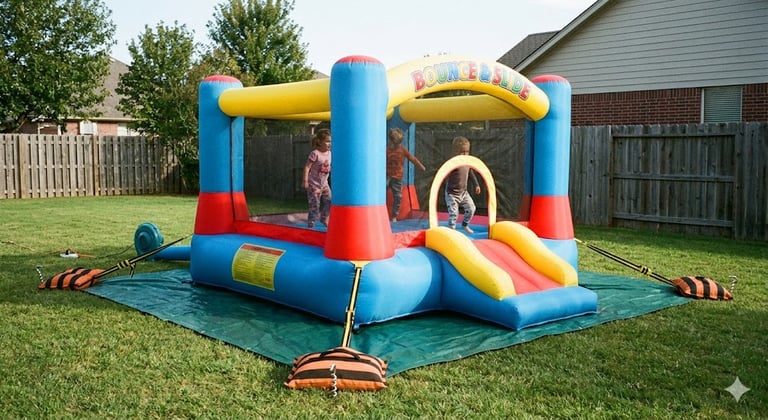
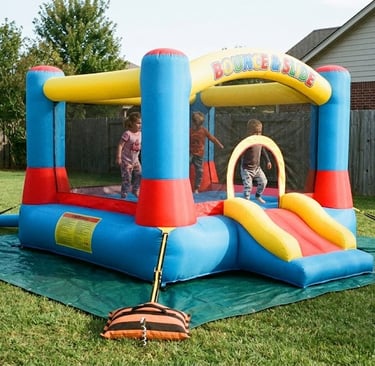
A tarp under a bounce house creates a protective layer between the inflatable and grass, dirt, concrete or other setup surfaces, but the right size and material depend on where you're setting up.
Intro
Bounce house safety and longevity often come down to what sits underneath the inflatable. While most owners focus on blowers, stakes, and sandbags, the ground layer is the most overlooked protection system.
A properly selected tarp or ground cover prevents abrasion, reduces moisture damage, blocks sharp debris, and improves anchoring stability. In windy or uneven yard conditions, it can even reduce shifting by creating a more controlled base layer.
This guide focuses on real-world solutions used by homeowners and rental operators who need durability, not just convenience.
Who This Guide Is For
This guide is designed for:
Homeowners setting up backyard bounce houses for parties
Rental operators who need long-term inflatable protection
Parents looking to reduce wear-and-tear on personal inflatables
Event planners working with temporary outdoor setups
Anyone using inflatables on grass, dirt, gravel, or mixed terrain
If your inflatable sits directly on the ground, this guide applies to you.
Why This Topic Matters
Most bounce house damage does not come from “big accidents.” It comes from slow, repeated wear:
Grass moisture weakening bottom seams
Rocks and sticks creating micro-tears
Uneven ground causing stress points
Sliding friction during wind gusts
Dirt and mud staining PVC surfaces
A tarp or ground cover acts as a protective barrier and stabilizer.
Age Group Segmentation
Different users need different protection levels depending on bounce house size and usage intensity:
Toddlers (2–4 years)
Lightweight inflatables
Short-duration use
Focus: soft ground padding + slip reduction
Kids (5–10 years)
Standard backyard bounce houses
Moderate foot traffic
Focus: abrasion resistance + debris protection
Teens (11–15 years)
Higher impact inflatables
More movement stress
Focus: reinforced tarps + stability improvement
Mixed-age events / Commercial use
Heavy traffic and long runtimes
Focus: industrial-grade ground covers + layered protection systems
Product Modules
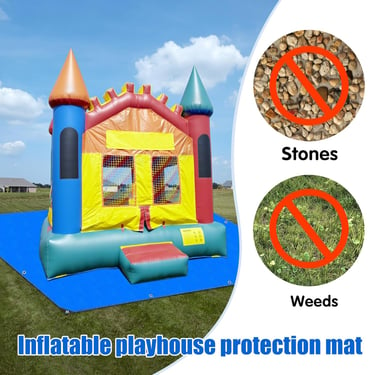
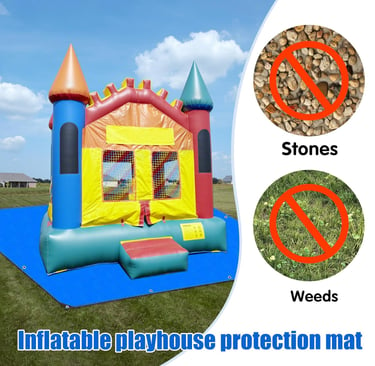
Wibeelee Bounce House Mat (197 x 118 in Heavy-Duty PE Underlay Pad)
1. What it is
A large, heavy-duty polyethylene ground mat designed specifically to sit under mid-to-large bounce houses, especially around the 15 ft inflatable class.
2. Why it works
It creates a dedicated protective barrier between the inflatable base and the ground, reducing abrasion from grass, dirt, and hidden debris while also helping stabilize the footprint of the bounce house during active play.
3. Size / footprint
At 197 x 118 inches, it’s well-suited for standard 12–15 ft bounce house footprints, offering solid edge coverage without excessive overhang.
4. Material & durability
Made from reinforced waterproof PE material with strengthened edges. Includes 10 metal ground stakes, which help anchor the mat itself so it doesn’t shift under movement or wind.
5. Best user / age range
Ideal for families with children ages 3–12 using backyard bounce houses for regular seasonal use.
6. Why buyers like it
Buyers appreciate that it’s a “ready-to-go system”—you get both the protective mat and anchoring stakes in one package, reducing setup guesswork.
7. Safety or usage notes
Best used on cleared, leveled ground before inflation. The included stakes help keep everything aligned, which can improve overall bounce house stability without needing extra accessories.
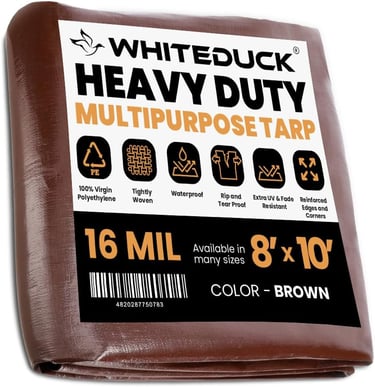
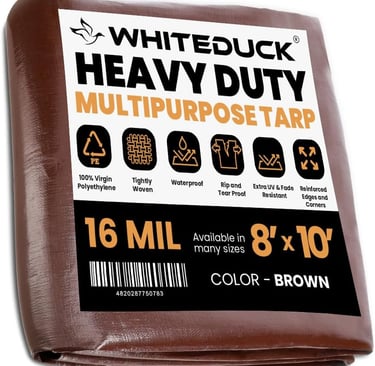
WHITEDUCK 8' x 10' Super Heavy Duty Poly Tarp (16 Mil, UV Resistant)
1. What it is
A commercial-grade reinforced polyethylene tarp designed for heavy outdoor protection, commonly used as a universal ground cover under inflatables.
2. Why it works
Its thick 16 mil construction creates a strong moisture and abrasion barrier, making it highly effective for protecting bounce house bottoms from rough or damp ground conditions.
3. Size / footprint
Finished size is approximately 7'6" x 9'6", making it best for smaller bounce houses, toddler inflatables, or as a layered underlayment system beneath larger setups.
4. Material & durability
Built from ultra-heavy-duty polyethylene with UV resistance, tear resistance, rustproof grommets, and reinforced edges. Designed for long-term outdoor exposure.
5. Best user / age range
Best for homeowners with smaller inflatables or those needing a durable base layer for light to moderate bounce house use.
6. Why buyers like it
Users value its extreme durability and versatility—it’s commonly used for camping, pool protection, and inflatable setups, making it a multi-purpose investment.
7. Safety or usage notes
Works best when fully flattened and secured at the corners to prevent folding under inflation pressure. Provides a strong protective base layer that significantly reduces wear on inflatable bottoms over time.
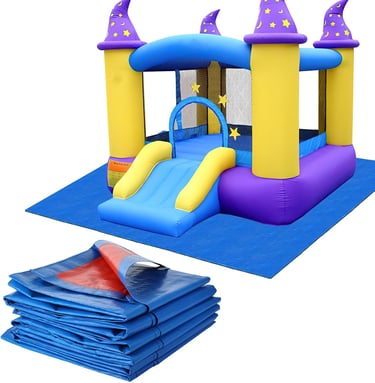
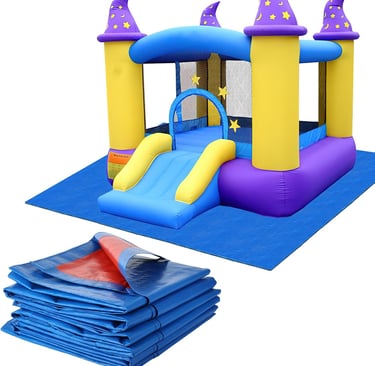
CIEOVO Bounce House Mat (157.48 x 118 in Heavy-Duty PE Underlayment)
1. What it is
A medium-sized protective underlay pad designed for inflatable bounce houses and water slide-style bounce setups.
2. Why it works
It provides a dedicated cushioning layer that helps reduce direct ground contact, limiting abrasion damage and helping maintain cleaner inflatable undersides during repeated setups.
3. Size / footprint
At 157.48 x 118 inches, it is well suited for compact to mid-size bounce houses or as a centered protective base under larger inflatables.
4. Material & durability
Constructed from waterproof heavy-duty PE material with reinforced stitching along the edges to handle repeated seasonal outdoor use.
5. Best user / age range
Best for backyard users with children ages 2–10 who want a balance of protection and easy setup.
6. Why buyers like it
Its lightweight design makes it easy to roll out, reposition, and store, while still offering meaningful protection against dirt, grass stains, and minor abrasions.
7. Safety or usage notes
Should be positioned flat and aligned before inflation to avoid bunching. It offers a simple, low-effort way to improve safety and extend inflatable lifespan for casual users.
Setup (Correct Ground Layer Installation Workflow)
Proper installation determines whether a tarp or mat actually protects your bounce house—or becomes a hazard.
Step 1: Clear the ground (non-negotiable)
Remove:
Rocks
Sticks
Pinecones
Sharp debris
Pet waste
Even heavy-duty products like the WHITEDUCK 14' x 20' Heavy Duty Tarp can’t compensate for sharp objects underneath.
Step 2: Lay the ground cover flat
Wibeelee Bounce House Mat (197x118) → roll out and pre-align edges
CIEOVO Mat (157x118) → center under inflatable footprint
WHITEDUCK 8x10 tarp → smooth fully to avoid fold pressure points
WHITEDUCK 420D tarp → tension edges before anchoring
Step 3: Anchor before inflation
This is where most competitors under-explain setup failure.
Use included stakes (Wibeelee system includes 10 metal stakes)
Add perimeter tension on large tarps
Avoid loose corners (wind lift risk increases 3–5x during inflation phase)
Step 4: Inflate and test stability
Before letting kids enter:
Walk perimeter
Check for tarp bunching
Confirm no sliding under inflatable base
Internal reference: As reinforced in "How to Set Up a Bounce House Safely (2026 Step-By-Step Guide)", stability testing should always happen before full occupancy.
Maintenance (Extending Product + Inflatable Lifespan)
Ground covers reduce wear—but only if maintained properly.
After each use:
Shake off dirt and grass
Wipe moisture from PE surfaces
Inspect grommets (especially WHITEDUCK tarps)
Check for small tears or edge fraying
Seasonal care:
Avoid long-term sun exposure when not in use
Rotate tarp orientation to distribute wear
Store completely dry to prevent mildew transfer to inflatable bottom
Storage (Preventing Hidden Damage)
Improper storage is a silent failure point.
Best practices:
Fold along original creases (avoid random folding stress lines)
Store in dry bin or sealed bag
Keep away from sharp edges or blower equipment
Never store damp tarps with inflatables
Product-specific notes:
WHITEDUCK 420D tarp → bulkier; roll storage preferred
CIEOVO mat → lightweight; easy folding but avoid compression stacking
Wibeelee mat → store stakes separately to avoid puncture marks
Key Takeaways
Ground covers are structural protection systems, not optional accessories
Size matching matters as much as material strength
Anchoring and tarps must work together
Heavy-duty options like WHITEDUCK excel in large setups, while Wibeelee provides balanced all-in-one protection
Small mistakes in setup create most bounce house damage—not product failure
Mini Conclusion
A bounce house doesn’t fail because of one big problem—it fails because of small, repeated ground-level issues.
The right tarp or mat reduces abrasion, stabilizes the inflatable footprint, and creates a safer environment for kids. Whether you choose a compact underlayment like the CIEOVO mat or a full-coverage system like the WHITEDUCK 14x20 tarp, the goal is the same: protect the inflatable from the ground up.
Related Articles
InflatableHoliday.com
Practical decorating ideas, buying guides, and setup and maintenance advice for outdoor holiday inflatables throughout the year.
Affiliate Disclosure
As an Amazon Associate I earn from qualifying purchases. Some links on this page are affiliate links — if you buy through them, InflatableHoliday may earn a commission at no extra cost to you. Prices and availability change, so the price you see on Amazon is the one that counts.
© 2026 InflatableHoliday.com