
Powering a Bounce House Safely: Extension Cords, Blowers & Electrical Setup Guide (2026)
Learn how to power a bounce house safely with the right extension cord, blower, outlet and GFCI setup while avoiding common electrical mistakes.
Frank “Frosty” Adminei
5/23/20263 min read
Powering a Bounce House Safely: Extension Cords, GFCI & Blower Setup Guide
A bounce house needs more than a nearby outlet. Safe setup depends on matching the blower, extension cord, circuit capacity and GFCI protection while keeping electrical connections protected from water and foot traffic.
Introduction
Power is one of the most important—and most misunderstood—parts of setting up a bounce house safely. The blower must run continuously, which means your electrical setup needs to be stable, outdoor-rated, and properly protected. Many setup issues come from using the wrong extension cord, skipping GFCI protection, or placing the blower incorrectly.
This guide explains exactly how to power a bounce house safely using correct extension cords, safe electrical practices, and proper blower positioning. Whether you’re a first-time owner or setting up regularly for parties, these fundamentals will help prevent outages, overheating, and safety hazards.
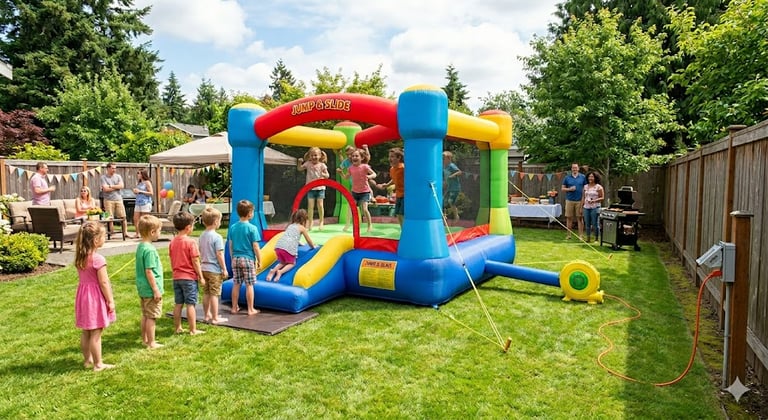
Quick Summary: How to Power a Bounce House Safely
Always use a dedicated outdoor-rated outlet with GFCI protection
Use a heavy-duty extension cord (12–14 gauge recommended)
Keep blower within manufacturer-recommended distance
Never use indoor-only power strips or lightweight cords
Protect cords from water, foot traffic, and pinch points
Key takeaway: The blower runs continuously, so electrical safety is not optional—it’s essential for safe operation.
Why Bounce House Power Setup Matters
A bounce house depends entirely on constant airflow from a blower motor. If power is interrupted—even briefly—the structure deflates quickly. That’s why electrical reliability and safety matter just as much as anchoring or placement.
Most issues come from:
Undersized extension cords causing voltage drop
Lack of GFCI protection outdoors
Improper blower distance or airflow restriction
Understanding these basics prevents both safety risks and inflatable damage.
Understanding Blower Electrical Requirements
Most residential bounce house blowers run on standard 110–120V outlets and require steady amperage. The key issue isn’t just power availability—it’s consistent delivery.
Voltage drop can occur when cords are too long or too thin, leading to:
Reduced blower efficiency
Motor overheating
Sudden deflation during use
Always match blower specs with appropriate cord thickness and length limits.
Choosing the Right Extension Cord
Selecting the correct extension cord is one of the most important setup decisions.
Recommended Cord Type
Outdoor-rated (SJTW or better)
Heavy-duty insulation
Minimum 12–14 gauge wire
Cord Length Guidelines
Shorter is always better (under 50 ft preferred)
Avoid daisy-chaining multiple cords
What to Avoid
Indoor orange household cords
Lightweight holiday extension cords
Coiled cords under load (heat risk)
A proper cord ensures the blower receives stable current without overheating or power loss.
GFCI Protection Explained
Ground Fault Circuit Interrupter (GFCI) protection is critical for outdoor inflatable setups.
Why It Matters
GFCI outlets shut off power instantly if they detect electrical imbalance, reducing shock risk in wet conditions.
Best Practice Setup
Use an outdoor GFCI outlet whenever possible
If unavailable, use a portable inline GFCI adapter
Test the GFCI before each use
Water exposure, dew, or damp grass can all create hazards without this protection.
Safe Blower Placement Tips
Blower positioning affects both safety and performance.
Best Practices
Place blower on flat, dry ground
Keep intake unobstructed
Elevate slightly if ground is wet
Ensure airflow is not blocked by grass, fences, or debris
Distance Considerations
Follow manufacturer guidelines, but typically:
Keep blower within 3–6 feet of inlet tube
Avoid stretching or bending intake hose excessively
Poor placement can reduce airflow efficiency and stress the motor.
Common Power Mistakes
Avoid these frequent setup errors:
Using indoor extension cords outdoors
Running multiple inflatables on one circuit
Plugging into overloaded household outlets
Leaving cords exposed in walking paths
Skipping GFCI protection
These mistakes are responsible for most preventable bounce house power failures.
Setup Checklist Before Inflation
Before turning on the blower:
Confirm GFCI protection is active
Inspect extension cord for damage
Ensure blower intake is clear
Verify outlet is not overloaded
Secure cord away from foot traffic
A 60-second checklist can prevent most issues during operation.
Conclusion
Safe power setup is the foundation of a reliable bounce house experience. Using the correct extension cord, ensuring GFCI protection, and positioning the blower properly all work together to maintain steady airflow and reduce risk.
Before every setup, take a moment to verify your electrical connections. A few simple precautions ensure your inflatable runs safely and consistently throughout the entire event.
Related Articles:
Are Bounce Houses Safe? (2026 Parent Guide) – Covers overall safety expectations and supervision guidelines for families
Bounce House Setup Mistakes to Avoid (2026) – Breaks down common errors that lead to unsafe or unstable setups
Bounce House Weather Guide (2026) – Explains wind and weather conditions that impact outdoor inflatables
Best Bounce House Blowers (2026) – Reviews blower types, performance levels, and compatibility considerations
Bounce House Anchoring Guide (2026) – Shows how to secure inflatables for stability during use
How to Set Up a Bounce House Safely (2026 Step-By-Step Guide) – Full installation walkthrough from start to finish
How to Protect Your Pets: Outdoor Power Cord Safety Tips - Learn how to protect your pets from electrical cords
FOOTER
This article may contain general informational references. Always follow manufacturer instructions for your specific bounce house and blower model. Electrical setups should comply with local safety codes.
Affiliate disclosure: Some recommended safety accessories may include affiliate-linked products.