
Bounce House Yard Prep Guide (2026): Slope, Clearance and Surface Types
Learn how to properly prepare your yard for a bounce house in 2026. Covers slope, clearance, surfaces, anchoring, and safe setup steps with real product recommendations.
Frank “Frosty” Adminei
5/18/20264 min read
Bounce House Yard Prep Guide (2026): Slope, Clearance & Surface Types
Frank “Frosty” Adminei
Intro
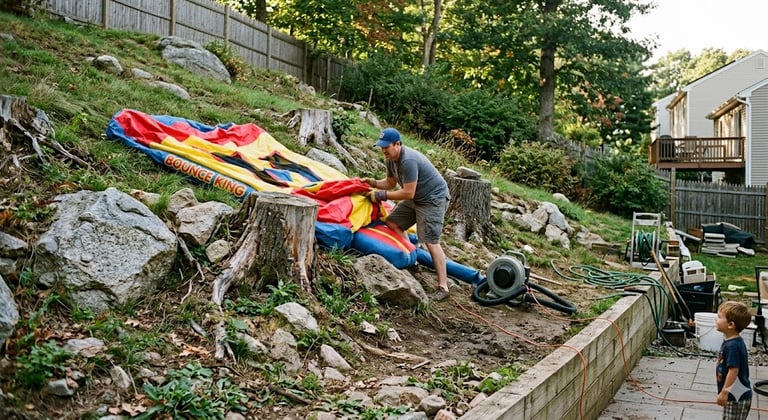
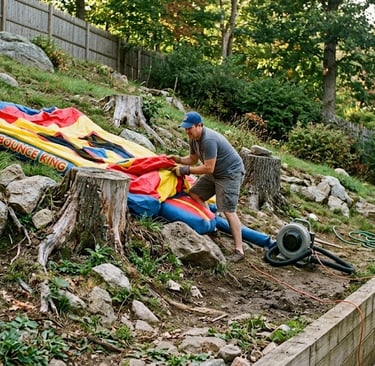
A bounce house setup is only as safe as the ground underneath it.
Most problems—leaning, instability, or premature wear—are caused by poor yard preparation, not the inflatable itself.
This guide shows how to properly prepare your yard in 2026 so your setup is safe, stable, and repeatable.
If you’re still choosing equipment, it helps to review How to Choose the Right Bounce House (2026 Buyer Guide) before final placement decisions.
Who This Guide Is For
This guide is built for:
Parents setting up backyard inflatables
First-time bounce house owners
Homeowners with uneven yards
Renters with limited outdoor space
Anyone focused on safe setup practices
If you’re working with tight space, Best Bounce Houses for Small Yards (2026 Guide) is useful alongside this.
Why This Topic Matters
Yard prep directly affects safety.
Poor setup can lead to:
Uneven bouncing
Anchor failure
Material damage
Increased injury risk
Most issues are preventable with proper ground preparation.
For safety fundamentals, see Are Bounce Houses Safe? (2026 Parent Guide).
Age Group Segmentation
Toddlers (2–4)
Require the flattest possible surface
Soft grass preferred
Minimal slope tolerance
Young Kids (5–8)
Need clear boundaries
Debris-free surfaces required
Older Kids (9–12)
Higher bounce force
Stronger anchoring required
For deeper safety breakdowns, see Bounce House Safety for Parents (2026): Age, Weight & Weather Rules.
Product Modules
Eurmax 12” Heavy Duty Steel Stakes (Amazon Bestseller)
Search: Eurmax 12 inch heavy duty tent stakes
What it is
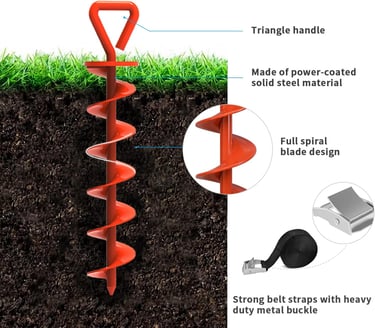
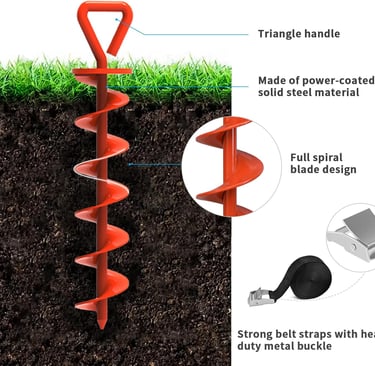
Steel J-hook stakes used for anchoring bounce houses into soil or grass.
Why it works
Deep ground hold prevents shifting during active use.
Size / footprint
12-inch steel stakes driven into soil at anchor points.
Material & durability
Galvanized steel resists bending and rust.
Best user / age range
All residential bounce house setups.
Why buyers like it
Reliable upgrade over included weak stakes.
Safety notes
Angle away from inflatable for maximum holding strength.
A small upgrade here dramatically improves overall stability.
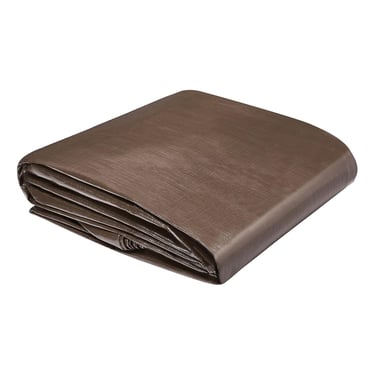
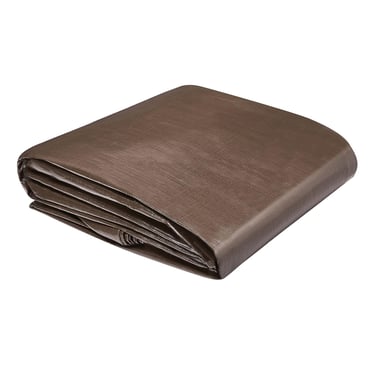
Amazon Basics Heavy Duty Poly Tarp (Amazon Bestseller)
Search: heavy duty tarp Amazon Basics
What it is
Protective ground layer placed under the inflatable.
Why it works
Prevents abrasion and moisture exposure.
Size / footprint
Choose slightly larger than bounce house base.
Material & durability
Heavy-duty polyethylene construction.
Best user / age range
All setups, especially on rough or wet ground.
Why buyers like it
Affordable and reusable protection layer.
Safety notes
Must be fully flattened before inflation.
Helps extend inflatable lifespan with minimal cost.


Southwire 12/3 Outdoor Extension Cord (Amazon Bestseller)
Search: Southwire outdoor extension cord 12 gauge
What it is
Heavy-duty outdoor-rated power cord for blowers.
Why it works
Maintains safe power delivery over distance.
Size / footprint
Common 25–100 ft lengths.
Material & durability
Weather-resistant insulation and grounded plug.
Best user / age range
All setups requiring distant power access.
Why buyers like it
Reliable, safe power handling for high-load equipment.
Safety notes
Never use indoor cords outdoors.
Prevents one of the most common bounce house setup failures.
Safety Notes
Never set up in moderate or high wind
Avoid wet or saturated ground
Always secure all anchor points
Keep blower area dry and clear
For deeper conditions, see Bounce House Weather Guide (2026): Wind, Rain & Temperature Rules.
Buying Considerations
Before setup, match inflatable size to yard reality.
Key factors:
Usable flat space
Clearance requirements
Anchor compatibility
Power access
If unsure, Bounce House Size Calculator (2026): Yard Fit & Space Requirements helps prevent misfits before setup.
If your measurements show that space is the limiting factor, Best Bounce Houses for Small Yards (2026 Guide) compares models designed to provide useful play space without overwhelming a tighter backyard.
Yard Size / Fit Considerations
Step 1: Measure usable space
Ignore total yard size—focus on flat, usable area.
Step 2: Add clearance buffer
6 ft minimum on all sides
15–20 ft overhead clearance
Step 3: Identify hazards
Trees
Slopes
Sprinklers
Fences
For planning layouts, see Bounce House Party Planning Guide (2026).
Setup
Position inflatable in cleared zone
Lay tarp if used
Attach blower securely
Begin inflation evenly
Tighten anchors after full inflation
When the ground is abrasive, damp or likely to dirty the inflatable, a protective layer can also reduce wear underneath the unit. Best Bounce House Tarps and Ground Covers (2026) explains which ground-cover options work best for protecting the base without interfering with safe setup.
For full process, see How to Set Up a Bounce House Safely (2026 Step By Step Guide).
Maintenance
Recheck anchors during use
Keep blower area clear
Inspect seams after use
Remove debris after sessions
For cleaning, see How to Clean a Bounce House (2026 Guide).
Storage
Fully dry before folding
Avoid sharp creases
Store in cool dry space
Keep off damp floors
For long-term care, see Bounce House Storage Guide (2026): Folding, Drying & Long Term Care.
Key Takeaways
Flat ground is essential
Grass is the safest surface
Clearance matters as much as size
Anchoring must match surface type
Power setup is part of safety
Mini Conclusion
Bounce house safety starts with the yard—not the inflatable.
When your surface, slope, clearance, and anchoring are correct, everything else becomes easier and safer.
Good preparation turns setup into a repeatable system.
Related Articles
Are Bounce Houses Safe? (2026 Parent Guide)
Bounce House Safety for Parents (2026): Age, Weight & Weather Rules
Bounce House Size Calculator (2026): Yard Fit & Space Requirements
Bounce House Setup Mistakes to Avoid (2026)
Bounce House Anchoring Guide (2026): Stakes, Sandbags & Stability Physics
How to Choose the Right Bounce House (2026 Buyer Guide)