
Best Bounce House Accessories (2026): Stakes, Blowers, Tarps and Sandbags
Discover the best bounce house accessories for safety and stability in 2026. Compare stakes, blowers, tarps, and sandbags for better setups.
Frank “Frosty” Adminei
5/17/20268 min read
Best Bounce House Accessories (2026): Stakes, Blowers, Tarps and Sandbags
Frank “Frosty” Adminei
Intro
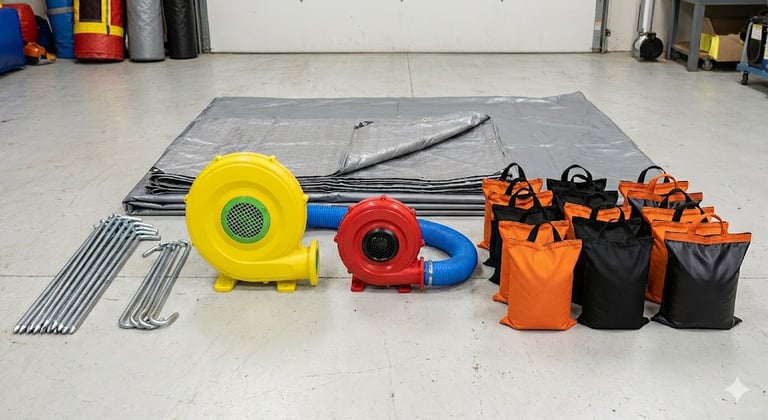
Bounce house accessories are what separate a “quick setup” from a safe, stable, long-lasting inflatable setup.
Even the best bounce house will underperform without the right support gear. Accessories control four critical forces:
Wind resistance
Ground friction and wear
Airflow consistency
Structural stability
If you are still learning how setup interacts with safety, How to Set Up a Bounce House Safely (2026 Step By Step Guide) is a helpful companion resource before choosing accessories.
Who This Guide Is For
This guide is for:
Parents setting up backyard bounce houses
Homeowners improving safety and stability
First-time inflatable buyers
Anyone tired of bounce houses shifting or deflating mid-use
Buyers trying to reduce setup mistakes
If you’re still selecting the right inflatable, How to Choose the Right Bounce House (2026 Buyer Guide) helps align accessories with the right base unit.
Why This Topic Matters
Accessories are not optional add-ons—they directly affect:
Safety under wind conditions
Stability on different yard surfaces
Air retention efficiency
Wear and tear on the inflatable base
Setup reliability and consistency
Most bounce house failures are not material failures—they are anchoring and airflow failures.
For broader safety context, see Are Bounce Houses Safe? (2026 Parent Guide) which explains how setup components impact injury prevention.
Age Group Segmentation
Toddlers (2–4 years)
Require softer landing stability
Low bounce force
Accessories mainly ensure safety containment
Young Kids (5–8 years)
Moderate bounce force
Stability becomes critical
Proper anchoring prevents shifting
Older Kids (9–12 years)
Higher dynamic movement
Strong anchoring systems required
Airflow consistency becomes more important
For safety thresholds and usage rules, see Bounce House Safety for Parents (2026): Age, Weight & Weather Rules.
Product Modules
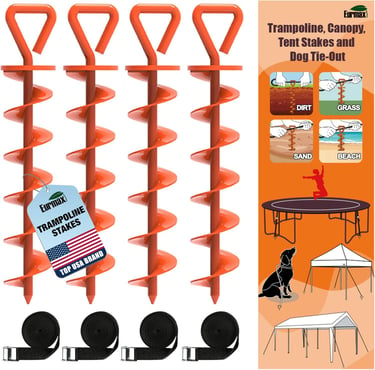
Eurmax Heavy Duty Spiral Ground Anchors
Search phrase: Eurmax heavy duty spiral ground stakes inflatable bounce house
What it is
Heavy-duty spiral steel stakes designed for anchoring inflatable bounce houses into grass or soil.Why it works
The spiral design increases ground resistance by gripping deeper soil layers instead of relying on straight pull-out tension.Size / footprint
Typically 9–12 inches long; compact but deep-set anchoring system.Material & durability
Powder-coated steel resists rust and bending under lateral wind load.Best user / age range
All residential bounce house users with grass setups.Why buyers like it
Users report significantly improved stability during active bouncing and light wind conditions.Safety or usage notes
Proper staking reduces lift risk and lateral shifting during group play.
A simple upgrade that keeps your bounce house firmly planted during active use.
Aimosen Heavy Duty Sandbags
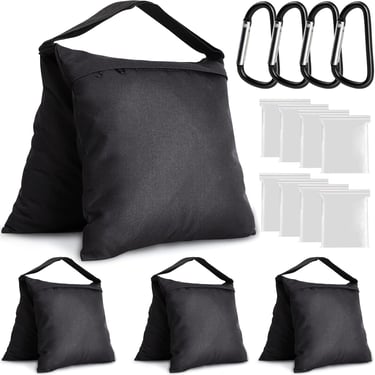
Search phrase: Aimosen inflatable bounce house sand bags heavy duty
What it is
Fillable sandbags designed to anchor bounce houses on hard surfaces.Why it works
Weight distribution across flat surfaces prevents movement where stakes cannot penetrate.Size / footprint
Compact empty storage; expands when filled with sand or gravel.Material & durability
Heavy-duty PVC-coated fabric resists tearing and moisture damage.Best user / age range
Ideal for patios, driveways, and indoor/outdoor hybrid setups.Why buyers like it
Flexible, reusable, and easy to store when not in use.Safety or usage notes
Critical for setups without soil penetration options.
A reliable backup when grass staking isn’t possible.
Breliter Heavy Duty Vinyl Repair Kit
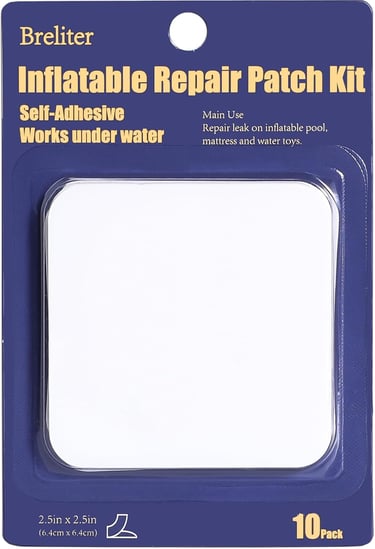
Search phrase: Breliter inflatable bounce house repair kit vinyl patch
What it is
Vinyl patch repair kit for inflatable bounce house tears and punctures.Why it works
Strong adhesive vinyl patches bond directly to inflatable surfaces to seal leaks.Size / footprint
Compact kit with multiple patch sizes for different damage levels.Material & durability
Industrial-grade adhesive vinyl designed for outdoor exposure.Best user / age range
Any bounce house owner dealing with minor surface damage.Why buyers like it
Fast repair capability without needing full replacement.Safety or usage notes
Prevents small tears from expanding into major failures.
A must-have for extending bounce house lifespan after normal wear.
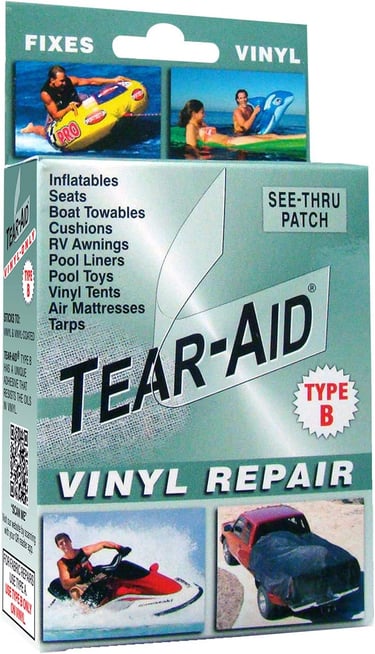
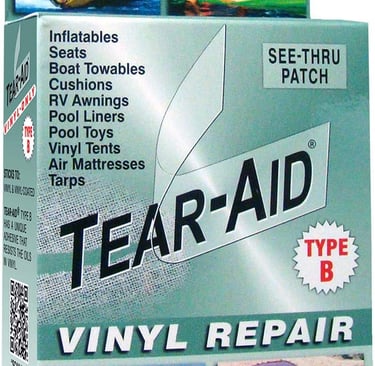
Tear-Aid Repair Patch Kit Type B
Search phrase: Tear-Aid vinyl repair patch kit inflatable bounce house Type B
What it is
High-strength transparent repair patch system for vinyl inflatables.Why it works
Industrial adhesive bonds at molecular level for long-term sealing.Size / footprint
Flexible roll-style patches that can be cut to size.Material & durability
Abrasion-resistant clear film with high elasticity.Best user / age range
Frequent users or commercial-grade inflatable owners.Why buyers like it
Nearly invisible repairs with strong long-term hold.Safety or usage notes
Ideal for preventing air leaks without replacing panels.
A professional-grade repair solution for extending inflatable life.
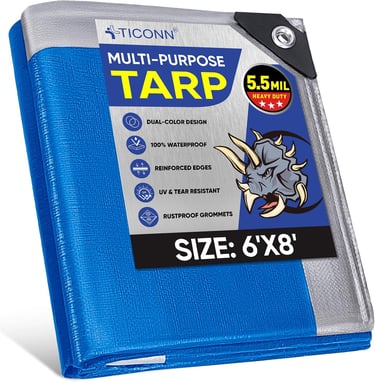
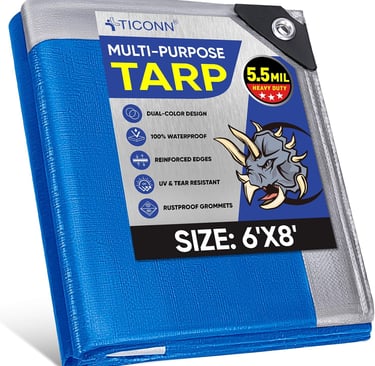
TICONN Heavy Duty Waterproof Tarp
Search phrase: TICONN waterproof heavy duty tarp ground cover inflatable
What it is
Heavy-duty waterproof tarp used as a protective base layer under bounce houses.Why it works
Creates a barrier between inflatable material and rough ground surfaces.Size / footprint
Multiple size options for small to large backyard setups.Material & durability
Multi-layer waterproof polyethylene with reinforced edges.Best user / age range
All residential bounce house users.Why buyers like it
Extends bounce house lifespan by reducing abrasion damage.Safety or usage notes
Prevents moisture buildup and ground friction damage.
A simple protection layer that quietly extends inflatable durability.
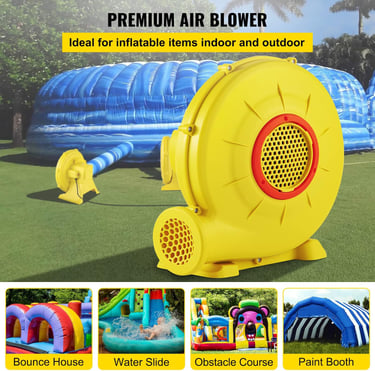
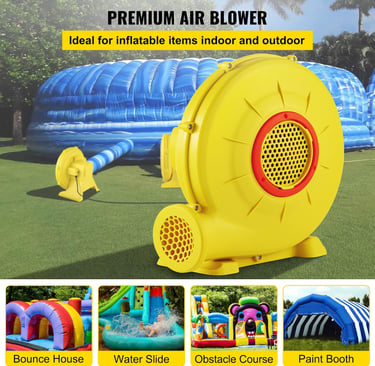
VEVOR Air Blower 450W
Search phrase: VEVOR bounce house blower 450W inflatable air pump
What it is
A compact electric blower designed to continuously inflate residential bounce houses.
Why it works
It maintains constant airflow pressure, compensating for natural air leakage in inflatable seams.
Size / footprint
Small handheld base unit designed for easy transport and ground placement near inflatable intake tubes.
Material & durability
Rigid plastic housing with internal electric motor designed for continuous operation during events.
Best user / age range
Ideal for all residential bounce house users regardless of child age group. Make sure you select the size needed by your bounce house.
Why buyers like it
Consistent airflow eliminates sagging and keeps bounce surface firm during extended play sessions.
Safety or usage notes
Requires proper outdoor-rated extension cords and dry placement to avoid electrical hazards.
A dependable airflow solution that keeps the bounce house consistently inflated without interruption.
Safety Notes
Accessories directly influence safety outcomes more than most buyers realize.
Key safety considerations:
Anchoring strength matters more than bounce house size
Loose stakes can cause lateral shifting during play
Weak blowers can cause partial deflation and instability
Tarps reduce ground abrasion that weakens underside seams
Sandbags are critical on non-grass surfaces (driveways, patios)
If your current anchors are too short, too light or poorly matched to the surface, Best Bounce House Accessories (2026): Stakes, Blowers, Tarps and Sandbags compares the equipment that can correct those weak points.
Surface-specific risks:
Grass: best grip for stakes
Dirt: moderate stability
Concrete: requires sandbags or weighted systems
For deeper structural safety context, see Bounce House Anchoring Guide (2026): Stakes, Sandbags & Stability Physics which explains how force distribution affects inflatable movement.
Buying Considerations
Choosing bounce house accessories is less about “extras” and more about system reliability. Each accessory solves a different failure point in backyard inflatable setups.
1. Anchoring priority (stakes vs sandbags)
Your first decision is surface type:
Grass → stakes are primary anchor system
Concrete / patio → sandbags are required
Mixed surfaces → combination system works best
If anchoring is weak, everything else becomes secondary.
For deeper setup failure prevention, see Bounce House Setup Mistakes to Avoid (2026) which explains how most stability issues start during installation.
2. Airflow stability (blower selection matters more than people think)
A bounce house does not stay inflated passively—it depends on constant airflow balance.
Key considerations:
Underpowered blowers cause sagging and uneven bounce zones
Overpowered blowers can stress seams over time
Incorrect hose fit causes air leakage at intake connection points
Even small airflow inconsistencies change bounce performance noticeably.
For airflow troubleshooting, see Bounce House Blower Troubleshooting (2026 Guide).
3. Ground protection (tarps extend lifespan significantly)
A ground tarp is often overlooked but plays a major role in:
Reducing abrasion under the inflatable
Blocking dirt intrusion into seams
Preventing moisture buildup from ground contact
Without a tarp, even high-quality bounce houses degrade faster due to constant micro-friction.
For full protection strategies, see Bounce House Repair, Cleaning & Mold Prevention (2026 Master Guide).
4. Environmental exposure (wind is the silent risk factor)
Accessories also help manage environmental stress:
Stakes reduce lateral movement
Sandbags stabilize hard surfaces
Proper blower placement reduces electrical exposure risks
Even light wind can amplify instability if anchoring is weak.
For full environmental thresholds, see Bounce House Weather Guide (2026): Wind, Rain & Temperature Rules.
Yard Size / Fit Considerations
Accessories must match yard conditions—not just bounce house size.
Small yards:
Sandbags often outperform stakes due to limited soil depth
Compact blowers are easier to position safely
Tarps are essential to reduce edge wear in tight spaces
Medium yards:
Stakes become primary stability system
Combination anchoring improves safety margin
Standard blowers perform efficiently
Large yards:
Multiple anchor points required
Wind exposure becomes more significant
Larger tarps recommended for full base coverage
For precise fit planning, see Bounce House Size Calculator (2026): Yard Fit & Space Requirements which helps match inflatable footprint to usable ground space.
Setup
Proper setup is where accessories either work together—or fail individually.
A stable bounce house system depends on sequence and balance, not just equipment quality.
Step 1: Ground prep
Clear sticks, rocks, and debris
Lay down a protective tarp if available
Ensure surface is level enough to prevent shifting
Ground prep directly impacts anchoring performance and fabric wear.
For full prep details, see Bounce House Yard Prep Guide (2026): Slope, Clearance & Surface Types.
Step 2: Position blower first
Place blower on dry, stable surface
Ensure intake is unobstructed
Keep extension cords elevated and safe
Blower placement affects inflation consistency and seam stress distribution.
For electrical safety, see Power, Extension Cords & Blower Guide (2026).
Step 3: Anchor before full inflation
Insert stakes or position sandbags at corners
Secure all anchor points loosely first
Then fully inflate and tighten final tension
Anchoring after inflation is a common cause of shifting and instability.
For anchoring systems, see Bounce House Anchoring Guide (2026): Stakes, Sandbags & Stability Physics.
Step 4: Final stability check
Walk perimeter and test movement resistance
Confirm blower hose is tightly sealed
Check for air leaks or soft spots
A stable bounce house should feel firm with no lateral drift during use.
Maintenance
Accessories also require maintenance—not just the inflatable.
Stakes:
Inspect for bending after each use
Remove soil buildup to prevent corrosion
Store dry to extend lifespan
Blowers:
Clean air intake regularly
Avoid moisture exposure
Check cord integrity before use
Tarps:
Shake off debris after each setup
Dry fully before storage
Sandbags:
Inspect seams and fill consistency
Avoid overfilling beyond rated capacity
For full inflatable upkeep, see How to Clean a Bounce House (2026 Guide).
Storage
Proper storage preserves accessory performance over time.
Stakes should be stored in dry containers to prevent rust
Blowers must be stored indoors in moisture-free environments
Tarps should be folded clean and dry to avoid mold growth
Sandbags should be fully dry before storage to prevent material breakdown
Poor storage practices often reduce accessory lifespan faster than usage itself.
For long-term care strategies, see Bounce House Storage Guide (2026): Folding, Drying & Long Term Care.
Key Takeaways
Accessories are essential—not optional—for safe setups
Stakes dominate grass-based stability systems
Sandbags are required for hard surfaces
Blowers control bounce performance consistency
Tarps extend overall system lifespan
Most safety issues come from setup—not equipment
Mini Conclusion
Bounce house accessories are what turn a simple inflatable into a controlled, stable play system.
When stakes, blowers, tarps, and sandbags work together, you reduce setup risk, improve bounce quality, and extend equipment life significantly.
Choosing the right combination is less about buying everything—and more about matching tools to your actual yard and usage conditions.
Related Articles
Are Bounce Houses Safe? (2026 Parent Guide)
Bounce House Safety for Parents (2026): Age, Weight & Weather Rules
Bounce House Setup Mistakes to Avoid (2026)
Bounce House Anchoring Guide (2026): Stakes, Sandbags & Stability Physics
Bounce House Weather Guide (2026): Wind, Rain & Temperature Rules
Best Bounce Houses by Age Group (2026 Guide)