
Home > Setup, Safety, and Repairs > Power and Extension Cords > When to Replace Outdoor Extension Cords (and Signs They're No Longer Safe)
When to Replace Outdoor Extension Cords (and Signs They're No Longer Safe)
Wondering if your outdoor extension cord is still safe? Learn the warning signs, how to inspect cords, when to replace them, and how to protect your holiday inflatable display.
By Frank "Frosty" Adminei
7/7/202613 min read
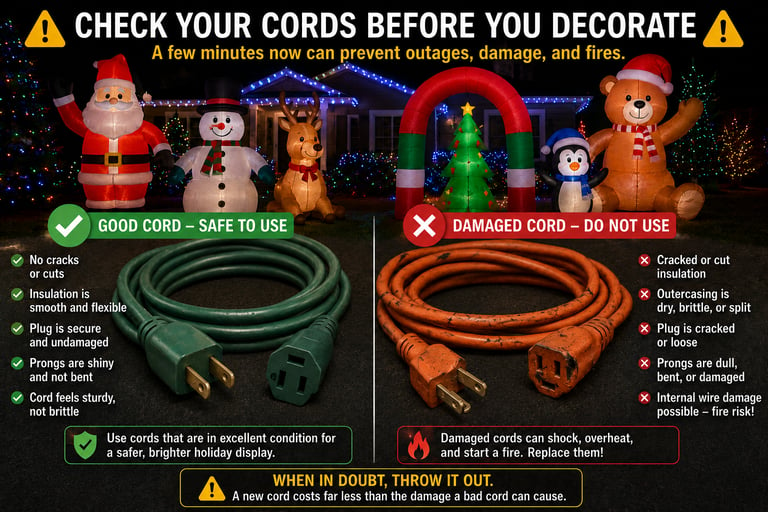
Table of Contents
Introduction
Outdoor extension cords are one of the hardest-working parts of any inflatable holiday display. They sit in rain, snow, freezing temperatures, blazing summer sun, muddy lawns, and crowded walkways while quietly delivering power to your decorations.
Unfortunately, many homeowners continue using the same extension cords year after year without ever inspecting them.
That's a mistake.
Unlike an inflatable that obviously won't inflate when it fails, an extension cord can continue working even after it has developed dangerous damage. Cracked insulation, loose plug blades, internal wire breaks, overheating, and moisture intrusion often develop slowly over multiple decorating seasons. A cord may still power your display while becoming increasingly unsafe each year.
The good news is that identifying a worn-out extension cord usually takes less than a minute. Knowing what to look for can help you avoid damaged inflatables, nuisance breaker trips, expensive blower replacements, and unnecessary safety risks.
This guide explains exactly when an outdoor extension cord should be replaced, which warning signs require immediate action, and how to choose a better replacement that will last through many future decorating seasons.
Who This Guide Is For
This guide is designed for homeowners who:
decorate for Christmas, Halloween, Easter, Fourth of July, or other holidays
power one or multiple outdoor inflatables
use outdoor extension cords every year
aren't sure whether an older cord is still safe
want realistic guidance instead of simply being told to buy a new cord
want to prevent future electrical problems before they happen
Whether you're powering one small inflatable or an entire neighborhood display, the same inspection principles apply.
Why This Matters
A quality outdoor extension cord can often provide years of reliable service—but only if it remains in good condition and is used within its electrical limits.
Many extension cord failures don't happen because the cord is old. They happen because the cord has experienced years of abuse from:
ultraviolet sunlight
freezing temperatures
repeated bending
lawn equipment
pets and wildlife
vehicle traffic
overloaded electrical circuits
improper storage
One damaged section hidden beneath leaves or snow can create enough resistance to generate heat, reduce voltage to your blower, or eventually fail when you least expect it.
If you've ever experienced a blower that suddenly stopped running or a breaker that repeatedly trips, it's worth reading Why Your Outdoor Inflatable Keeps Tripping the Breaker (And How to Fix It) as well. That guide explains how worn cords, overloaded circuits, and voltage issues often work together to create recurring display problems.
The Short Answer: When Should You Replace an Outdoor Extension Cord?
If your outdoor extension cord shows any sign of electrical damage, replace it.
While it may be tempting to keep using a cord that "still works," visible damage is often only part of the problem. Internal conductors can weaken long before the cord stops supplying power.
Replace an outdoor extension cord immediately if you notice:
cracked or brittle insulation
exposed copper wire
melted plastic
burn marks
missing ground pin
loose plugs that won't stay firmly connected
cuts or crushed sections
evidence of overheating
severe corrosion
water intrusion inside connectors
animal chew marks
repeated breaker trips that disappear when using another cord
Age alone is not a reason to replace a cord.
A well-made outdoor cord that has been properly stored may remain perfectly serviceable after many years, while a cheaper cord exposed to constant sun, moisture, and physical abuse may require replacement after only a few seasons.
If you're replacing a cord because it has become too small for your growing display—not because it's damaged—you may also want to read Best Outdoor Extension Cords for Holiday Inflatables (2026 Buyer's Guide), which explains when moving from 16-gauge to heavier 14- or 12-gauge cords makes sense for longer runs and multiple inflatables.
12 Warning Signs Your Outdoor Extension Cord Is No Longer Safe
1. Cracked or Brittle Insulation
One of the most common signs of an aging extension cord is insulation that feels dry, stiff, or brittle.
Outdoor cords spend months exposed to:
sunlight
freezing temperatures
moisture
repeated flexing
Over time, the protective outer jacket begins to lose flexibility. Small surface cracks may not seem serious, but they allow moisture to reach the inner conductors and often grow larger with each season.
If you notice cracking anywhere along the cord—especially near the plug ends—replacement is usually the safest option.
2. Exposed Copper Wire
If you can see bare copper anywhere on the cord, stop using it immediately.
Even a tiny opening in the insulation can expose energized conductors to moisture, metal objects, pets, or people. Exposed wire also increases the likelihood of short circuits, overheating, and nuisance breaker trips.
There is no safe temporary fix for exposed conductors on an outdoor extension cord. Replace the cord rather than attempting to cover the damage with electrical tape.
3. Melted or Discolored Plug Ends
Healthy plugs should remain cool and maintain their original shape.
If the plastic around either plug begins to discolor, soften, warp, or melt, excessive heat has already been generated at the connection. This usually indicates a loose connection, corrosion, overloading, or internal damage.
A melted plug is a replace-immediately condition.
4. Loose Connections That Wiggle Easily
A properly connected extension cord should fit securely into both the outlet and the female connector.
If plugs pull apart easily, wobble excessively, or intermittently lose power when bumped, the connection may be worn enough to create electrical resistance and heat.
Loose connections are also much more likely to allow moisture into the connection during rain or snow.
5. Missing Ground Pin
The round grounding pin on a three-prong extension cord is an important safety feature—not an optional extra.
Unfortunately, many outdoor cords end up with broken or intentionally removed ground pins after years of use. Some homeowners even cut off the grounding pin so the cord fits an older two-prong outlet, creating a significant safety hazard.
Replace the cord immediately if:
the ground pin is missing
the ground pin is loose
the pin has become badly bent
corrosion prevents proper electrical contact
Never use an adapter or modify a grounded outdoor extension cord to fit an ungrounded outlet.
6. The Plug Feels Hot After Running Your Display
A properly sized extension cord should remain only slightly warm during normal operation.
After your inflatables have been running for 20–30 minutes, unplug the display and carefully check:
the male plug
the female connector
the first foot of cord near each plug
the middle of the cord
Normal
cool
slightly warm
Warning
noticeably warm
uncomfortable to hold
Replace Immediately
hot plastic
soft plug
burning smell
melted insulation
Excessive heat usually indicates one or more of these problems:
overloaded circuit
damaged conductor
loose connection
undersized extension cord
failing plug
If you repeatedly notice heat buildup, don't simply replace the cord. Also determine whether your electrical load exceeds the cord's capacity. Our guide How to Power Multiple Outdoor Inflatables Safely Without Overloading Your Circuit explains how to calculate safe loads before damage occurs.
7. Cuts, Crushing, or Flattened Sections
Outdoor extension cords are frequently damaged by:
lawn mowers
snow blowers
garage doors
patio furniture
ladders
vehicle tires
landscaping equipment
Even if the outer jacket isn't completely cut through, crushing can permanently damage the copper conductors inside the insulation.
Watch for:
flattened spots
deep cuts
permanent kinks
bulges
sections that no longer feel round
These indicate the cord's internal structure may already be compromised.
8. Animal Damage
Holiday decorators often discover small chew marks after cords have been sitting outdoors for weeks.
Common culprits include:
squirrels
rabbits
mice
chipmunks
pets
Tiny bite marks can expose insulation to moisture long before bare copper becomes visible.
If teeth have penetrated the insulation, replacement is usually the safest option.
9. Corrosion on Plug Blades
Outdoor plugs are constantly exposed to:
humidity
road salt
fertilizer
rain
snow
condensation
Light discoloration is usually cosmetic.
However, replace the cord if you see:
green corrosion
heavy rust
pitting
blackened blades
burned contacts
Corroded plugs create electrical resistance, which increases heat generation during operation.
10. Water Inside the Connector
Outdoor-rated extension cords are weather resistant—not waterproof.
If water repeatedly enters the plug connection, corrosion develops much faster.
Signs include:
visible moisture
condensation
mineral deposits
corrosion
intermittent power
Rather than replacing cords every season, protect future connections with properly sized weatherproof connection covers or electrical connection boxes.
If your display frequently operates in rain or snow, Best Weatherproof Cord Connection Boxes for Outdoor Decorations explains how to protect these vulnerable connection points much more effectively.
11. The Cord Has Become Extremely Stiff
Flexibility is one of the easiest ways to judge cord health.
If a cord that was once flexible now feels:
rigid
difficult to coil
prone to cracking
unusually hard in moderate temperatures
the insulation has likely deteriorated.
Cold-weather-rated SJTW cords generally remain flexible much longer than inexpensive light-duty cords.
If your decorating season regularly includes freezing temperatures, upgrading to a better cold-weather cord may prevent repeated replacement cycles.
12. The Problem Disappears When You Use Another Cord
Sometimes the biggest clue isn't visible at all.
Suppose:
the inflatable blower struggles to start
lights flicker
breakers occasionally trip
decorations randomly shut off
Then you replace only the extension cord.
Everything suddenly works normally.
That strongly suggests the original cord had developed excessive resistance or an intermittent internal failure.
If replacing one extension cord consistently solves the problem, retire the old cord permanently rather than keeping it as a "backup."
Does Age Alone Mean You Should Replace an Extension Cord?
One of the biggest misconceptions is that extension cords have a fixed lifespan.
They don't.
A high-quality outdoor extension cord that's used for six weeks each year, inspected regularly, and stored correctly can remain perfectly serviceable for many years.
Meanwhile, a cheaper cord that's left outside year-round may become unsafe after only a few seasons.
Instead of asking:
"How old is this cord?"
Ask:
Has the insulation remained flexible?
Are the plugs still tight?
Has it ever overheated?
Has it been crushed or cut?
Has it been exposed to prolonged sunlight?
Does it still pass a careful inspection?
Hidden Damage You Can't Always See
Some of the most dangerous extension cord failures occur where no obvious damage is visible.
Internal copper conductors can slowly fracture after years of:
wrapping cords too tightly
repeatedly pulling by the cord instead of the plug
slamming cords in doors
dragging cords across concrete
stretching cords under tension
placing heavy decorations directly on top of them
The outside jacket may appear perfectly intact while the electrical pathway inside has already weakened.
Common symptoms include:
intermittent power
blower motors slowing unexpectedly
decorations working only when the cord is positioned a certain way
random breaker trips
unexplained voltage loss
These issues are often blamed on the inflatable itself when the real culprit is hidden inside the extension cord.
If you've experienced mysterious electrical problems that seem impossible to reproduce, you'll also find useful troubleshooting examples in Real-World Holiday Decoration Power Setup Fails (And How to Prevent Them).
How to Inspect an Outdoor Extension Cord in Less Than One Minute
Before every decorating season, spend one minute inspecting each extension cord.
30-Second Inspection Checklist
Step 1
Run the entire cord through your hands.
Look for:
cuts
cracks
flattened areas
chew marks
stiff sections
Step 2
Inspect both plug ends.
Check for:
bent blades
corrosion
melted plastic
missing ground pin
loose strain relief
Step 3
Gently bend the cord near each plug.
If cracking appears or the insulation separates, retire the cord.
Step 4
Plug the cord into a known-good outlet.
Verify:
snug connection
no wobble
no sparking
no unusual sounds
Step 5
After 20–30 minutes of operation, feel both ends.
Warm is generally acceptable.
Hot is not.
Seasonal Damage That Shortens Extension Cord Life
Holiday decorators expose extension cords to conditions that change dramatically throughout the year.
Spring
Spring displays often suffer damage from:
lawn mowing
edging
mulch installation
muddy ground
standing water
Always inspect cords before storing them after Easter or spring decorating.
Summer
Summer is particularly hard on cord jackets because prolonged UV exposure slowly dries and weakens the insulation.
High temperatures also accelerate aging when cords are left in direct sunlight.
Halloween
Halloween displays are frequently installed and removed quickly, increasing the chances of cords being pinched under decorations, stepped on by visitors, or damaged during setup.
Christmas
Winter introduces an entirely different set of problems:
snow accumulation
ice
repeated freeze-thaw cycles
road salt
frozen storage
moisture trapped inside connectors
One of the best ways to reduce winter damage is protecting plug connections inside weatherproof electrical boxes instead of leaving them exposed on the ground. Proper cord management also helps prevent repeated bending and accidental crushing.
Can You Repair an Outdoor Extension Cord—Or Should You Replace It?
This is one of the most common questions homeowners ask every decorating season.
The answer is simple:
Most damaged outdoor extension cords should be replaced, not repaired.
While replacement plug ends exist and electricians sometimes repair cords in commercial settings, most homeowners are better served by replacing a damaged cord. Outdoor holiday displays are exposed to rain, snow, freezing temperatures, UV exposure, and heavy seasonal use. A questionable repair often introduces another potential failure point.
When Replacement Is the Only Safe Option
Replace the entire extension cord if you find:
Cracked or split insulation
Exposed copper conductors
Melted plugs
Burn marks
Crushed sections
Internal overheating
Missing ground pin
Water intrusion inside the molded plug
Severe corrosion
Animal chew damage through the insulation
None of these conditions should be repaired with electrical tape.
Likewise, avoid heat-shrink tubing or homemade waterproofing attempts on cords that already have structural damage. These products may hide the damage without restoring the cord's original safety rating.
What About Replacing the Plug?
Inline replacement plugs can technically repair a cord whose only damage is a broken plug end.
However, before spending time repairing an older cord, ask yourself:
Is the insulation still flexible?
Has the cord already seen many seasons?
Would a heavier gauge cord better fit my display now?
Is this cord otherwise in excellent condition?
For most holiday decorators, investing in a new outdoor-rated cord is usually the safer and more future-proof solution.
Choosing the Right Replacement Cord
If you're replacing an extension cord, don't automatically buy the exact same model.
Your display may have grown since you purchased the original cord.
You may now benefit from:
a heavier gauge
better cold-weather flexibility
improved visibility
longer length
lighted connector ends
improved weather resistance
Budget Replacement
Ideal for:
one inflatable
shorter runs
light electrical loads
Recommended examples:
These are excellent replacements when the original cord failed simply because of age or physical damage—not because it was undersized.
Mid-Range Upgrade
If your display has expanded to several inflatables, it's often worth moving beyond basic 16-gauge cords.
Advantages include:
reduced voltage drop
cooler operation
improved durability
better long-term reliability
For medium displays, the Southwire Yellow Jacket 14-gauge cord offers an excellent balance between flexibility and carrying capacity.
Heavy-Duty Upgrade
If you routinely power:
several inflatables
long cord runs
large blowers
multiple accessories
consider stepping up to a 12-gauge outdoor cord.
Good approved choices include:
The heavier conductors reduce voltage loss over longer distances while remaining much cooler under higher loads.
For readers planning larger displays, Best Outdoor Extension Cords for Holiday Inflatables (2026 Buyer's Guide) explains exactly when each gauge becomes the better choice.
How to Make Your Next Extension Cord Last Longer
Buying a quality replacement cord is only half the equation.
How you use and store it determines whether it lasts three years—or fifteen.
Protect Every Plug Connection
The cord itself is rarely the first component to fail.
Most failures occur where plugs connect.
Protect those connections using:
For displays with timers, power strips, or multiple connections, larger weatherproof boxes such as the Hrensaw, OUTDSPLY, or Flemoon models offer much better long-term protection.
Keep Connections Off the Ground
Snow, puddles, mulch, and wet grass constantly expose connectors to moisture.
Whenever possible:
elevate connections
secure cords to stakes
use weatherproof boxes
avoid laying plugs directly in standing water
Use GFCI Protection
Ground-fault protection is inexpensive insurance.
If your outlet isn't already GFCI protected, consider using approved GFCI extension cords or outdoor GFCI power strips for additional protection.
Avoid Overloading
One overloaded extension cord ages much faster than several properly loaded cords.
If your display has expanded over the years, revisit your electrical planning rather than simply adding more splitters.
Our guide How Many Inflatables Can One Circuit Handle? explains safe circuit loading with practical examples.
Store Cords Correctly
At the end of each season:
wipe cords clean
allow them to dry completely
coil loosely
avoid tight bends
use storage straps
hang them off the floor
The VELCRO and ZTSXLLIM storage organizers make this much easier while reducing strain on the insulation.
Protect Against Trips and Abrasion
Busy walkways are hard on extension cords.
Where cords cross sidewalks or driveways, use heavy-duty cord protectors instead of leaving cords exposed to foot traffic.
Likewise, secure long runs with clips or cable clamps so they aren't repeatedly pulled or dragged across rough surfaces.
For additional setup ideas, see Best Outdoor Cord Management Accessories for Holiday Displays (Clips, Stakes, Covers & Safer Setup Guide).
Key Takeaways
Replace any outdoor extension cord with cracked insulation, exposed copper, overheating, or a missing ground pin.
Age alone doesn't determine whether a cord is safe—condition does.
Inspect every cord before each decorating season and after severe weather.
Don't repair structurally damaged outdoor extension cords with tape or temporary fixes.
Upgrading to a heavier-gauge cord often improves reliability as your display grows.
Protect plug connections with weatherproof covers and boxes to extend cord life.
Proper storage and load planning can add years to the life of a quality outdoor extension cord.
Mini Conclusion
A quality outdoor extension cord is one of the least expensive components of your holiday display, yet it's responsible for safely delivering power to everything else. Replacing a worn cord before it fails is far cheaper than replacing blower motors, troubleshooting nuisance breaker trips, or rebuilding part of your display after an avoidable electrical problem.
Think of every pre-season inspection as inexpensive insurance. A one-minute inspection and a timely replacement can help keep your inflatables running safely through every Christmas, Halloween, Easter, patriotic celebration, and other seasonal display for years to come.
Frequently Asked Questions
How often should outdoor extension cords be replaced?
There is no fixed replacement schedule. Inspect them before every season and replace them whenever you find structural damage, overheating, missing ground pins, or deteriorating insulation.
Can extension cords expire?
Not by age alone. Properly stored, lightly used outdoor cords can last many years. Damage and wear—not birthdays—determine when replacement is necessary.
Is a stiff extension cord unsafe?
Sometimes. Stiffness often indicates aging insulation. If the cord also shows cracking or brittleness, replace it.
Can sunlight damage extension cords?
Yes. Years of UV exposure gradually dry and weaken insulation, making it more susceptible to cracking.
Is it safe to tape a damaged extension cord?
No. Electrical tape does not restore the original insulation or safety rating of an outdoor extension cord.
Why does my extension cord get hot?
Heat usually indicates excessive electrical load, loose connections, corrosion, or internal conductor damage. Investigate the cause and replace the cord if damage is found.
Can cold weather damage extension cords?
Repeated freezing can accelerate cracking in lower-quality cords. Cold-weather-rated SJTW cords generally remain flexible much longer.
Should I replace a cord after flooding?
If water entered the plug ends or the cord shows corrosion afterward, replacement is the safest option.
Can I leave outdoor extension cords outside all year?
Outdoor-rated cords tolerate weather much better than indoor cords, but storing them indoors when not in use significantly extends their service life.
What gauge extension cord is best for holiday inflatables?
That depends on cord length and electrical load. Larger displays often benefit from 14-gauge or 12-gauge cords to reduce voltage drop and improve overall performance.
Related Articles
If you're expanding or improving your outdoor power setup, these guides are excellent next reads:
Best Outdoor Extension Cords for Holiday Inflatables (2026 Buyer's Guide) — Compare gauges, lengths, cold-weather performance, and the best options for different display sizes.
Extension Cord Mistakes That Cause Outdoor Inflatable Failures (Gauge, Length, and Voltage Drop Explained) — Learn how common cord selection mistakes reduce blower performance and trip breakers.
Best Weatherproof Cord Connection Boxes for Outdoor Decorations — Protect plugs, timers, and power strips from rain, snow, and ice.
How to Power Multiple Outdoor Inflatables Safely Without Overloading Your Circuit — Plan larger displays without overloading household circuits.
Real-World Holiday Decoration Power Setup Fails (And How to Prevent Them) — See real-world examples of electrical mistakes and the simple solutions that prevent them.
InflatableHoliday.com
Practical decorating ideas, buying guides, and setup and maintenance advice for outdoor holiday inflatables throughout the year.
Affiliate Disclosure
As an Amazon Associate I earn from qualifying purchases. Some links on this page are affiliate links — if you buy through them, InflatableHoliday may earn a commission at no extra cost to you. Prices and availability change, so the price you see on Amazon is the one that counts.
© 2026 InflatableHoliday.com