
Home > Setup, Safety, and Repairs > Outdoor Power Accessories >Best Weatherproof Cord Connection Boxes for Outdoor Decorations
Best Weatherproof Cord Connection Boxes for Outdoor Decorations
A complete guide to choosing the best weatherproof cord connection boxes for outdoor holiday decorations, including quick recommendations, comparison tables, safety tips, and solutions for preventing water intrusion and GFCI trips.
By Frank “Frosty” Adminei
7/8/20267 min read
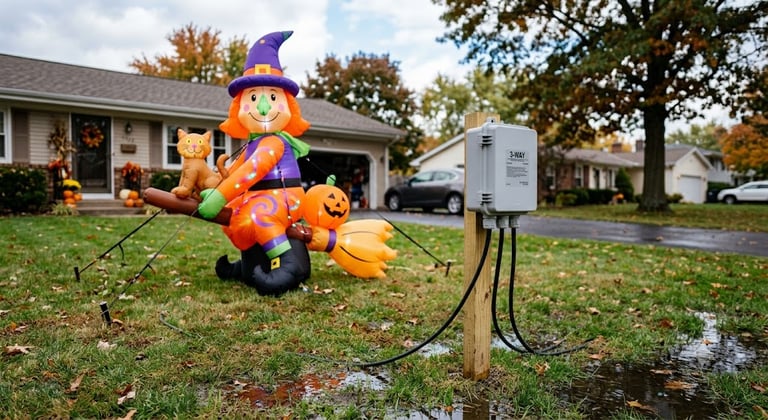
Table of Contents
Why cord boxes matter for holiday decorations
Outdoor holiday displays look magical, but the power connections behind them are often exposed to rain, snow, and ground moisture. The plug‑to‑plug connection is the weak point in every setup, and when it gets wet, inflatables collapse, lights shut off, and GFCI outlets trip. A weatherproof cord connection box protects that vulnerable point so your display stays running reliably through storms and freezing temperatures.
Cord boxes also help keep cords organized and reduce strain when decorations sway in the wind. If you have pets or kids who roam near your display, keeping connections contained is even more important. For deeper safety guidance, you can read How to Protect Your Pets: Outdoor Power Cord Safety Tips, which explains how to keep cords safe around animals.
Quick recommendations
Here are the fastest, most reliable picks for most holiday setups:
Flemoon Large Outdoor Electrical Box — Best overall for inflatables and large adapters.
Cismorvex 2‑Latch Outdoor Extension Cord Safety Cover — Best budget option for simple plug‑to‑plug connections.
Iwillink 2‑Pack Outdoor Extension Cord Cover — Best compact option for small decorations and light strings.
Hrensaw Small/Medium Weatherproof Box — Best for oversized plugs and deeper adapters.
Outdoor power stakes (Tiffcofio, Dewenwils, Suraielec) — Best for multi‑cord setups needing elevated, covered outlets.
If you’re planning a multi‑inflatables layout, the article How to Power Multiple Outdoor Inflatables Safely Without Overloading Your Circuit explains how to distribute load safely.
What makes a cord connection box truly weatherproof
A weatherproof cord box must keep moisture out while allowing cords to enter without gaps. IP ratings matter: IP44 protects against splashing water, IP54 adds dust resistance and better sealing, and IP65 offers stronger water resistance. For holiday displays, IP54 is typically the sweet spot.
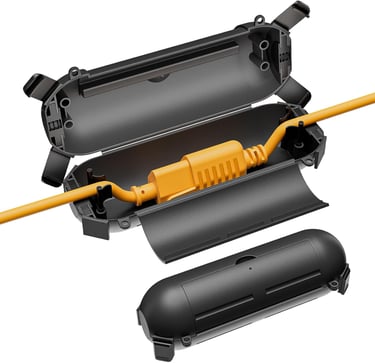
Gasket quality is critical. A thick, continuous rubber gasket that compresses evenly provides far better moisture resistance than thin or uneven seals. Latch design also affects sealing: two‑latch, four‑latch, or hinged lids help pull the lid down evenly. Cord entry ports should grip the cord without pinching it, preventing water from wicking inside.
Cold weather can stiffen gaskets and make plastic brittle. For a deeper explanation of why some boxes still leak in harsh conditions, the article Why Weatherproof Outdoor Electrical Boxes Still Fail in Rain, Snow, and Ice (And How to Fix Them for Good) breaks down the most common failure modes.
What fits inside: size, cord gauge, and adapter compatibility
Cord gauge affects fit. Many holiday decorations use 16 AWG cords, which fit easily through most entry ports. Heavier SJTW cords (14 AWG or 12 AWG) may require larger boxes like Flemoon or Hrensaw.
Bulky adapters—like those used for inflatables, timers, and smart plugs—often require deeper enclosures. Capsule‑style covers like Iwillink or Cismorvex are great for simple connections but may not close around oversized plugs.
Placement matters too. Boxes sitting directly on the ground are more likely to end up in puddles or snow. Mounting them on a wall, fence, or stake keeps them drier. For more guidance on matching cords and boxes, the article Outdoor Extension Cords and Power Setups for Spring Inflatables (Beginner Safe Guide) offers a helpful overview.
How to choose the right weatherproof cord box
Start by mapping your display: count how many connections you have, note which ones use large adapters, and identify where cords converge. Compact covers like Cismorvex or Iwillink work well for simple setups. Larger boxes like Flemoon or Hrensaw are better for inflatables, timers, and smart plugs.
Climate matters. In rainy or snowy regions, prioritize IP54 boxes with strong gaskets. If you frequently adjust timers or smart plugs, choose a hinged design for easier access.
Power stakes from Tiffcofio, Dewenwils, or Suraielec can simplify complex layouts by providing elevated, covered outlets. For a broader look at planning safe, efficient power, the article The Ultimate Guide to Powering Outdoor Inflatables Safely: Extension Cords, GFCI Protection, Weatherproofing and Load Planning is a valuable reference.
Best weatherproof cord connection boxes
Flemoon Large Outdoor Electrical Box
1. Summary
Best for homeowners with larger or growing holiday displays, the Flemoon Large Outdoor Electrical Box provides generous interior space for multiple extension cords, timers, smart plugs, and bulky adapters. Its multiple cable entry ports make it one of the most versatile options for expanding outdoor displays.
2. Best For
Large holiday displays, multiple inflatables, oversized adapters, timers, smart plugs, and homeowners planning to expand their display over time.
3. Key Features
IP54 rating
Multiple cable entry ports
Wall‑mountable design
Thick gasket and secure clips
4. Pros
Excellent interior space
Strong sealing performance
Works with 12–16 AWG cords
5. Cons
Larger footprint than capsule covers
Cismorvex 2‑Latch Outdoor Extension Cord Safety Cover
1. Summary
Best for homeowners protecting a single extension cord connection, the Cismorvex 2-Latch Safety Cover is an affordable solution for simple plug-to-plug setups. Its hinged design makes installation quick while providing dependable weather protection for everyday outdoor decorations.
2. Best For
Single extension cord connections, small holiday displays, light strings, pathway decorations, and homeowners who want an inexpensive solution for protecting one outdoor plug connection.
3. Key Features
IP54 rating
Two‑latch locking system
Integrated cord clamps
4. Pros
Affordable
Easy to use
Good seal for its size
5. Cons
Too small for large adapters
Iwillink 2‑Pack Outdoor Extension Cord Cover
1. Summary
Best for homeowners protecting multiple small decorations, the Iwillink 2-Pack Outdoor Extension Cord Covers include two compact weatherproof enclosures for light strings, pathway lighting, and other simple outdoor plug connections. Because you get two covers, they're a practical choice when your decorations are spread around the yard instead of grouped in one location.
2. Best For
Small holiday displays, light strings, pathway lighting, patio decorations, and simple extension cord connections located in different areas of your yard.
3. Key Features
IP44 rating
Slim capsule design
Sold as a 2‑pack
4. Pros
Very lightweight
Easy to store
Good for low‑profile setups
5. Cons
Not suitable for bulky adapters
Hrensaw Small/Medium Weatherproof Electrical Box
1. Summary
Best for homeowners who need extra depth without moving to a full-size electrical box, the Hrensaw Small/Medium Weatherproof Electrical Box easily accommodates oversized plugs, timers, and power strips that won't fit inside smaller capsule-style covers. Its deeper design provides extra flexibility while remaining compact enough for most holiday displays.
2. Best For
Oversized plugs, bulky adapters, timers, smart plugs, power strips, and homeowners who need more interior space without using a full-size weatherproof enclosure.
3. Key Features
IP54 rating
Deep interior
Multiple cable ports
4. Pros
Excellent depth
Strong latch strength
Works with larger cords
5. Cons
Larger and heavier than compact capsule-style covers if you only need to protect one simple plug connection.
Best Outdoor Power Stakes (Tiffcofio, Dewenwils, Suraielec)
1. Summary
Best for homeowners managing several extension cords in one area, outdoor power stakes create a centralized power hub while keeping outlets elevated above wet ground. Many models also include built-in timers, photocells, or remote controls, making larger holiday displays easier to organize and manage.
2. Best For
Large holiday displays, multiple inflatables, outdoor lighting, and homeowners who want to organize several extension cords in one central location.
3. Key Features
Covered outlets
Overload protection
Optional timers or remotes
4. Pros
Keeps outlets off the ground
Reduces need for multiple boxes
Very convenient for complex layouts
5. Cons
Does not replace weatherproof connection boxes. Individual plug connections that rest on the ground still need their own weatherproof protection.
How to install and seal a cord box correctly
Place the plug connection inside the box with enough slack to avoid strain.
Use cable clamps or strain relief features to secure cords.
Close the lid firmly and ensure the gasket compresses evenly.
Create a drip loop so water runs away from the box.
Mount the box on a stake, wall, or fence to keep it off the ground.
For inflatable blowers and similar setups, the article Powering a Bounce House Safely: Extension Cords, Blowers & Electrical Setup Guide (2026) provides a helpful step‑by‑step overview.
GFCI safety and why boxes still trip
Even with a cord box, moisture can reach outlets, plug blades, or damaged cord insulation. Large adapters that prevent a box from closing fully can also create gaps. Using outdoor‑rated GFCI extension cords or inline GFCI plugs adds protection, especially for displays far from the house.
Smart plugs and timers can reduce the number of adapters inside each box, improving sealing. For a seasonal example, the article Ultimate Guide to Powering Your Easter Inflatables Safely explains how GFCI protection fits into safe outdoor decorating.
Troubleshooting common failures
Water inside the box: Clean the gasket, reposition cords, and elevate the box.
Frequent GFCI trips: Inspect outlets for cracked covers or damaged cords.
Broken latches: Replace the box—don’t improvise fixes.
Adapters not fitting: Upgrade to a larger enclosure.
Boxes sitting in puddles: Mount them on stakes or walls.
For real‑world examples, the article Real‑World Outdoor Inflatable Power Problems and How to Fix Them walks through common scenarios.
Best accessories to pair with your cord box
SJTW extension cords: Designed for outdoor use and temperature swings.
Power stakes: Provide elevated, covered outlets.
GFCI adapters: Add shock protection.
Outdoor timers: Automate your display.
Smart plugs: Enable remote control and scheduling.
If you’re curious about energy usage, the article Uncover the Surprising Energy Costs of Holiday Decorations breaks down real‑world consumption.
Common mistakes that cause boxes to fail
Placing boxes directly on the ground
Overstuffing boxes
Using indoor cords outdoors
Forcing thick cords through small entry ports
Ignoring seasonal wear and tear
For more energy‑smart decorating ideas, the article Top Halloween Display Ideas to Save Energy and Money offers practical guidance.
Weatherproof boxes protect plug connections, but they work best when paired with the properly sized extension cords recommended in Best Outdoor Extension Cords for Halloween.
FAQs
Are these boxes waterproof?
They are water‑resistant, not fully waterproof. They protect against rain and splashes but should not be submerged.
Can I bury a cord box?
No. Always keep them above ground and ideally elevated.
Will a cord box stop all GFCI trips?
It helps, but moisture can still reach outlets or damaged cords.
What size box do I need?
Match the box to your largest adapter.
Are they safe in snow?
Yes, when properly sealed and elevated.
Can I run multiple inflatables from one box?
Use a power stake or large box designed for multi‑cord setups. The article How to Power Multiple Outdoor Inflatables Safely Without Overloading Your Circuit explains how to plan load safely.
Related articles
If you want to go deeper into outdoor power safety, energy planning, and smart decorating, these articles are especially helpful: