
Home > Setup, Safety, and Repairs > Outdoor Power Accessories >Extension Cord Mistakes That Cause Outdoor Inflatable Failures
Extension Cord Mistakes That Cause Outdoor Inflatable Failures (Gauge, Length, and Voltage Drop Explained)
Learn the extension cord mistakes that cause outdoor inflatable failures, including voltage drop, undersized cords, overheating plugs, cold-weather issues, and overloaded circuits. Includes real-world troubleshooting and safe cord recommendations.
By Frank "Frosty" Adminei
6/22/202611 min read
Table of Contents
Introduction
Many homeowners assume that if an inflatable lights up and the blower turns on, everything is working correctly.
Unfortunately, that's not always true.
Outdoor inflatable decorations can be surprisingly sensitive to poor power delivery. A display may appear to function normally while slowly experiencing reduced airflow, increased blower stress, overheating electrical connections, or voltage loss that shortens equipment life.
This becomes especially common during Christmas decorating season when homeowners use long extension cords, power multiple decorations from one outlet, or attempt to reach displays located far from the house.
The good news is that most inflatable power problems can be prevented.
In many cases, replacing a thin extension cord with a properly sized outdoor-rated cord solves the issue immediately. In other situations, correcting overloaded circuits, eliminating daisy-chained cords, or protecting outdoor connections from moisture restores reliable operation.
This guide focuses on real-world failures—not electrical theory. You'll learn what symptoms to watch for, why they occur, and how to choose safer extension cord setups for inflatable displays throughout the year.
Who This Guide Is For
This guide is designed for:
Christmas inflatable owners
Halloween display enthusiasts
Easter and spring inflatable decorators
Homeowners running multiple inflatables
Anyone troubleshooting mysterious power problems
First-time inflatable owners selecting extension cords
Whether you're powering a small 4-foot inflatable near your front porch or building a large holiday display across your entire yard, understanding how extension cords behave outdoors can prevent frustration and improve safety.
Why Extension Cord Selection Matters
Most inflatable blowers draw relatively little power compared to appliances like heaters or air conditioners.
That fact often creates a false sense of security.
Many decorators assume:
"The blower only uses a little electricity, so any extension cord will work."
Technically, the inflatable may operate on a smaller cord.
But operation and optimal performance are not the same thing.
As extension cord length increases, electrical resistance also increases. Resistance causes voltage drop. Voltage drop reduces the amount of usable power reaching the blower motor.
The result isn't usually dramatic failure.
Instead, homeowners often experience subtle symptoms:
Slower inflation
Reduced firmness
Leaning decorations
Lower airflow
Dimmer lighting
Intermittent operation
Increased motor stress
These symptoms frequently get blamed on defective inflatables when the actual problem originates at the extension cord.
Long extension cords become especially problematic when:
Multiple decorations share one circuit
Power stakes feed several inflatables
Cord runs exceed 75–100 feet
Connections become wet
Temperatures drop below freezing
Every additional foot of cord creates a small amount of resistance.
Every additional connection introduces another potential failure point.
Every additional splitter creates another opportunity for heat buildup.
Understanding these factors allows homeowners to diagnose problems faster and build more reliable holiday displays.
What Voltage Drop Looks Like in Real Life
Voltage drop sounds technical.
The actual symptoms are easy to recognize.
Inflatable Slowly Deflates Overnight
One of the most common complaints occurs when an inflatable appears fully inflated after setup but gradually softens throughout the evening.
The blower continues running.
The lights remain on.
Yet the decoration slowly loses shape.
This often indicates reduced blower performance caused by inadequate voltage reaching the motor.
Inflatable Leans to One Side
Large inflatables rely on consistent airflow to maintain shape.
When airflow decreases, taller sections lose support first.
Homeowners may notice:
Leaning snowmen
Drooping Santas
Collapsing arches
Sagging character arms
The inflatable itself is not defective.
The blower simply isn't producing full airflow.
Inflation Takes Longer Than Normal
If a decoration previously inflated within 60 seconds but now requires several minutes, inadequate power delivery may be contributing to the issue.
This is especially common after adding:
Longer extension cords
Additional decorations
Outdoor timers
Power stakes
Blower Sounds Different
Many users overlook sound changes.
Healthy blowers produce a consistent sound.
Voltage drop often causes:
Lower pitch
Slower fan speed
Reduced airflow noise
Inconsistent motor sound
A blower that sounds weaker frequently is weaker.
Problems Get Worse After Adding Decorations
This is one of the strongest indicators of voltage-related issues.
The display works perfectly.
Then another inflatable gets added.
Suddenly:
Existing decorations soften
Lights dim
GFCIs trip
Performance declines
The new inflatable may not be the problem.
The additional load simply exposed weaknesses already present in the power setup.
Before learning about voltage drop and common installation errors, make sure you've selected one of the extension cords recommended in Best Outdoor Extension Cords for Halloween.
16/3 vs 14/3 vs 12/3: What Actually Happens Outdoors
Most extension cord guides immediately dive into amperage charts.
Homeowners don't think in amperage charts.
They think in real-world situations.
Let's look at what actually happens outdoors.
Scenario 1: Small Inflatable Near the House
Display:
One 4–6 foot inflatable
Distance:
25 feet or less
Typical Choice:
16/3 outdoor-rated extension cord
Result:
Usually works well.
A quality outdoor-rated 16/3 cord is often sufficient for short runs and small decorations.
Skrizcable 16/3 Outdoor Extension Cord (25 ft)
What It Is:
A weather-resistant outdoor extension cord designed for seasonal decorations and general outdoor use.
Why It Works:
Provides adequate power for smaller inflatable displays while remaining lightweight and easy to handle.
Size / Footprint:
25-foot length suitable for shorter runs.
Material & Durability:
Weatherproof SJTW construction with cold-weather flexibility.
Best User:
Homeowners running one or two smaller decorations close to an outlet.
Why Buyers Like It:
Flexible design, outdoor durability, and affordable pricing.
Safety Notes:
Always fully uncoil extension cords during operation to prevent heat buildup.
Scenario 2: Medium Inflatable Display
Display:
One medium inflatable
Multiple lighting elements
Decorative accessories
Distance:
50–75 feet
Typical Choice:
14/3 or 12/3 extension cord
Result:
14/3 may work, but 12/3 often provides a larger performance margin.
This is the point where many homeowners begin noticing the difference between cord sizes.
The inflatable may still run on a 16/3 cord, but performance can become inconsistent as distance increases.
Common symptoms include:
Slightly softer inflation
Longer startup times
More noticeable effects during cold weather
Increased sensitivity when additional decorations are connected
Scenario 3: Large Yard Display
Display:
Multiple inflatables
Timers
Power stakes
Decorative lighting
Distance:
75–100 feet
Typical Choice:
12/3 extension cord
Result:
Strongly recommended.
This is where many seasonal decorating problems begin.
The issue isn't usually that the inflatable stops working.
The issue is that everything starts working slightly worse.
Homeowners often report:
Blowers sound weaker
Inflatable firmness decreases
Lights appear less bright
GFCI nuisance trips increase
Connections become warmer
A quality 12/3 cord helps reduce these issues by minimizing voltage loss over longer distances.
Scenario 4: Large Christmas Display
Display:
Multiple inflatables
Yard-wide decorating
Long cord runs
Distance:
100+ feet
Typical Choice:
Heavy-duty 12/3 cord
Result:
Often the best option available without adding a dedicated outlet closer to the display.
At these distances, every power connection matters.
This is where weatherproof cord boxes, GFCI protection, and quality outdoor-rated cords become extremely important.
Distance vs Load Quick Reference Chart
This chart is intentionally simple.
You do not need to become an electrician to make good extension cord decisions.
A useful rule of thumb:
As distance increases, cord gauge should become heavier.
Many display problems disappear simply by moving from a 16/3 cord to a 12/3 cord.
Heavy-Duty Outdoor Extension Cord Option
POWGRN 50-Foot 12/3 Outdoor Extension Cord
What It Is
A heavy-duty outdoor-rated 12-gauge extension cord designed for longer runs and higher-demand applications.
Why It Works
The thicker conductors reduce voltage loss and improve power delivery to inflatable blowers.
Size / Footprint
50-foot cord length.
Material & Durability
Weather-resistant SJTW construction with cold-weather flexibility and a lighted power indicator.
Best User
Homeowners powering medium-to-large inflatable displays.
Why Buyers Like It
The lighted end makes troubleshooting easier, while the heavier gauge provides greater confidence during long decorating seasons.
Safety Notes + Natural Benefit Statement
Always fully extend the cord before use. Heavy-duty cords cannot eliminate overloads, but they can reduce voltage-loss-related performance problems that commonly affect inflatables.
Why Plug Connections Get Hot
One of the most overlooked holiday decorating problems is connector heat.
Many homeowners focus entirely on the extension cord itself.
The real danger often occurs at the plug connection.
What Should a Plug Feel Like?
Normal:
Cool
Slightly warm
Concerning:
Noticeably warm
Uncomfortable to hold
Dangerous:
Hot
Soft plastic
Burning smell
Discoloration
If a connection becomes hot, something is wrong.
Common Causes of Overheating
Loose Connections
A loose plug creates resistance.
Resistance creates heat.
Heat creates even more resistance.
The problem often accelerates over time.
Corrosion
Outdoor plugs exposed to moisture can develop corrosion.
Even minor corrosion increases resistance.
This often appears as:
Green deposits
White residue
Darkened plug blades
Partially Inserted Plugs
A surprisingly common issue.
Sometimes a connection looks secure but is only partially seated.
The resulting electrical resistance generates heat.
Cheap Splitters
Low-quality splitters frequently become the weakest point in a holiday display.
Multiple decorations drawing power through inexpensive adapters can create hot spots.
Water Intrusion
Moisture doesn't always trip a breaker.
Sometimes it creates small leakage paths that generate heat and intermittent problems.
Warning Signs
Inspect outdoor connections regularly for:
Warm plugs
Discoloration
Soft plastic
Burning odor
Cracked insulation
Melted connector ends
These symptoms should never be ignored.
Weatherproof Connection Protection Options
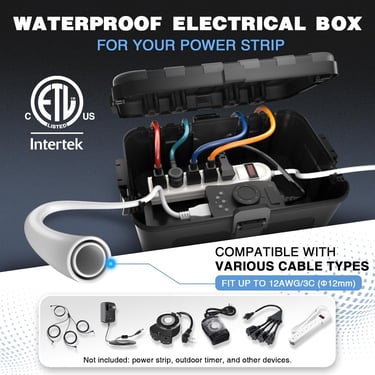
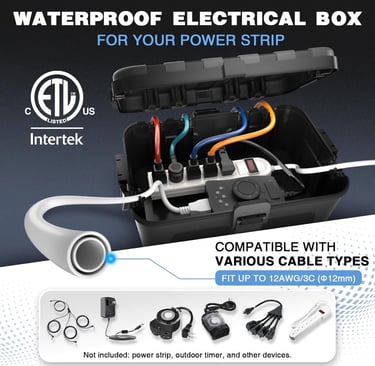
Flemoon Large Outdoor Electrical Box
What It Is
A large weatherproof enclosure designed to protect extension cord connections, timers, and power strips.
Why It Works
Keeps water, snow, and debris away from critical electrical connections.
Size / Footprint
Large enough to accommodate multiple plug connections and timers.
Material & Durability
Heavy-duty outdoor-rated construction with gasket sealing and locking clips.
Best User
Homeowners running multiple decorations or complex holiday displays.
Why Buyers Like It
Provides a cleaner and safer solution than leaving electrical connections exposed on the ground.
Safety Notes + Natural Benefit Statement
A weatherproof box cannot correct overloaded circuits, but it significantly reduces moisture-related failures that commonly affect outdoor holiday displays.
Why GFCI Trips After Rain
Few decorating problems create more frustration.
Everything works perfectly.
Then it rains.
The next morning the GFCI has tripped.
The inflatable is deflated.
Half the display is dark.
The GFCI is often doing exactly what it is supposed to do.
Common Causes
Water entering plug connections
Damaged extension cord jackets
Water accumulation inside splitters
Faulty inflatable blowers
Damaged outdoor timers
Many homeowners repeatedly reset the GFCI without identifying the source.
Instead:
Disconnect all decorations.
Reset the GFCI.
Reconnect devices one at a time.
Identify the offending component.
This process frequently isolates the issue within minutes.
Outdoor GFCI Protection
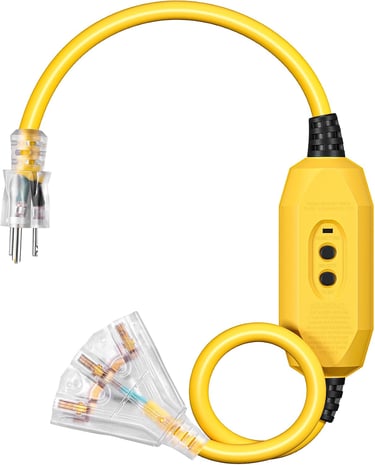
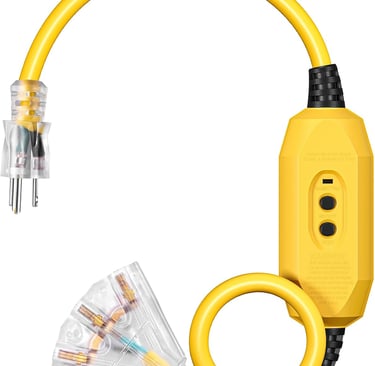
DEWENWILS 12/3 Automatic GFCI Extension Cord
What It Is
A heavy-duty extension cord with integrated GFCI protection.
Why It Works
Provides additional protection against ground faults that can occur in wet outdoor environments.
Size / Footprint
Compact inline GFCI design with triple outlet capability.
Material & Durability
Contractor-grade 12/3 construction with weather-resistant design.
Best User
Homeowners decorating in rainy, snowy, or moisture-prone environments.
Why Buyers Like It
Combines extension cord functionality and GFCI protection into a single solution.
Safety Notes + Natural Benefit Statement
Ground-fault protection can help reduce shock hazards while simplifying outdoor power management for inflatable displays.
Why Cold Weather Makes Cord Problems Worse
Many extension cords perform very differently in December than they do in July.
Cold weather affects:
Flexibility
Durability
Plug connections
Insulation performance
The difference can be dramatic.
Cord Stiffness
Lower-quality cords often become rigid in freezing temperatures.
This can create:
Trip hazards
Plug strain
Connection stress
Insulation Cracking
Repeated freezing and thawing can damage lower-quality cord jackets.
Small cracks may allow moisture intrusion.
Increased Mechanical Stress
When cords become stiff, they pull harder on outlets, timers, splitters, and power stakes.
This can loosen connections over time.
Startup Challenges
Cold temperatures increase stress on motors and moving components.
Marginal power setups that worked in mild weather may struggle during freezing conditions.
This is one reason many decorators experience problems only during winter.
Why Daisy-Chaining Extension Cords Causes Problems
Many homeowners eventually run out of cord length.
The quick solution seems simple:
Plug one extension cord into another.
While occasional temporary use may not create an immediate problem, daisy-chaining extension cords introduces several risks that become more significant as display size increases.
Additional Resistance
Every extension cord adds resistance.
Every connection point adds resistance.
When multiple cords are connected together, voltage loss accumulates across the entire run.
The result may be:
Reduced blower performance
Slower inflation
Dimmer lighting
Increased heat generation
More Failure Points
Every plug connection becomes another potential problem area.
A single display using three extension cords may contain:
Three cords
Four plug connections
Multiple opportunities for moisture intrusion
Multiple opportunities for loose connections
Troubleshooting becomes significantly more difficult.
Increased Heat
Connection points generate heat when resistance increases.
More connections mean more locations where heat can develop.
This is especially important when decorations operate continuously for weeks during the holiday season.
Better Alternative
Instead of connecting multiple smaller cords together, use one properly sized outdoor-rated extension cord whenever possible.
A single 100-foot 12/3 cord is generally preferable to connecting two or three smaller cords together.
Why Your Inflatable Keeps Deflating Even Though the Blower Is Running
This is one of the most common questions inflatable owners ask.
The blower is running.
The lights are on.
Yet the inflatable continues to soften or partially collapse.
Several causes may be responsible.
Cause #1: Voltage Drop
The blower is receiving power.
It simply isn't receiving enough power.
Reduced motor speed creates reduced airflow.
Reduced airflow allows air leakage to exceed airflow production.
The inflatable gradually loses firmness.
Cause #2: Undersized Extension Cord
A cord that is technically functioning may still be limiting performance.
This is particularly common when:
Cord runs exceed 75 feet
Multiple decorations share the circuit
Winter temperatures increase electrical stress
Cause #3: Overheated Connections
A hot connection can create intermittent voltage loss.
Symptoms often include:
Random softening
Intermittent inflation
Decorations recovering after cooling down
Cause #4: Moisture
Water intrusion can affect timers, splitters, GFCIs, and plug connections.
Problems often appear after rain, snow, or freezing conditions.
Cause #5: Aging Blower Motor
Not every issue originates with the extension cord.
Older blowers may experience:
Reduced airflow
Bearing wear
Internal motor deterioration
The extension cord should be evaluated before replacing the blower.
Measuring Actual Power Usage
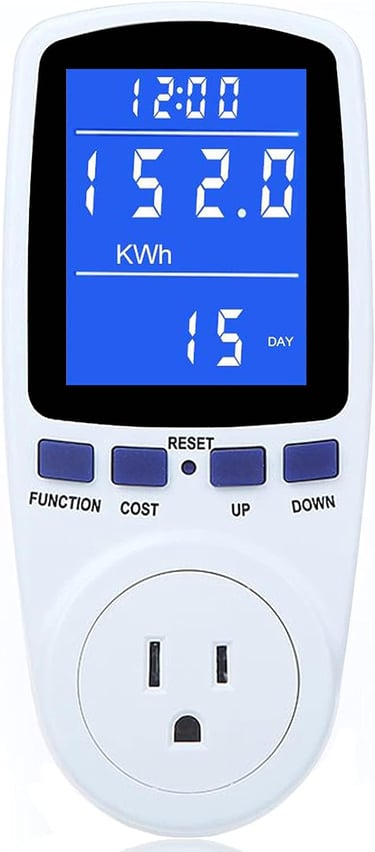
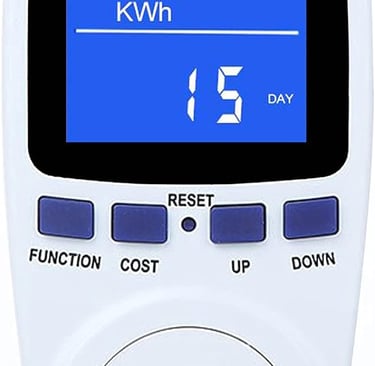
Mecheer Watt Meter
What It Is
A plug-in energy monitor that measures actual electrical consumption.
Why It Works
Allows homeowners to verify real-world power draw rather than guessing.
Size / Footprint
Small plug-in design.
Material & Durability
Indoor monitoring device with backlit display and overload alerts.
Best User
Anyone troubleshooting power problems or planning larger holiday displays.
Why Buyers Like It
Provides immediate visibility into watts, amps, voltage, and energy consumption.
Safety Notes + Natural Benefit Statement
Understanding actual power usage helps prevent overloaded circuits and improves planning for future display expansions.
Outdoor Power Distribution
Tiffcofio Outdoor Power Stake
What It Is
A weather-resistant outdoor power stake with multiple grounded outlets.
Why It Works
Creates organized power distribution without leaving multiple connections directly on the ground.
Size / Footprint
Six grounded outlets with a 25-foot extension cord.
Material & Durability
Outdoor-rated construction with weather-resistant outlet covers.
Best User
Homeowners running multiple inflatables in a single display area.
Why Buyers Like It
Keeps outlets elevated above wet ground while simplifying power distribution.
Safety Notes + Natural Benefit Statement
Power stakes improve organization but should still be used within the circuit's electrical limits.
Smart Control for Holiday Displays
Kasa Outdoor Smart Plug
What It Is
A weather-resistant outdoor smart plug with scheduling capability.
Why It Works
Automates display operation while reducing unnecessary runtime.
Size / Footprint
Compact dual-outlet outdoor smart controller.
Material & Durability
IP64 weather-resistant enclosure.
Best User
Homeowners who want automatic operation and remote control.
Why Buyers Like It
Reliable scheduling, smartphone control, and compatibility with popular smart-home ecosystems.
Safety Notes + Natural Benefit Statement
Smart controls improve convenience but should never be used to compensate for overloaded circuits or unsafe power setups.
Outdoor Timer Recommendation
BN-LINK Heavy Duty Outdoor Timer
What It Is
A simple mechanical outdoor timer designed for daily scheduling.
Why It Works
Provides reliable automation without requiring Wi-Fi or apps.
Size / Footprint
Compact plug-in design with dual grounded outlets.
Material & Durability
Weather-resistant outdoor housing.
Best User
Decorators seeking simple, dependable operation.
Why Buyers Like It
Easy setup, reliable daily scheduling, and straightforward operation.
Safety Notes + Natural Benefit Statement
Timers help reduce energy consumption and blower wear by limiting unnecessary operating hours.
Key Takeaways
Most inflatable power problems originate from extension cord issues rather than defective inflatables.
Voltage drop commonly causes soft inflation, leaning decorations, and reduced blower performance.
Longer cord runs generally benefit from heavier-gauge extension cords.
A quality 12/3 cord often solves problems that appear to be blower failures.
Hot plug connections should always be investigated immediately.
Weatherproof connection protection significantly reduces moisture-related failures.
Cold weather increases stress on cords, connections, and electrical equipment.
Daisy-chaining extension cords increases resistance and creates additional failure points.
GFCI protection remains one of the most important outdoor electrical safety measures.
Monitoring actual power consumption helps prevent overloads and simplifies troubleshooting.
Mini Conclusion
Most outdoor inflatable failures are preventable.
By understanding how extension cords behave in real-world conditions, homeowners can avoid many of the issues that lead to weak inflation, overheating plugs, nuisance GFCI trips, and premature equipment wear.
A properly sized outdoor-rated extension cord, protected connections, and thoughtful power planning often make the difference between a display that struggles all season and one that operates reliably from setup through takedown.