
Home > Setup, Safety, and Repairs > Outdoor Power Accessories > The Ultimate Guide to Powering Outdoor Inflatables Safely
The Ultimate Guide to Preventing Outdoor Inflatable Power Failures (Extension Cords, GFCI Safety, Weatherproofing and Load Planning)
Learn how to safely power outdoor inflatables using extension cords, GFCI protection, weatherproof connections, timers, smart plugs, power stakes, and proper electrical load planning.
By Frank "Frosty" Adminei
6/22/202611 min read
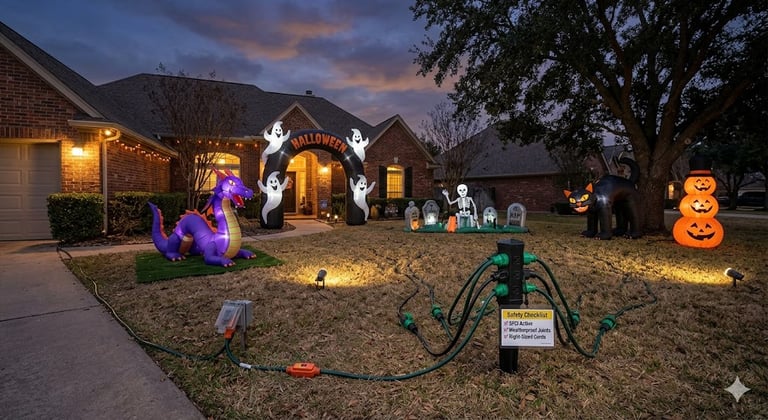
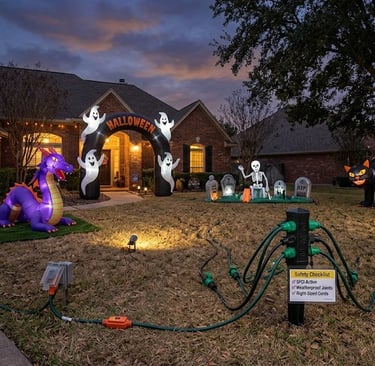
Table of Contents
Why Power Planning Matters
When most people buy an inflatable, they focus on size, appearance, lighting, and display themes.
Few people think about power distribution.
That works fine when running one inflatable a few feet from an outdoor outlet.
However, as displays grow larger, electrical planning becomes increasingly important.
Poor power planning can lead to:
Weak blower performance
Inflatable collapse
Tripped breakers
Repeated GFCI trips
Damaged equipment
Water intrusion into electrical connections
Increased fire risk
The good news is that most of these problems are completely preventable.
Understanding a few basic concepts can dramatically improve both safety and reliability.
How Outdoor Inflatables Actually Use Electricity
Many homeowners assume inflatables consume large amounts of electricity.
In reality, most residential inflatables are relatively efficient.
The inflatable itself uses almost no electricity.
Instead, power is used by:
The blower motor
Internal lighting
Any integrated decorative effects
The blower runs continuously while the inflatable is operating.
Unlike appliances that cycle on and off, inflatable blowers typically maintain a steady electrical load.
This consistency makes planning easier.
Most residential blower motors draw:
Small inflatables: 0.3–0.5 amps
Medium inflatables: 0.5–1 amp
Large inflatables: 1–2 amps
Giant inflatables: 2+ amps
This means most displays use less electricity than many homeowners expect.
Understanding Watts, Amps & Circuits
You do not need an electrical background to safely power inflatables.
Three measurements matter most:
Volts
Standard residential outlets provide approximately 120 volts.
Amps
Amps measure electrical current.
This is the number that determines how much load a circuit is carrying.
Watts
Watts measure actual power consumption.
The relationship between these values is:
Watts=Volts\times Amps
Example:
A blower using 1 amp on a 120-volt circuit consumes roughly 120 watts.
Five similar inflatables:
120 watts × 5
= 600 watts total
Most residential circuits can handle significantly more than this.
The challenge usually isn't power consumption.
The challenge is delivering power efficiently and safely.
How Many Inflatables Can Run on One Outlet?
This is one of the most common questions inflatable owners ask.
The answer depends on:
Blower size
Lighting load
Extension cord length
Other devices sharing the circuit
Most residential circuits are:
15-Amp Circuit
Approximately 1,800 watts maximum
Recommended continuous load:
1,440 watts
20-Amp Circuit
Approximately 2,400 watts maximum
Recommended continuous load:
1,920 watts
Many displays containing multiple inflatables operate safely on a single circuit.
The problem is that homeowners often do not realize what else is connected to that same circuit.
Outdoor outlets frequently share power with:
Garages
Bathrooms
Basements
Interior rooms
Understanding circuit sharing helps prevent nuisance breaker trips.
FAQ
Can I Run Multiple Inflatables From One Extension Cord?
Yes, provided the extension cord is properly sized for the total electrical load.
Most inflatable blowers consume relatively little power individually, but combining several decorations increases the total current flowing through the cord.
If the cord is too long or too small in gauge, voltage drop may occur and blower performance can suffer.
For larger displays, many decorators choose heavy-duty 12-gauge outdoor extension cords because they provide greater flexibility and better power delivery.
Choosing The Correct Extension Cord
Extension cords are the foundation of safe inflatable power distribution.
The wrong extension cord can cause:
Voltage drop
Reduced blower performance
Excessive heat
Premature motor wear
Reliability issues
Understanding Extension Cord Gauge
Extension cords use an American Wire Gauge (AWG) rating.
Lower numbers indicate thicker wire.
Examples:
16 gauge = thinner wire
14 gauge = medium duty
12 gauge = heavy duty
Thicker wire reduces resistance and improves power delivery over longer distances.
When 16-Gauge Extension Cords Make Sense
16-gauge cords work well for:
One inflatable
Short distances
Temporary displays
They are lightweight, affordable, and easy to handle.
However, they are not ideal for larger displays or long cord runs.
When 12-Gauge Extension Cords Are Better
12-gauge extension cords are often preferred for:
Multiple inflatables
Long distances
Future display expansion
Maximum reliability
Many experienced decorators standardize on 12-gauge cords because they eliminate many common voltage drop issues before they occur.
FAQ
Is a 16-Gauge Extension Cord Safe for Inflatables?
Yes.
A 16-gauge outdoor-rated extension cord is usually safe for a single inflatable located near an outlet.
Problems arise when homeowners use long 16-gauge cords with multiple decorations connected simultaneously.
For larger displays or cord runs exceeding 50 feet, heavier-gauge cords often provide a better long-term solution.
Weatherproofing Outdoor Electrical Connections
One of the biggest weaknesses in most inflatable power guides is the lack of discussion around weatherproofing.
Most electrical failures do not occur at the inflatable.
They occur at the connection points.
Rain, melting snow, lawn irrigation, ice, condensation, and standing water can all create problems if plugs and connections are left exposed.
Fortunately, protecting these vulnerable areas is relatively simple.
The Four Rules of Weatherproof Outdoor Power
Keep Connections Off the Ground
Never allow extension cord connections to rest directly on soil, mulch, grass, or pavement where water can collect.
Elevating connections even a few inches can significantly reduce moisture exposure.
Protect Every Plug Connection
Every connection point is a potential entry point for moisture.
Even outdoor-rated extension cords benefit from additional protection where cords join together.
Create Drip Loops
A drip loop is a simple downward curve in the cord before it reaches a connection point.
This helps water drip off the cord instead of running directly into plugs.
Inspect Throughout the Season
Weather conditions change.
Snow melts.
Wind shifts equipment.
Animals move cords.
Inspecting connections periodically helps catch problems before they become failures.
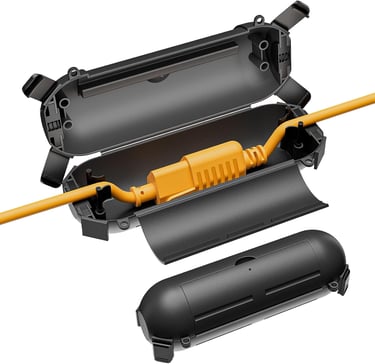
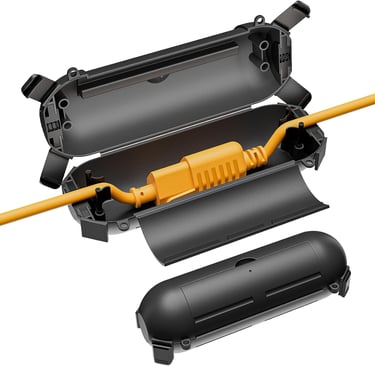
Small Connection Protection
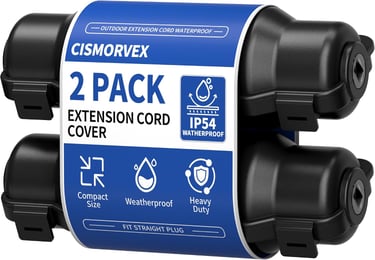
For displays using only a few inflatables, individual cord covers are often sufficient.
Recommended Solution
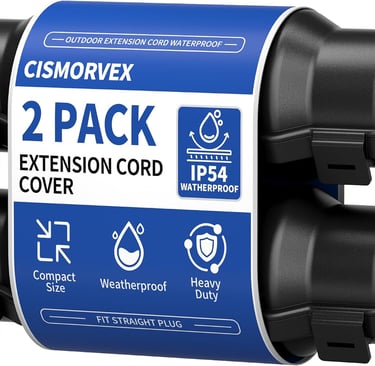
Cismorvex Outdoor Extension Cord Safety Cover
Best For:
Single cord connections
Blower plug protection
Small displays
Advantages:
Quick installation
Compact design
Improved moisture protection
Inexpensive upgrade
These covers are often one of the easiest improvements homeowners can make.
Alternative Option
Iwillink Outdoor Cord Connection Cover
Best For:
Larger plug combinations
Bulkier outdoor cords
Heavier-duty applications
Advantages:
Larger internal space
Weather-resistant sealing
Accommodates thicker cords
Large Connection Protection
As displays grow, individual cord covers become less practical.
Many decorators eventually need to protect:
Smart plugs
Timers
Power strips
Multiple extension cord connections
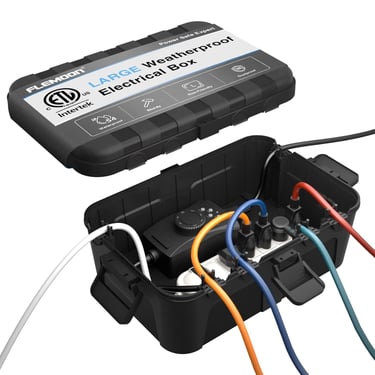
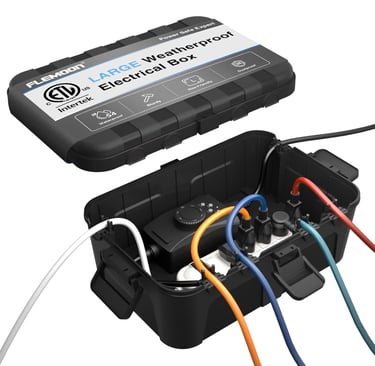
This is where weatherproof electrical boxes become valuable.
Recommended Weatherproof Box
Flemoon Outdoor Electrical Box
Best For:
Large displays
Multiple power accessories
Seasonal decorating setups
Advantages:
Protects multiple devices
Helps organize wiring
Reduces moisture exposure
Simplifies seasonal setup
Alternative Weatherproof Box
Hrensaw Outdoor Electrical Box
Best For:
Medium-sized displays
Multiple cord connections
Compact installations
Advantages:
Durable construction
Improved cable organization
Weather-resistant design
FAQ
Can Inflatables Stay Plugged In During Rain?
Most outdoor inflatables are designed to operate in wet weather.
The greater concern is protecting the electrical connections that power them.
To improve safety:
Use outdoor-rated extension cords.
Protect plug connections.
Elevate electrical connections.
Use GFCI protection.
Avoid standing water.
If severe weather or flooding is expected, disconnect decorations until conditions improve.
FAQ
Can I Plug An Inflatable Into A Power Strip?
Yes, but the power strip must be rated for outdoor use.
Indoor power strips should never be used outdoors.
For larger displays, outdoor power stakes often provide a safer and more organized alternative because they elevate outlets and help manage multiple decorations.
Understanding GFCI Protection
Ground Fault Circuit Interrupters (GFCIs) are among the most important safety devices available for outdoor electrical use.
A GFCI continuously monitors electrical current.
If it detects electricity flowing somewhere it should not, it immediately disconnects power.
This rapid response can help prevent electrical shock.
Because inflatable displays operate outdoors, GFCI protection is strongly recommended.
Common Causes Of GFCI Trips
Many homeowners assume a tripped GFCI means the outlet is defective.
In reality, common causes include:
Water intrusion
Damaged extension cords
Worn insulation
Faulty blowers
Damaged timers
Poor electrical connections
GFCIs are often doing exactly what they were designed to do—protect you.
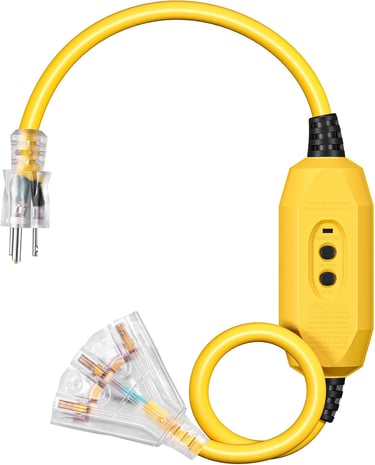
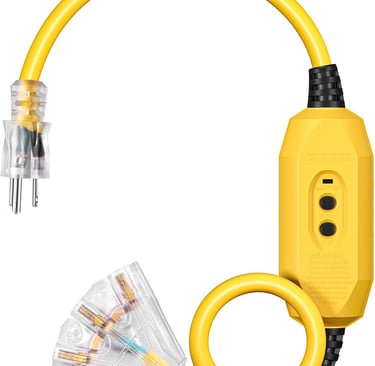
Portable GFCI Protection
Not every outdoor outlet includes built-in GFCI protection.
Portable GFCI devices provide an easy solution.
Recommended Product
Best For:
Inflatable displays
Holiday lighting
Outdoor decorating
Advantages:
Integrated GFCI protection
Heavy-duty 12-gauge construction
Triple outlet capability
Easy reset functionality
Alternative Option
Best For:
Existing extension cord setups
Portable protection
Flexible installations
Advantages:
Compact design
Easy installation
Weather-resistant construction
FAQ
Why Does My GFCI Trip During Cold Weather?
Cold temperatures themselves rarely cause GFCI trips.
More often, moisture enters plugs, timers, cords, or blower components and creates conditions that trigger the safety device.
Common causes include:
Condensation
Snow melt
Damaged insulation
Water intrusion
Repeated GFCI trips should always be investigated rather than ignored.
Power Distribution Solutions
As displays grow, running separate extension cords to every inflatable becomes inefficient.
This is where power distribution products become useful.
Good power distribution improves:
Safety
Organization
Setup speed
Expansion capability
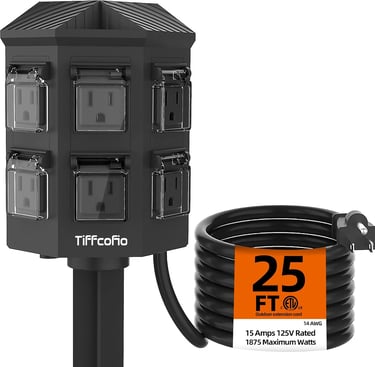
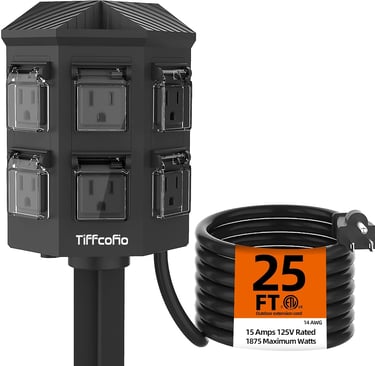
Outdoor Power Stakes
Power stakes are one of the most useful upgrades available for seasonal decorators.
Instead of running multiple extension cords back to the house, a single extension cord powers a centralized distribution point.
Benefits include:
Cleaner layouts
Elevated outlets
Easier expansion
Reduced cable clutter
Better moisture protection
Recommended Power Stake
Best For:
Family displays
Multiple inflatables
Seasonal decorating
Advantages:
Six grounded outlets
Elevated power distribution
Weather-resistant design
Built-in overload protection
Upgrade Option
DEWENWILS Power Stake With Timer
Best For:
Automated displays
Mixed inflatable and lighting setups
Advantages:
Integrated timer functions
Multiple outlets
Simplified scheduling
Premium Option
Best For:
Larger displays
Advanced automation
Advantages:
Multiple programmable settings
Weather-resistant construction
Expanded scheduling capabilities
Smart Plugs And Outdoor Automation
One of the easiest ways to improve a display is automating it.
Many homeowners begin with manual operation but eventually want their decorations to operate automatically.
Benefits include:
Consistent schedules
Energy savings
Remote control
Vacation operation
Convenience
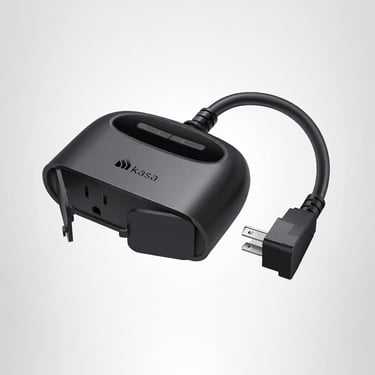
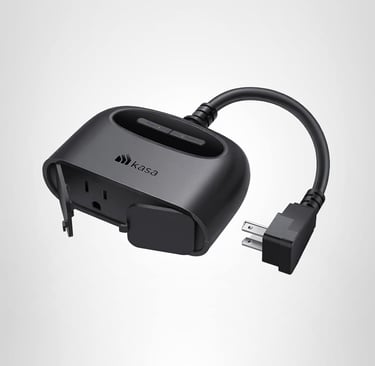
Recommended Smart Plug
Best For:
Smartphone control
Scheduling
Smart home integration
Advantages:
Reliable app control
Multiple schedules
Remote access
Weather-resistant housing
Alexa-Based Alternative
Amazon Basics Outdoor Smart Plug
Best For:
Alexa households
Voice control
Routine automation
Advantages:
Dual independently controlled outlets
Alexa integration
Weather-resistant design
Easy setup
Outdoor Timers
Not every homeowner needs smart-home automation.
Timers remain one of the simplest and most affordable ways to automate inflatable displays.
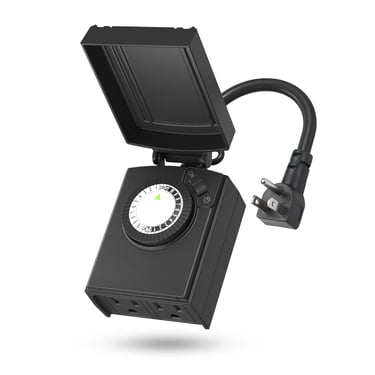
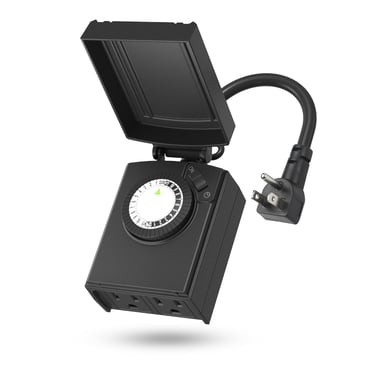
Mechanical Timer
BN-LINK Heavy Duty Mechanical Outdoor Timer
Best For:
Simplicity
Reliability
Budget-conscious users
Advantages:
No Wi-Fi required
Daily repeat operation
Easy setup
Dusk-To-Dawn Timer
Tiffcofio Outdoor Light Sensor Timer
Best For:
Automatic sunset activation
Advantages:
Seasonal adjustment
No programming required
Daily operation
Remote-Control Timer
DEWENWILS Outdoor Timer With Remote
Best For:
Larger properties
Winter convenience
Advantages:
Remote operation
Countdown settings
Dusk-to-dawn functions
Digital Timer
Tiffcofio Digital Outdoor Timer
Best For:
Advanced scheduling
Advantages:
Multiple programs
Large display
Flexible automation options
Monitoring Energy Usage
One of the biggest misconceptions in the inflatable hobby is electricity cost.
Many homeowners assume large displays dramatically increase utility bills.
In reality, most displays are surprisingly affordable to operate.
Monitoring energy use removes guesswork and helps optimize your setup.
Why Monitor Electricity Usage?
Benefits include:
Understanding operating costs
Identifying overloaded circuits
Diagnosing performance issues
Comparing decorations
Planning future expansion
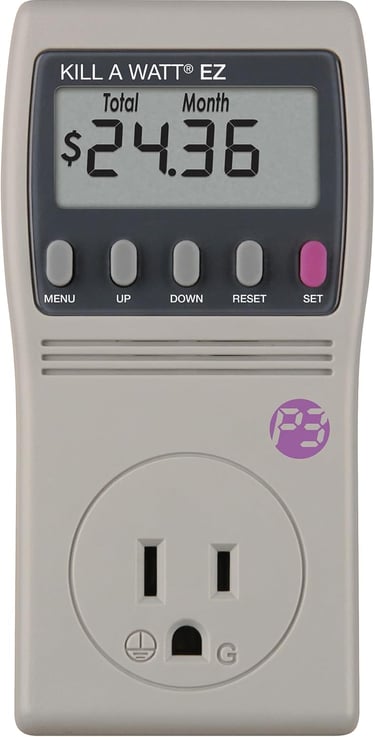
Recommended Energy Monitor
Displays:
Voltage
Amps
Watts
Kilowatt-hours
Estimated costs
Ideal for homeowners wanting a simple understanding of energy usage.
Premium Monitoring Option
Benefits:
Long-term monitoring
Load calculations
Voltage analysis
Cost estimation
Many experienced decorators consider a Kill-A-Watt meter one of the most useful troubleshooting tools available.
FAQ
How Much Electricity Does A Christmas Inflatable Use?
Most residential inflatables consume less electricity than many homeowners expect.
Typical ranges include:
Small inflatables: 50–100 watts
Medium inflatables: 100–150 watts
Large inflatables: 150–250 watts
Even larger residential displays often cost only a few dollars per month to operate when run several hours each evening.
A power monitoring device provides the most accurate measurement.
Troubleshooting Outdoor Inflatable Power Problems
Most inflatable failures are not caused by defective decorations.
Instead, the problem is often found somewhere in the power delivery system.
Learning to diagnose these issues can save time, money, and frustration.
Inflatable Won't Fully Inflate
Symptoms:
Inflatable appears soft
Decoration struggles to stand upright
Inflation seems slower than normal
Possible Causes:
Undersized extension cord
Excessive cord length
Voltage drop
Blower obstruction
Air leaks
Recommended Actions:
Verify cord gauge
Reduce extension cord length
Check blower intake for debris
Inspect seams and zippers
Inflatable Randomly Shuts Off
Symptoms:
Decoration loses power unexpectedly
Blower stops running
Display restarts intermittently
Possible Causes:
Loose electrical connection
GFCI interruption
Faulty timer
Damaged cord
Recommended Actions:
Inspect all plug connections
Bypass timer temporarily
Check GFCI status
Test using a different outlet
GFCI Trips Repeatedly
Symptoms:
GFCI immediately resets and trips again
Decorations lose power after rain
Power interruptions occur overnight
Possible Causes:
Moisture intrusion
Damaged insulation
Defective blower
Water entering plug connections
Recommended Actions:
Dry all connections
Replace damaged cords
Test decorations individually
Inspect weatherproof covers
Breaker Trips Frequently
Symptoms:
Entire circuit loses power
Multiple decorations shut down simultaneously
Possible Causes:
Circuit overload
Shared household circuit
Additional appliances drawing power
Recommended Actions:
Identify all devices on the circuit
Reduce electrical load
Distribute decorations across multiple circuits
Extension Cord Feels Warm
Symptoms:
Cord noticeably warm to the touch
Blower performance reduced
Possible Causes:
Undersized cord
Excessive load
Cord left tightly coiled
Recommended Actions:
Upgrade to heavier gauge cord
Fully uncoil cord
Reduce connected load
Warm cords should never be ignored.
Water Found Inside Electrical Connections
Symptoms:
Visible moisture
Corrosion
Intermittent operation
Recommended Actions:
Disconnect power immediately
Dry components completely
Replace damaged equipment
Improve weatherproofing
Real Electricity Cost Examples
One of the most common concerns among new inflatable owners is operating cost.
The reality is often much better than expected.
Example 1: Single Inflatable
Power Consumption:
100 watts
Operation:
6 hours per night
Monthly Usage:
18 kWh
Estimated Monthly Cost:
$2–$4
Example 2: Family Display
Power Consumption:
600 watts
Operation:
6 hours per night
Monthly Usage:
108 kWh
Estimated Monthly Cost:
$15–$25
Example 3: Large Holiday Display
Power Consumption:
1,200 watts
Operation:
6 hours per night
Monthly Usage:
216 kWh
Estimated Monthly Cost:
$30–$50
Actual costs vary based on local electricity rates.
Using a Kill-A-Watt meter provides the most accurate measurement.
Examples: Outdoor Inflatable Power Setups
Setup Example #1: Beginner Display
Display Size:
1–2 inflatables
Recommended Equipment:
16-gauge outdoor extension cord
Cord connection cover
Dusk-to-dawn timer
Best For:
First-time inflatable owners.
Advantages:
Simple setup
Low cost
Minimal maintenance
Setup Example #2: Family Display
Display Size:
3–6 inflatables
Recommended Equipment:
12-gauge extension cord
Outdoor power stake
Weatherproof electrical box
Photocell timer
Best For:
Families decorating for multiple holidays.
Advantages:
Better organization
Easier expansion
Improved weather protection
Setup Example #3: Advanced Display
Display Size:
7–15 inflatables
Recommended Equipment:
Multiple 12-gauge extension cords
Power stakes
GFCI protection
Smart plugs
Weatherproof electrical boxes
Energy monitor
Best For:
Serious seasonal decorators.
Advantages:
Reliable power distribution
Better troubleshooting
Automation capabilities
Setup Example #4: Showcase Display
Display Size:
15+ inflatables
Recommended Equipment:
Multiple dedicated circuits
Power distribution zones
Smart automation
GFCI protection throughout
Energy monitoring devices
Large weatherproof enclosures
Best For:
Neighborhood showcase displays.
Advantages:
Scalability
Reliability
Simplified maintenance
Frequently Asked Questions
Do Holiday Inflatables Need GFCI Protection?
Yes. Because inflatables operate outdoors, GFCI protection provides an important layer of electrical safety.
What Extension Cord Gauge Is Best For Inflatables?
For maximum flexibility and future expansion, many decorators prefer 12-gauge outdoor-rated extension cords.
Can I Leave Extension Cords Outside All Winter?
Outdoor-rated cords are designed for seasonal outdoor use, but they should be inspected regularly for damage and wear.
Are Outdoor Smart Plugs Waterproof?
Most outdoor smart plugs are weather-resistant rather than fully waterproof.
Always follow manufacturer guidelines and protect connections from standing water.
What Happens If An Extension Cord Gets Buried In Snow?
Outdoor-rated cords can generally tolerate snow exposure, but plug connections should remain elevated and protected.
The greatest risk comes during melting periods when water can collect around connections.
Should I Unplug Inflatables During Wind Storms?
Severe weather can increase stress on both inflatables and electrical components.
Disconnecting decorations during extreme weather events is often the safest option.
How Long Can An Extension Cord Safely Be?
Safe length depends on wire gauge and electrical load.
Longer runs generally benefit from heavier-gauge extension cords to reduce voltage drop.
Can I Leave Inflatables Plugged In All Season?
Many homeowners do.
However, periodic inspections of cords, plugs, timers, and weatherproofing components are strongly recommended.
Do Smart Plugs Save Electricity?
Smart plugs can reduce energy consumption by automating operation schedules and eliminating unnecessary runtime.
Is A Power Stake Better Than A Power Strip?
For outdoor decorating, power stakes are often the superior solution because they elevate outlets, improve organization, and provide weather-resistant power distribution.
What Causes Inflatable Blower Motors To Fail?
Common causes include:
Moisture intrusion
Debris blockage
Voltage drop
Key Takeaways
The safest inflatable displays follow a simple formula:
Use outdoor-rated extension cords.
Match cord gauge to display size.
Protect every electrical connection.
Use GFCI protection whenever possible.
Organize power distribution with stakes and weatherproof boxes.
Automate responsibly using timers and smart plugs.
Monitor power usage as displays expand.
Troubleshoot problems early before equipment damage occurs.
The majority of inflatable power issues are preventable with proper planning.
Conclusion
Powering outdoor inflatables safely is not complicated, but it does require planning.
By understanding electrical loads, choosing the correct extension cords, protecting connections from moisture, utilizing GFCI protection, and organizing power distribution effectively, you can create a display that is safer, more reliable, and easier to expand in the future.
Whether you are decorating for Christmas, Halloween, Easter, patriotic holidays, birthdays, or special events, a solid electrical foundation helps ensure your inflatables remain the centerpiece of your display rather than the source of unexpected problems.
Related Articles:
Why Your Outdoor Inflatable Keeps Tripping the Breaker (And How to Fix It)
Real-World Outdoor Inflatable Power Problems and How to Fix Them
How to Power Multiple Outdoor Inflatables Safely Without Overloading Your Circuit
Best Outdoor Extension Cords for Holiday Inflatables (2026 Buyer's Guide)
Best Weatherproof Cord Connection Boxes for Outdoor Decorations
Outdoor Holiday Power Troubleshooting Guide: Why Decorations Fail and How to Fix Them