
Home > Bounce House > Best Bounce House Stakes (2026)
Best Bounce House Stakes (2026): Steel, Spiral and Heavy‑Duty Options
: Discover the best bounce house stakes of 2026, including steel, spiral, and heavy duty options for safer backyard setups. Learn what to buy, how to choose, and what actually keeps inflatables anchored
By Frank “Frosty” Adminei
5/6/20269 min read
Best Bounce House Stakes (2026): Steel, Spiral and Heavy Duty Options
Intro
If you’ve ever watched a bounce house wiggle in the wind like a holiday lawn reindeer after too much eggnog, you already know why good stakes matter. The right anchoring hardware turns a fun inflatable into a stable, predictable play zone. The wrong stakes? Well… let’s just say Santa’s sleigh handles turbulence better.
Parents often learn about anchoring the hard way, which is why guides like Bounce House Anchoring Guide (2026): Stakes, Sandbags & Stability Physics are so important. This article builds on that foundation by focusing specifically on the best stakes you can buy in 2026.
In this guide, we’ll break down steel, spiral, and heavy‑duty options—plus when each type shines. Whether you’re hosting a birthday bash or just giving the kids a Saturday surprise, the right stakes make all the difference.
Who This Guide Is For
This guide is perfect for parents, grandparents, and backyard heroes who want their bounce house to stay put even when the wind tries to RSVP uninvited. If you’ve ever wondered whether your included stakes are “good enough,” this guide is your new best friend.
It’s especially helpful for readers who already understand the basics of bounce house setup from How to Set Up a Bounce House Safely (2026 Step By Step Guide) and now want to upgrade their anchoring gear for better stability and peace of mind.
Why This Topic Matters
Stakes are the unsung heroes of inflatable safety. They’re small, inexpensive, and often overlooked—but they’re the only thing standing between a stable bounce house and a backyard blimp.
A well‑anchored inflatable dramatically reduces tipping, sliding, and wind‑related hazards. This is especially important because many budget bounce houses ship with thin, short stakes that are more decorative than functional. As explained in Are Bounce Houses Safe? (2026 Parent Guide), anchoring is one of the top factors that determines whether an inflatable is safe for kids.
Choosing the right stakes isn’t just a gear decision—it’s a safety decision.
Age Group Segmentation
Different age groups create different forces inside a bounce house, and your stakes need to match the energy level of your jumpers.
Toddlers (2–4 years)
Lightweight play means lighter forces, but stability still matters. Standard steel stakes usually work well here. Parents who use smaller inflatables often reference Best Bounce Houses by Age Group (2026 Guide) to match the right unit to their child’s needs.
Young Kids (5–8 years)
This is the “maximum chaos” age group. Spirals or longer steel stakes are recommended because kids this age bounce with the enthusiasm of elves on cookie day.
Older Kids (9–12 years)
Heavier bodies + higher jumps = more lateral force. Heavy‑duty stakes or 12–18 inch spirals are ideal.
Teens & Mixed Age Groups
If you’re hosting a party where older kids or adults might join in, you’ll want the strongest stakes available. This is the same logic used in Best Commercial Bounce Houses (2026): Heavy Duty PVC & Pro Level Units, where anchoring strength scales with user weight.
Product Modules
ABCCANOPY 11" Heavy‑Duty Steel Tent Stakes
What it is
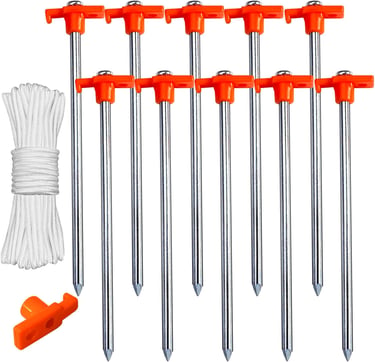
A set of thick, 11‑inch galvanized steel stakes designed for tents, inflatables, and outdoor equipment that needs serious anchoring strength.Why it works
These stakes use a straight‑shaft design with a welded hook that grips bounce house D‑rings securely. The length and weight give them excellent holding power in typical backyard soil.Size / footprint
Each stake measures 11 inches long with a ⅜‑inch diameter, offering a compact but strong anchoring profile.Material & durability
Made from galvanized steel to resist rust, bending, and long‑term outdoor exposure.Best user / age range
Ideal for families with kids ages 5–10 who use mid‑size bounce houses and want a reliable upgrade from the thin stakes included with most inflatables.Why buyers like it
Parents appreciate the durability and the way these stakes stay put even during energetic play sessions.Safety or usage notes
Drive them fully into the ground at a 45‑degree angle for best results, as recommended in How to Set Up a Bounce House Safely (2026 Step By Step Guide). These are a great choice if you want a simple, sturdy upgrade without overthinking it.
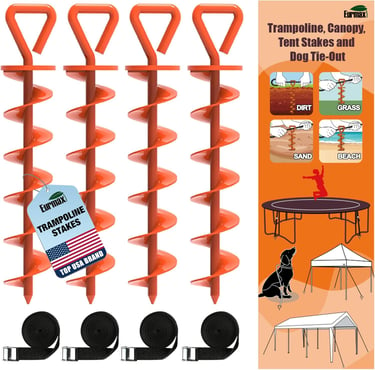
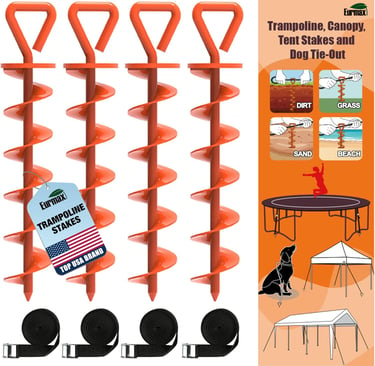
Eurmax USA 10" Spiral Ground Anchors
What it is
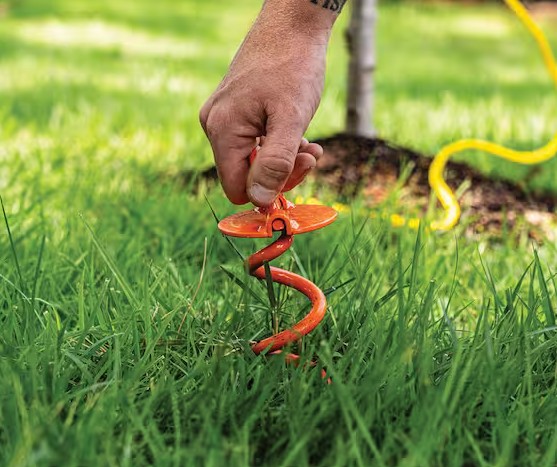
A set of spiral‑style ground anchors commonly used for canopies and inflatables, offering excellent rotational grip.Why it works
The corkscrew design twists deep into the soil, creating a strong hold that resists lateral movement—perfect for kids who bounce like reindeer on hot cocoa.Size / footprint
Each anchor is 10 inches long with a wide spiral diameter for improved soil bite.Material & durability
Constructed from heavy‑duty steel with a rust‑resistant coating.Best user / age range
Great for families with kids ages 6–12 or for anyone using a bounce house on softer soil where straight stakes may loosen.Why buyers like it
The spiral design feels more secure, especially in yards that get muddy or soft after rain.
Safety or usage notes
Use a cordless drill with a hex adapter for fast installation. If you want a stake that holds tight even when the ground gets squishy, these spirals are a smart pick.
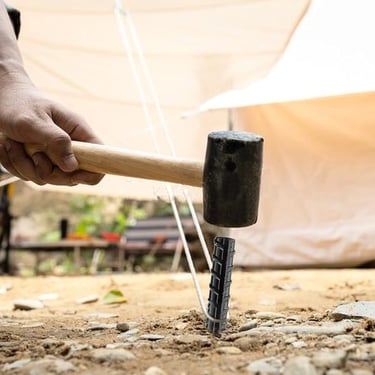
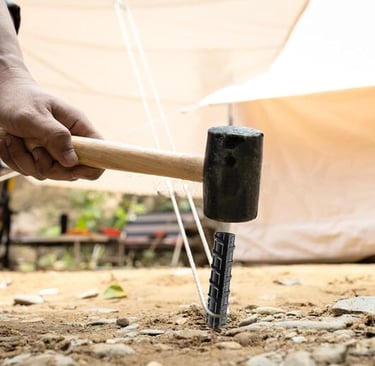
NHZ 15" Heavy‑Duty Rebar Stakes
What it is
A set of long, rebar‑style stakes designed for maximum anchoring strength in demanding conditions.Why it works
The ribbed rebar surface grips soil better than smooth steel, and the 15‑inch length adds serious holding power for larger inflatables.Size / footprint
Each stake is 15 inches long with a ½‑inch diameter—larger and heavier than standard options.Material & durability
Made from industrial‑grade steel with a welded hook for secure attachment.Best user / age range
Perfect for older kids, mixed‑age groups, or families using larger inflatablesWhy buyers like it
These stakes feel “pro‑level” and stay put even during high‑energy play.Safety or usage notes
Because they’re longer, check for underground utilities before driving them in. If you want the strongest consumer‑grade stakes available, these are a top contender.
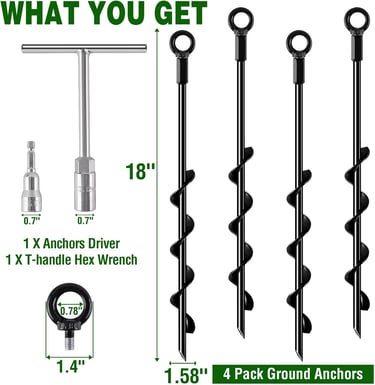
Fabulas 18" Spiral Earth Anchors
What it is
A set of long, heavy‑duty spiral anchors designed for securing large outdoor equipment.Why it works
The extended length and deep spiral threading create exceptional holding power, making them ideal for bigger inflatables or windy areas.Size / footprint
Each anchor measures 18 inches long with a thick, wide spiral.Material & durability
Made from powder‑coated steel for maximum strength and corrosion resistance.Best user / age range
Recommended for older kids, teens, or mixed‑age groups using larger bounce houses similar to those discussed in Best Commercial Bounce Houses (2026): Heavy Duty PVC & Pro Level Units.Why buyers like it
These anchors feel extremely secure and are trusted by users who need serious stability.Safety or usage notes
Use a drill adapter for easier installation. If you want the kind of anchoring that laughs at gusty weather, these spirals deliver peace of mind.
Safety Notes
Safety is the heart of every bounce house setup, and stakes play a starring role. Even the best inflatable can shift if it’s not anchored correctly. As explained in Bounce House Weather Guide (2026): Wind, Rain & Temperature Rules, wind is the biggest risk factor—and proper stakes dramatically reduce that risk.
Always drive stakes at a 45‑degree angle, pointing away from the bounce house. This increases resistance to pull‑out forces. Make sure every anchor point is used, even if the inflatable seems stable without them. A bounce house that feels solid in calm weather can behave very differently when kids start jumping or when a breeze picks up.
Check stakes before every use. Soil conditions change daily, especially after rain or irrigation. If the ground feels soft, consider switching to spiral anchors or adding sandbags as recommended in Best Bounce House Accessories (2026): Stakes, Blowers, Tarps & Sandbags.
A well‑anchored bounce house is a safer bounce house, and the right stakes make all the difference.
Buying Considerations
Choosing the right bounce house stakes is a little like choosing the right ornaments for your holiday tree—some are decorative, some are functional, and some are built to survive a blizzard. The key is matching the stake to your soil, your inflatable, and your jumpers.
Soil Type
Firm soil works well with straight steel stakes, while softer or sandy soil benefits from spiral anchors. This mirrors the advice in Bounce House Yard Prep Guide (2026): Slope, Clearance & Surface Types, where ground conditions determine setup success.
Inflatable Size
Bigger bounce houses create more lateral force. If you’re using a larger unit, consider 15–18 inch stakes or heavy‑duty spirals.
Wind Exposure
If your yard gets breezy, longer stakes or spirals offer better resistance. Even mild gusts can shift an inflatable if the stakes are too short.
User Age & Weight
Older kids and mixed‑age groups require stronger anchoring. This is the same principle used in How to Choose the Right Bounce House (2026 Buyer Guide), where user weight influences material and blower selection.
Ease of Installation
Some stakes require a mallet, while others twist in with a drill. If you prefer quick setup, spirals with hex heads are your best friend.
Yard Size / Fit Considerations
Your yard plays a big role in how well stakes perform. A bounce house that fits comfortably with room to spare is easier to anchor and safer overall. As explained in Bounce House Size Calculator (2026): Yard Fit & Space Requirements, you need clearance on all sides—not just for safety, but for proper stake placement.
Clearance Zones
Stakes need space to angle outward at 45 degrees. If your yard is tight, you may need shorter stakes or vertical‑drive options.
Obstacles & Underground Lines
Tree roots, sprinkler lines, and buried utilities can interfere with stake placement. Always check before driving in long stakes.
Slope & Drainage
A sloped yard can cause bounce houses to shift downhill. Longer stakes or spirals help counteract this movement.
Surface Type
Grass is ideal. Hard soil may require pre‑drilling, while sandy soil benefits from wide spirals. If your yard is tricky, the guidance in Best Bounce House Tarps & Ground Covers (2026) can help stabilize the base before anchoring.
Setup
Setting up stakes correctly is just as important as choosing the right ones. Think of it like hanging holiday lights—sure, you can rush it, but taking a few extra minutes makes everything safer and brighter.
Start by laying out your bounce house and blower, then identify all anchor points. Most inflatables have four to eight tie‑downs, and every single one should be used. As explained in How to Set Up a Bounce House Safely (2026 Step By Step Guide), skipping anchor points is one of the most common setup mistakes.
Drive each stake into the ground at a 45‑degree angle, pointing away from the inflatable. This increases resistance to pull‑out forces. If you’re using spiral anchors, twist them in until the top loop sits flush with the ground. Once the blower inflates the unit, recheck each strap for tension and adjust as needed.
Maintenance
Stakes may seem like simple pieces of metal, but they benefit from a little TLC. After each use, wipe off dirt and moisture to prevent rust. Spiral anchors should be checked for soil buildup in the threads, which can affect how easily they twist in next time.
Inspect hooks and welds regularly. If a hook bends or a weld cracks, retire the stake immediately. This is the same principle used in Bounce House Repair, Cleaning & Mold Prevention (2026 Master Guide)—small hardware issues can lead to bigger safety problems if ignored.
Store stakes in a dry container or toolbox to keep them organized and rust‑free. A little maintenance goes a long way toward keeping your anchoring system reliable.
Storage
Proper storage keeps your stakes ready for the next big bounce‑fest. After cleaning them, place them in a dedicated bag or bin so they don’t get lost among garden tools or holiday decorations. If you use long rebar stakes, consider wrapping the ends to prevent accidental scratches or dings.
Keep your stakes near your blower and tarp so everything is easy to grab during setup. This mirrors the organizational tips in Bounce House Storage Guide (2026): Folding, Drying & Long Term Care, where keeping accessories together reduces setup time and frustration.
If you live in a humid area, toss a moisture absorber into your storage bin to prevent rust. Your stakes will thank you by lasting longer and performing better.
Key Takeaways
• Stakes are essential for bounce house safety, especially in windy or high‑energy play environments.
• Straight steel stakes work well in firm soil, while spirals excel in soft or mixed soil.
• Longer stakes (15–18 inches) provide superior holding power for larger inflatables.
• Always drive stakes at a 45‑degree angle and use every anchor point.
• Regular cleaning and proper storage extend the life of your anchoring gear.
• Following the guidance in Bounce House Anchoring Guide (2026): Stakes, Sandbags & Stability Physics ensures your setup stays safe and stable.
Mini Conclusion
Anchoring a bounce house isn’t glamorous, but it’s one of the most important steps in creating a safe, joyful play space. With the right stakes—and a little Frosty‑approved know‑how—you can keep your inflatable grounded and your kids happily bouncing.
Whether you choose steel, spiral, or heavy‑duty rebar, the key is matching your stakes to your soil, your inflatable, and your jumpers. Do that, and your backyard fun will stay right where it belongs.
Related Articles
• Bounce House Anchoring Guide (2026): Stakes, Sandbags & Stability Physics
• Bounce House Weather Guide (2026): Wind, Rain & Temperature Rules
• Best Bounce House Accessories (2026): Stakes, Blowers, Tarps & Sandbags
• How to Set Up a Bounce House Safely (2026 Step By Step Guide)
• Bounce House Yard Prep Guide (2026): Slope, Clearance & Surface Types