
Home > Setup, Safety, and Repairs > Power and Extension Cords > Can You Run Holiday Inflatables from a Generator or Portable Power Station?
Can You Run Holiday Inflatables from a Generator or Portable Power Station?
Can you run holiday inflatables from a generator or portable power station? Learn runtime, power requirements, safety tips, and the best setup.
By Frank "Frosty" Adminei
7/7/202611 min read
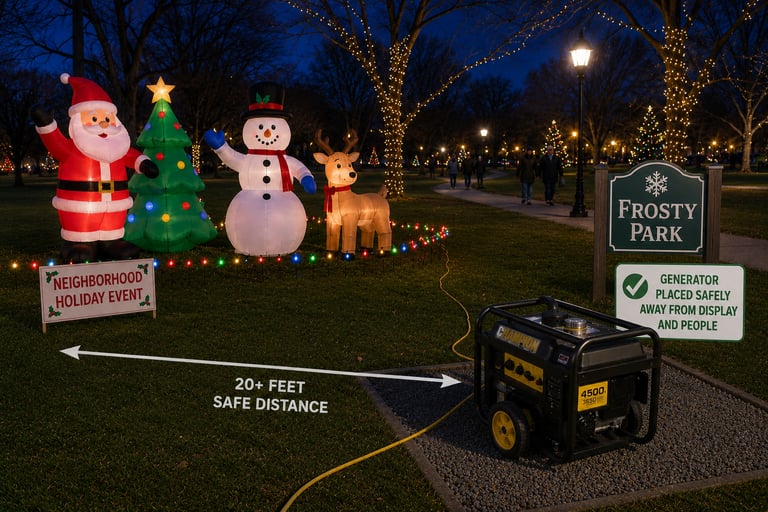
Table of Contents
Introduction
One of the most common questions decorators ask is:
"Can I run my holiday inflatables without plugging into my house?"
The answer is yes—but with some important limitations.
Whether you're decorating for Christmas, Halloween, Easter, Valentine's Day, Independence Day, or another seasonal celebration, there are many situations where traditional household outlets simply aren't convenient. Maybe your display is too far from the house, you're decorating a community event, setting up for trunk-or-treat, or preparing for a temporary display during a neighborhood festival.
Fortunately, modern portable power stations and generators make these situations much easier than they were just a few years ago.
The challenge isn't whether they'll work—it's knowing which type of portable power is the better choice for your specific display.
A compact battery-powered power station may quietly run one or two inflatables for hours, while a gasoline generator can power an entire yard full of decorations all night long. Choosing the wrong option can leave you with disappointing runtimes, unnecessary expense, or even unsafe operating conditions.
By the end of this guide, you'll understand:
when portable power is practical
how much electricity inflatables actually use
how to estimate realistic runtime
when generators outperform batteries
how to set everything up safely outdoors
If you're still planning the electrical side of your display, you'll also want to read The Ultimate Guide to Powering Outdoor Inflatables Safely: Extension Cords, GFCI Protection, Weatherproofing and Load Planning, which explains the complete foundation of safe outdoor power distribution before comparing alternative power sources.
Who This Guide Is For
This guide is designed for decorators who:
want to place inflatables where no nearby outlet exists
decorate community events or trunk-or-treat locations
build displays at churches, schools, parks, or businesses
own RVs or campgrounds where seasonal decorating is common
prepare for holiday decorating during power outages
want flexible display placement without running extremely long extension cords
are considering buying a portable power station but aren't sure if it's large enough
Whether you display a single inflatable or build a large seasonal yard display, understanding portable power options helps you make smarter—and often less expensive—equipment decisions.
Can You Really Run Holiday Inflatables from Portable Power?
The short answer is yes.
Most modern holiday inflatables use surprisingly little electricity once fully inflated. Their small blower motors continuously replace the tiny amount of air that naturally escapes through seams and vents. Because of this design, many inflatables draw far less power than people expect.
For example:
A small inflatable may use only a few dozen watts.
Medium family-yard decorations often remain well under 150 watts.
Even many larger inflatables consume considerably less electricity than outdoor heaters, power tools, or kitchen appliances.
That relatively modest electrical demand makes portable power stations a realistic solution for many decorating situations.
However, there are important limitations.
Portable batteries store a fixed amount of energy. Once depleted, they must be recharged before they can continue powering your decorations. Gas generators, by comparison, continue operating as long as fuel is available.
This difference makes each solution ideal for different situations.
Portable power stations excel when:
noise matters
fuel isn't practical
displays are temporary
emissions would be a concern
portability is important
Generators become the better choice when:
displays run all night
many inflatables operate simultaneously
lighting, music, and projection equipment share the same power source
power outages may last several days
Rather than asking "Can it work?", the better question is:
"Which portable power option fits my display?"
The remainder of this guide answers exactly that.
How Much Electricity Does a Holiday Inflatable Actually Use?
One of the biggest mistakes decorators make is estimating electrical usage based on the inflatable's physical size.
While larger inflatables generally require larger blowers, size alone isn't a reliable predictor of power consumption.
Factors include:
blower motor efficiency
blower manufacturer
motor age
internal air pressure
number of chambers
lighting included
inflation design
The only way to know your exact electrical usage is to measure it.
This is where a Kill-A-Watt meter becomes incredibly useful. Instead of guessing, you can plug your inflatable into the meter and immediately see its real-world wattage. That information allows you to size a portable power station or generator with confidence rather than relying on estimates.
For anyone planning to use alternative power sources, measuring actual electrical demand before buying equipment is one of the smartest—and least expensive—steps you can take.
If you're unsure how much total power your display requires, How Many Inflatables Can One Circuit Handle? walks through the process of adding up multiple decorations and calculating safe electrical loads.
Generator vs. Portable Power Station
At first glance, both devices accomplish the same goal—they provide electricity where wall outlets aren't available.
In reality, they're designed for very different situations.
Portable power stations shine when convenience is the priority. They're quiet enough for neighborhood decorating, produce no exhaust, require almost no maintenance, and are easy to transport. For trunk-or-treat events, holiday photo booths, school displays, or temporary decorating, they can be an outstanding solution.
Generators, on the other hand, are built for endurance. If your display includes numerous inflatables, extensive lighting, music, and other powered decorations running from dusk until late evening—or during extended outages—a generator provides far greater sustained capacity.
The decision isn't about which technology is "better." It's about matching the power source to the way you actually decorate.
How Long Will a Portable Power Station Run an Inflatable?
This is the question that surprises most decorators.
Owning a large portable power station doesn't automatically mean it will power your decorations all night. The actual runtime depends on three primary factors:
Battery capacity (measured in watt-hours or Wh)
The inflatable's continuous power draw
Real-world efficiency losses
A simple estimate looks like this:
Estimated Runtime (hours) = Battery Capacity (Wh) ÷ Running Watts
For example:
A 1,000Wh portable power station powering a 100-watt inflatable could theoretically operate for around 10 hours.
In the real world, battery systems lose some energy through the inverter and internal electronics, so expect slightly less runtime than the math suggests.
Cold weather can also reduce available battery capacity, especially during late-season Christmas decorating.
Fortunately, most holiday inflatables draw much less power than many homeowners assume, making portable batteries practical for smaller displays and shorter operating periods.
Real-World Situations Where Portable Power Makes Sense
Portable power stations are rarely the best solution for a permanent residential display, but they excel in many situations where convenience matters more than maximum runtime.
Trunk-or-Treat Events
This is probably the ideal application.
Instead of running extension cords across a parking lot or searching for available outlets, a portable power station can quietly power one or more inflatables for the duration of the event.
Benefits include:
silent operation
no fuel
no exhaust
quick setup
easy transportation
Church and Community Displays
Holiday festivals, church events, school decorating contests, and community celebrations often place inflatables in locations where permanent power isn't readily available.
Portable batteries eliminate the need for noisy generators while allowing decorators to create attractive temporary displays almost anywhere.
Remote Yard Locations
Some homes have landscaping features that make extension cords difficult or unsafe.
Examples include:
islands in the lawn
decorative gardens
mailbox displays
long driveways
detached barns
waterfront decorations
Rather than stretching extremely long extension cords, a portable power station may provide a cleaner and safer temporary solution.
Power Outages During the Holidays
If a winter storm knocks out neighborhood power shortly before guests arrive, a portable power station may provide enough electricity to keep a favorite inflatable operating for several hours.
This obviously isn't a necessity—but it can help preserve part of your display during a short outage.
Vendor Booths and Holiday Markets
Many vendors use inflatables to attract attention.
Battery-powered operation eliminates generator noise while simplifying setup and teardown.
When a Generator Is the Better Choice
Portable power stations are convenient, but they have one unavoidable limitation:
Eventually the battery runs out.
Generators don't have this limitation.
As long as fuel is available and the generator is operated safely outdoors, it can continue producing electricity for many hours.
Generators become the better solution when your display includes:
numerous inflatables
synchronized lighting
projectors
music systems
animated props
all-night operation
multiple electrical circuits
If your decorating style resembles a neighborhood Christmas attraction rather than a typical residential display, a properly sized generator often becomes the more practical investment.
The same applies during extended power outages.
While portable batteries eventually require several hours of recharging, a generator can continue operating after simply refilling the fuel tank.
Safe Outdoor Setup Practices
Regardless of which portable power source you choose, safety should always come before convenience.
Never Operate a Generator Near the House
Generators produce carbon monoxide.
They should always operate outdoors in open air, well away from doors, windows, garages, crawl-space vents, and other building openings.
Never operate one:
inside a garage
inside a shed
under a deck
inside a porch enclosure
Even partially enclosed spaces can allow dangerous gases to accumulate.
Protect Every Outdoor Connection
Portable power creates additional connection points.
Every one of those connections should remain protected from:
rain
melting snow
standing water
sprinkler systems
accidental disconnects
Weatherproof connection boxes help keep plugs dry while reducing the chance of unexpected shutdowns.
If you're comparing different enclosure styles, Best Weatherproof Cord Connection Boxes for Outdoor Decorations explains which designs work best for various outdoor setups.
Use Proper Extension Cords
Portable power doesn't eliminate the need for good extension cords.
Choose outdoor-rated cords with the proper gauge for the expected load and keep cord lengths as short as practical.
If you're unsure whether to use 16-gauge, 14-gauge, or 12-gauge cords, Best Outdoor Extension Cords for Holiday Inflatables (2026 Buyer's Guide) explains the differences and provides practical recommendations for different display sizes.
Don't Skip GFCI Protection
Outdoor electricity always benefits from additional protection.
A GFCI device helps reduce shock hazards if moisture or damaged wiring creates a ground fault.
Even when using a portable generator or battery-powered inverter, proper GFCI protection remains an important part of a safe decorating setup.
For a complete explanation of when GFCI protection is required—and why it sometimes trips unexpectedly—see GFCI Protection for Outdoor Holiday Decorations: What It Is, Why It Trips, and When You Need It.
Measure Before You Buy
One of the most useful accessories you can own isn't an extension cord or weatherproof box.
It's a watt meter.
Measuring your decorations with a Kill-A-Watt meter removes the guesswork from selecting portable power. Instead of buying a generator or battery based on assumptions, you'll know exactly how much electricity your display actually requires.
That simple measurement can save money, improve safety, and help prevent purchasing equipment that's either undersized or far larger than necessary.
Accessories That Make Portable Power Setups Safer and Easier
The generator or portable power station is only one part of a reliable outdoor power setup. A few well-chosen accessories can make your display safer, more weather-resistant, and easier to manage throughout the decorating season.
Measure Your Actual Power Usage First
Before spending hundreds of dollars on a generator or portable power station, verify how much electricity your display actually uses.
A Kill-A-Watt meter is one of the most valuable planning tools you can own because it lets you:
Measure the running wattage of each inflatable
Check the total power draw of multiple decorations
Compare different blower motors
Estimate realistic battery runtime
Avoid buying an oversized or undersized power source
This simple step removes much of the guesswork from portable power planning.
Use Heavy-Duty Outdoor Extension Cords
Even with portable power, you'll often need a short extension cord to position your decorations exactly where you want them.
Choose an outdoor-rated extension cord that:
matches the expected electrical load
remains flexible in cold weather
is visible enough to reduce trip hazards
is rated for outdoor use
For larger displays or longer cord runs, heavier-gauge cords reduce voltage drop and provide an additional safety margin.
Protect Every Plug Connection
Battery stations and generators often create additional plug connections that may be exposed to rain, melting snow, or lawn moisture.
Weatherproof cord connection boxes help protect:
extension cord connections
timers
adapters
power strips
smart plugs
They're especially valuable during multi-day displays where weather conditions can change quickly.
Add GFCI Protection
If your portable power source doesn't already include ground-fault protection, consider using an approved outdoor GFCI extension cord or adapter.
This adds another layer of protection when operating electrical equipment outdoors where moisture is always a possibility.
Keep Cords Organized
Temporary decorating often means temporary wiring.
Cord organizers and clips help:
prevent tangled cords
reduce accidental unplugging
simplify post-season storage
create a cleaner-looking display
A little organization during setup usually saves a lot of frustration during teardown.
Common Mistakes to Avoid
Most portable power problems aren't caused by defective equipment—they're caused by planning mistakes.
Avoid these common issues.
Buying Before Measuring
Many decorators purchase a generator or portable power station based solely on online recommendations.
Instead:
Measure your actual display first.
Every inflatable is different.
Ignoring Total Display Load
One inflatable may only use modest power.
Five inflatables plus lighting plus music plus projection equipment quickly becomes a much larger electrical load.
Always calculate the total display—not individual decorations.
Forgetting About Runtime
A battery may easily power your display for a three-hour community event.
That same battery may not last through a six-hour Christmas evening.
Always plan around how long the decorations will actually operate.
Using Indoor Equipment Outdoors
Only use outdoor-rated:
extension cords
timers
smart plugs
power strips
connection boxes
Outdoor decorating exposes equipment to moisture, UV light, freezing temperatures, and physical wear that indoor products aren't designed to handle.
Placing Generators Too Close to Buildings
This remains one of the most dangerous mistakes homeowners make.
Always follow the generator manufacturer's safety instructions and maintain adequate distance from homes, garages, windows, doors, and vents.
Skipping a Test Run
Don't wait until the evening of your holiday event to test your portable power setup.
Instead:
inflate everything
verify total power draw
confirm battery runtime (if applicable)
inspect all cord connections
test timers and automation
A one-hour test before decorating season often prevents hours of troubleshooting later.
If you're diagnosing unexpected shutdowns, Outdoor Holiday Power Troubleshooting Guide: Why Decorations Fail and How to Fix Them covers many of the real-world problems decorators encounter after setup.
Key Takeaways
Most holiday inflatables can be powered by either a generator or a portable power station.
Portable power stations are best suited for smaller displays, temporary events, and locations without nearby outlets.
Generators are generally the better choice for larger displays, overnight operation, and extended outages.
Measuring your actual electrical usage with a watt meter provides much more accurate planning than relying on estimates.
Safe outdoor wiring—including proper extension cords, GFCI protection, and weatherproof connections—is just as important as choosing the right power source.
Mini Conclusion
Portable power has made holiday decorating far more flexible than it was just a few years ago.
Whether you're decorating a church lawn, setting up a trunk-or-treat display, adding inflatables to a campground, or simply reaching a distant corner of your yard, today's portable power stations can handle many decorating situations surprisingly well.
At the same time, it's important to recognize their limitations. Battery capacity, runtime, and weather all influence performance, while larger displays often remain better suited to properly sized generators—or, whenever practical, a standard household electrical circuit.
The best approach is simple: measure your display, choose the right power source for your specific needs, and build your setup with safety as the top priority.
Frequently Asked Questions
Can a portable power station run multiple holiday inflatables?
Yes, provided the combined running wattage of the inflatables stays within the power station's continuous output rating and the battery has enough capacity for your desired runtime.
How long will a portable power station run my Christmas inflatable?
Runtime depends on the battery's watt-hour capacity and the inflatable's electrical demand. Smaller inflatables may operate for many hours, while larger multi-inflatable displays can drain a battery much more quickly.
Is a generator better than a portable power station?
Neither is universally better. Portable power stations are quieter and require less maintenance, while generators provide much longer runtimes for larger displays.
Can I use a portable power station in cold weather?
Yes, but cold temperatures can reduce battery performance and shorten runtime. Consult the manufacturer's operating temperature recommendations for your specific unit.
Do holiday inflatables require surge power to start?
Most inflatable blowers have a modest startup surge, but it is usually brief. Your power source should comfortably support both the startup and continuous running load.
Should I still use GFCI protection with portable power?
Yes. Outdoor electrical safety remains important regardless of the power source.
Can I leave a generator running overnight?
Many generators are designed for extended operation, but you should always follow the manufacturer's instructions, monitor fuel levels, and never operate a generator in or near enclosed spaces.
Can I recharge a portable power station while using it?
Some models support pass-through charging, while others do not. Check your manufacturer's documentation before relying on this feature.
Related Articles
The Ultimate Guide to Powering Outdoor Inflatables Safely: Extension Cords, GFCI Protection, Weatherproofing and Load Planning
Start here if you're designing a new display and want a complete overview of safe outdoor electrical planning.
How Many Inflatables Can One Circuit Handle?
Learn how to calculate total electrical load before adding more decorations.
Best Outdoor Extension Cords for Holiday Inflatables (2026 Buyer's Guide)
Compare cord gauges, lengths, and cold-weather performance to choose the right extension cord for your display.
Best Weatherproof Cord Connection Boxes for Outdoor Decorations
See which weatherproof boxes are best for protecting outdoor plug connections in rain, snow, and ice.
Outdoor Holiday Power Troubleshooting Guide: Why Decorations Fail and How to Fix Them
Use this guide to diagnose common power issues, unexpected shutdowns, and recurring display problems.
InflatableHoliday.com
Practical decorating ideas, buying guides, and setup and maintenance advice for outdoor holiday inflatables throughout the year.
Affiliate Disclosure
As an Amazon Associate I earn from qualifying purchases. Some links on this page are affiliate links — if you buy through them, InflatableHoliday may earn a commission at no extra cost to you. Prices and availability change, so the price you see on Amazon is the one that counts.
© 2026 InflatableHoliday.com