
Outdoor Extension Cords & Power Setups for Spring Inflatables (Beginner Safe Guide)
Power your spring inflatables safely with the right outdoor cords, GFCI protection, and weatherproof setups. Learn beginner safe tips to prevent overloads and keep displays running smoothly.
By Frank “Frosty” Adminei
3/2/20265 min read
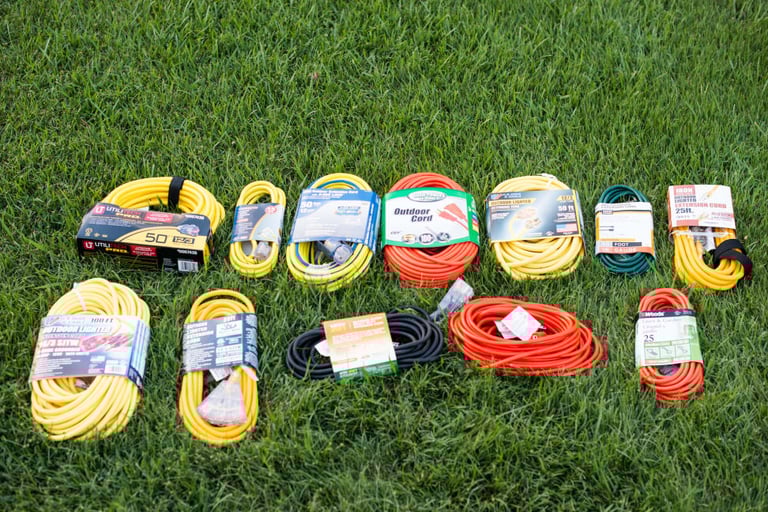
The safest way to power spring inflatables outdoors is to use a 12–14 gauge outdoor‑rated (SJTW) extension cord, plug it into a GFCI‑protected outlet, and shield the connection with a weatherproof cord cover. Keep cord runs under 50–100 feet, avoid daisy‑chaining, and choose cords that stay flexible in cold early‑spring temperatures.
Overview
Spring inflatables need stable, weather‑safe power to run reliably through cold mornings, damp afternoons, and unpredictable March and April storms. This guide explains which extension cords to use, how to protect outdoor plug connections from moisture, how to plan electrical loads for multiple inflatables, and how to build a safe, durable setup that lasts the entire season.
Introduction: A Spring Setup Story
Early spring decorating has its own rhythm. The grass is still waking up, the air carries that mix of thaw and chill, and the weather can swing from sunshine to sleet in a single afternoon. Over the years, I’ve learned that powering inflatables in March and April isn’t just about wattage—it’s about weatherproofing, cord selection, and smart routing. A cheerful bunny or garden gnome inflatable only stays cheerful if the blower gets steady, safe power. And in spring, the environment tests every weak point in your setup.
For a complete guide to powering inflatables safely and efficiently, visit The Complete Guide to Energy, Power & Smart Tech for Holiday Inflatables
Choosing the Right Outdoor Extension Cord
Understanding Cord Gauge (AWG)
Inflatable blowers draw steady current, so cord thickness directly affects performance.
16 AWG — Too light for most inflatables
14 AWG — Good for small to medium inflatables
12 AWG — Best for long runs or multiple blowers
Electricians consistently note that blower motors perform best when voltage drop is minimized, which is why 12 AWG is the gold standard for outdoor displays.
Length Limits & Voltage Drop
Cord length affects how much power actually reaches the blower.
Under 50 ft → 14 AWG is fine
50–100 ft → Use 12 AWG
Over 100 ft → Avoid (blower performance drops)
Cold‑Weather Flexibility
Early spring mornings can dip below freezing. Many cords stiffen or crack at low temperatures.
Look for labels such as:
SJTW
Cold‑weather flexible
‑40°F rated
Cold‑weather cords coil easily, resist insulation damage, and stay safe even when the ground is frosty.
Safe Power Setups for Spring Inflatables
GFCI Protection
A GFCI outlet or portable GFCI adapter is essential. If moisture enters the system, GFCI protection cuts power instantly—preventing shock and protecting your blower.
Weatherproofing Connections
Spring brings rain, dew, mud, and puddles. Protect every plug connection using:
Weatherproof cord covers
Raised power stakes
Drip loops
These prevent moisture from reaching the plug and reduce GFCI trips.
Load Planning for Multiple Inflatables
Most inflatable blowers draw 0.5–1.2 amps. A typical outdoor circuit handles 12–15 amps, but long cords and cold starts increase load.
A safe rule: No more than 3–4 inflatables per circuit.
Common Misconceptions
Indoor cords are not safe outdoors
Daisy‑chaining cords increases heat and resistance
Inflatables do need GFCI protection
Cold weather affects cord flexibility and safety

Product Recommendations
1. 12/3 Heavy‑Duty Outdoor Extension Cord (50 ft, SJTW Rated)
Why it fits: Thick 12‑gauge wire prevents voltage drop for medium–large inflatables.
Who it’s for: Homeowners running multiple blowers or long distances.
Why selected: Highly visible, durable, and reliable in cold weather.
Product Discovery Fingerprint: "12/3 heavy duty outdoor extension cord 50 ft SJTW yellow cold weather"
2. 12/3 Cold‑Weather Extension Cord (‑40°F Rated, 50 ft)
Why it fits: Designed for early‑spring freezes and thaw cycles.
Who it’s for: Northern states where March and April still bring frost.
Why selected: Remains flexible in cold mornings and resists cracking.
Product Discovery Fingerprint: "12/3 cold weather extension cord -40F flexible outdoor SJTW"
3. 12/3 Outdoor Extension Cord (25 ft, SJTW Rated)
Why it fits: Short, heavy‑duty cord ideal for porch or patio inflatables.
Who it’s for: Small displays close to the outlet.
Why selected: UL‑listed, durable, and easy to coil.
Product Discovery Fingerprint: "12/3 outdoor extension cord 25 ft SJTW heavy duty"
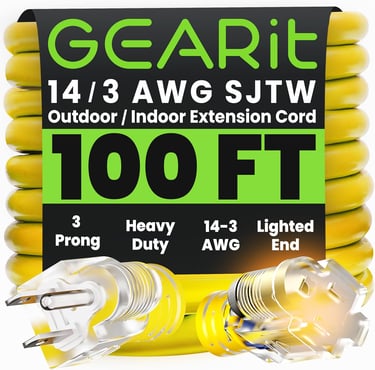
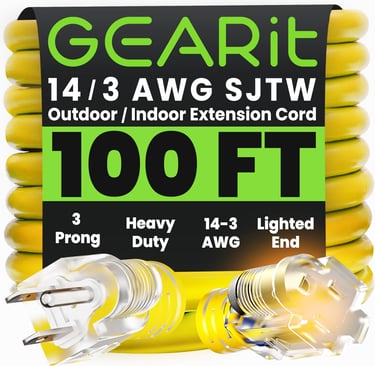
4. 14/3 Outdoor Extension Cord (100 ft)
Why it fits: Long reach for wide yard displays.
Who it’s for: Homeowners spacing inflatables across the lawn.
Why selected: Supports most small–medium blowers without excessive voltage drop.
Product Discovery Fingerprint: "14/3 outdoor extension cord 100 ft lawn display SJTW"
5. Weatherproof Extension Cord Connection Box
Why it fits: Protects plug connections from rain, mud, and puddles.
Who it’s for: Anyone placing inflatables on grass or mulch.
Why selected: Prevents GFCI trips and keeps plugs dry.
Product Discovery Fingerprint: "weatherproof extension cord connection box outdoor waterproof cover"
For cord recommendations that work well for fall displays, see Best Outdoor Extension Cords for Halloween Inflatables.
6. Heavy‑Duty Cord Protector (High‑Moisture Rated)
Why it fits: Shields plug connections in areas prone to heavy spring rain.
Who it’s for: Displays exposed to open yard conditions.
Why selected: Popular among holiday decorators for reliability.
Product Discovery Fingerprint: "heavy duty outdoor cord protector waterproof high moisture"
7. Portable Outdoor GFCI Adapter
Why it fits: Adds GFCI protection to any outdoor outlet.
Who it’s for: Homes with older or unprotected outlets.
Why selected: Essential safety upgrade for inflatable blowers.
Product Discovery Fingerprint: "portable outdoor GFCI adapter inline safety plug"
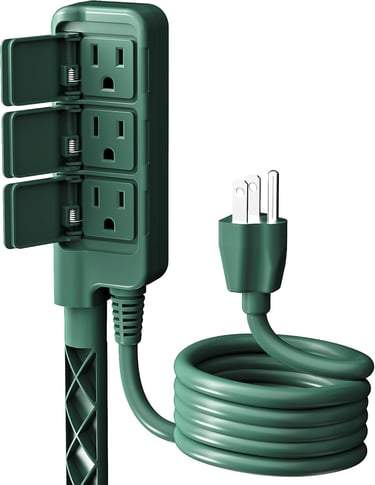
8. 3‑Outlet Outdoor Power Stake
Why it fits: Raises connections off the ground and reduces moisture exposure.
Who it’s for: Multi‑inflatable setups.
Why selected: Keeps plugs organized, visible, and safe.
Product Discovery Fingerprint: "outdoor power stake 3 outlet raised plug lawn"
Practical Setup Examples
Small Porch Display
One 4–6 ft inflatable
25 ft 12/3 cord
Weatherproof cover
GFCI outlet
Front Yard Easter Scene
Three inflatables spaced across lawn
50 ft 12/3 cord + power stake
Weatherproof multi‑tap
Drip loops
Townhome Patio
One medium inflatable
Cold‑weather cord
Cord routed overhead to avoid puddles
For Easter‑specific power setup tips, read Ultimate Guide to Powering Your Easter Inflatables Safely.
Author Insight
After years of building seasonal displays, I’ve learned that a single bad cord can shut down an entire scene. Spring weather is unpredictable—rain one day, frost the next—and inflatables need stable, safe power to shine. Choosing the right cord isn’t just a technical detail; it’s the foundation of a display that lasts all season.
FAQ
Can I use an indoor extension cord outside? NO!—indoor cords lack insulation and can absorb moisture.
How long can an extension cord be for inflatables? Ideally under 50 ft; up to 100 ft with 12 AWG.
Do inflatables need surge protection? Not required, but helpful during spring storms.
Why does my inflatable shut off in the rain? Likely a GFCI trip caused by moisture at the plug connection.