
The Complete Guide to Energy, Power & Smart Tech for Holiday Inflatables
Learn how much energy holiday inflatables really use, how to cut power costs, and how smart tech can make every seasonal display safer, easier, and more efficient.
3/17/202631 min read
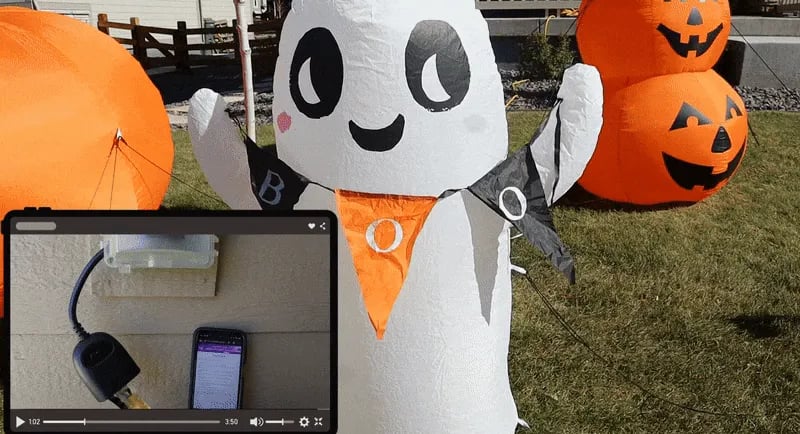
Holiday inflatables use far less electricity than most people expect—typically the same or less than a single indoor lamp—yet smart tech, proper power setups, and seasonal best practices can reduce energy costs even further. This guide breaks down real‑world wattage, safe extension cord choices, climate‑specific tips, and smart‑home upgrades that make every holiday display brighter, safer, and more efficient.
Overview
Holiday inflatables are one of the most energy‑efficient outdoor décor options, but their total cost depends on wattage, run‑time, climate, and the power gear you choose. This article explains how much electricity inflatables use across all major holidays, how they compare to other decorations, and how to optimize your setup with timers, smart plugs, and low‑draw accessories. You’ll also learn how to prevent energy spikes, troubleshoot power issues, and build a safe, weather‑ready system for any season—from Halloween to Easter to Valentine’s Day. Each supporting topic receives a full, multi‑paragraph section with examples, safety notes, and practical guidance.
Introduction
Holiday inflatables have a reputation for being big, bright, and full of personality—but not for being energy hogs. In reality, most inflatables use surprisingly little electricity, often less than a single indoor lamp. What does make a difference is how long you run them, the climate you live in, and the power gear you choose. That’s where smart tech, proper extension cords, and a few operator‑ready habits can transform your display from “plug it in and hope” to a safe, efficient setup that performs beautifully in any season.
Across the holidays—Halloween, Christmas, Easter, Valentine’s Day, and even the smaller seasonal moments—your inflatables face different weather, moisture levels, daylight patterns, and power demands. This guide walks you through all of it with hands‑on clarity. You’ll learn how wattage really works, how to compare inflatables to other décor types, and how to use smart plugs or timers to cut energy costs without dimming your display. We’ll also cover safety, troubleshooting, and real‑world examples from yards of every size, so you can build a setup that’s efficient, reliable, and ready for whatever your climate throws at it.
SECTION 1 — Understanding Energy Usage for Holiday Inflatables
What “energy usage” really means
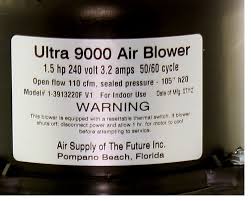
Holiday inflatables run on small blower motors that use far less electricity than most people expect. A typical inflatable draws about the same power as a household fan, and even large Christmas or Halloween pieces rarely exceed the wattage of a single indoor lamp. The key is understanding how wattage, blower size, and run‑time interact—because those three factors determine your actual energy bill.
For practical ways to reduce energy costs across all your outdoor decorations, see Energy Usage for Outdoor Decorations and Money Saving Tips.
How blower wattage works
Most inflatables use continuous‑run blowers, which means they stay on the entire time the inflatable is upright.
Common wattage ranges:
Small inflatables (3–5 ft): 25–60 watts
Medium inflatables (6–8 ft): 60–120 watts
Large inflatables (9–12 ft): 120–200+ watts
Giant inflatables (12–20 ft): 200–300+ watts
Even at the high end, these numbers are modest compared to incandescent light strings, animated props, or older blow molds.
To understand how holiday displays can unexpectedly raise your electric bill, read How Holiday Decorations Can Skyrocket Your Energy Bill.
Real‑world examples
A 6‑ft Easter bunny inflatable running 6 hours per night for a month costs only a few dollars in most U.S. regions.
A 12‑ft Halloween ghost may double the wattage but still stays well below the draw of a fog machine or projector.
A 20‑ft Christmas Santa uses more power but remains efficient compared to large LED displays or animated yard figures.
Climate and location impact
Cold climates increase blower strain slightly, especially in December when motors must push against stiff vinyl. Humid regions can cause minor resistance in the motor housing. Windy areas force blowers to work harder to maintain shape. None of these factors dramatically increase wattage, but they can affect performance and longevity.
How inflatables compare to other décor
LED string lights: extremely efficient, but large quantities add up
Incandescent lights: major energy spikes
Projectors: often draw more than a medium inflatable
Animated props: motors + lights = higher total load
Inflatables sit in the “surprisingly efficient” category, especially when paired with smart scheduling.
Troubleshooting energy‑related issues
Blower seems weak: check for partially blocked air intakes
Inflatable won’t stay upright: wind load may be forcing the blower to work harder
Breaker trips: usually caused by extension cord issues, not the inflatable itself
For troubleshooting inflatables that won’t stay fully inflated, see Fixing Weak Blowers: Why Your Inflatable Won’t Stay Up.
Safety notes
Always use outdoor‑rated cords and GFCI outlets
Keep blowers clear of snow, leaves, and mulch
Avoid daisy‑chaining cords, especially in wet climates
SECTION 2 — How Holiday Decorations Can Skyrocket Your Energy Bill (Myth‑Busting + Reality Check)
Why some décor types spike energy usage
Inflatables rarely cause energy bill surprises. The real culprits are older, inefficient décor items—especially incandescent light strings, outdated blow molds, and high‑draw animated props. These items can multiply your wattage quickly, especially when used in large quantities. Inflatables, by contrast, maintain a predictable, steady draw.
Hidden energy traps
Incandescent Christmas lights: can draw 10–20× more power than LEDs
Old blow molds: often run 60–120 watts each
Fog machines: extremely high draw during heat cycles
Projectors: 100–300 watts depending on brightness
Outdated timers: mechanical timers can drift and run longer than intended
These traps often go unnoticed because they blend into the display.
Climate‑based factors
Freeze cycles: cold vinyl stiffens, causing blowers to work harder
Snow load: heavy snow can partially collapse an inflatable, increasing resistance
Wet leaves + rain: can cause GFCI trips, leading to repeated restarts
High winds: force blowers to maintain pressure more aggressively
While these don’t dramatically increase wattage, they can cause runtime spikes—the real driver of higher bills.
Example scenarios
Halloween yard: fog machines + projectors + animatronics often use more power than all inflatables combined
Christmas yard: incandescent lights can dwarf inflatable wattage
Spring yard: inflatables remain efficient, but early‑season storms may cause GFCI resets and longer run cycles
Troubleshooting energy spikes
Check for incandescent holdovers from older décor
Inspect timers for drift
Look for multiple high‑draw items on the same circuit
Verify that extension cords are not overheating or causing voltage drop
Safety notes
Never mix incandescent and LED strings on the same plug
Keep fog machines on separate circuits
Avoid running projectors in heavy rain or fog
SECTION 3 — Energy Usage for Outdoor Decorations & Money‑Saving Tips
How inflatables fit into the bigger outdoor décor picture
When you look at your yard as a whole—lights, props, projectors, inflatables—each category contributes differently to your energy bill. Inflatables remain one of the most efficient décor types because their wattage is predictable and steady. The real variation comes from lighting choices, run‑time, and whether you’re mixing older incandescent items with newer LED or smart‑controlled gear.
Seasonal wattage comparisons
Different holidays bring different energy patterns.
Halloween: fog machines and projectors often overshadow inflatable wattage.
Christmas: incandescent strings (if still used) dominate energy usage.
Spring holidays: inflatables remain efficient, but early‑season storms can cause GFCI resets and longer run cycles.
Valentine’s Day: small displays mean low total wattage, but cold snaps can stiffen vinyl and increase blower strain slightly.
Hands‑on ways to reduce total consumption
Use smart plugs or timers to limit run‑time to peak viewing hours.
Switch to LED lighting for accent décor.
Avoid long extension cord runs that cause voltage drop and blower inefficiency.
Group inflatables by size so you can schedule larger ones for shorter windows.
Keep blower intakes clear to prevent unnecessary strain.
Mini case studies
Small yard: A single 6‑ft inflatable + LED pathway lights can run for under $2–$4 per month in most regions.
Medium yard: Three inflatables + LED strings + a projector typically stay under $10–$15 per month.
Large yard: Ten inflatables + mixed lighting can still remain efficient with smart scheduling and LED conversions.
Troubleshooting common issues
Unexpected bill increase: check for incandescent holdovers or timers running longer than intended.
Inflatables running sluggishly: inspect for clogged intakes or cold‑weather stiffening.
Breaker trips: usually caused by overloaded circuits or wet‑weather GFCI sensitivity.
Safety notes
Always use outdoor‑rated cords and weatherproof covers for plugs.
Keep cords elevated or routed away from puddles and thawing ground.
Avoid mixing high‑draw items (fog machines, projectors) on the same circuit as inflatables.
SECTION 4 — How Much Electricity Do Spring Inflatables Use? (Season‑Specific Deep Dive)
Spring inflatables vs. winter inflatables
Spring inflatables often run more efficiently because temperatures are milder and vinyl stays flexible. Blowers don’t have to fight stiff material the way they do in December. However, spring brings its own challenges—pollen, moisture, and early thunderstorms can affect blower performance and GFCI stability.
Seasonal weather factors
Moisture: Spring rain increases the chance of GFCI trips, especially with long cord runs.
Pollen: Can clog blower intakes and reduce airflow.
Wind: Early‑season gusts can force blowers to work harder to maintain shape.
Temperature swings: Warm days + cold nights can cause condensation inside the inflatable.
Holiday‑specific examples
Easter: Medium inflatables (6–8 ft) typically run 60–120 watts and remain stable in mild temperatures.
St. Patrick’s Day: Smaller inflatables (3–5 ft) often run under 60 watts and are ideal for early‑season displays.
Mother’s Day: Lightweight, low‑draw inflatables work well for short evening displays.
Troubleshooting early‑season GFCI trips
Check for wet connections—spring rain is notorious for creeping into plug joints.
Use weatherproof cord covers to protect low‑lying areas.
Shorten extension cord runs to reduce voltage drop.
Clear pollen buildup from blower intakes weekly.
Safety notes
Always anchor inflatables securely—spring winds can be unpredictable.
Keep blowers elevated slightly off damp ground.
Use GFCI‑protected outlets and avoid running cords through wet grass after heavy rain.
SECTION 5 — Uncover the Surprising Energy Costs of Holiday Decorations (Comparative Analysis)
Inflatables vs. other décor: the real story
Most homeowners assume inflatables are the biggest energy draw in their yard, but the numbers tell a different story. Inflatables use steady, predictable wattage, while other décor types—especially older lighting and animated props—can spike dramatically. When you compare watt‑for‑watt, inflatables often outperform expectations and remain one of the most efficient ways to fill a yard with visual impact.
LED vs. incandescent lighting
LED lights: extremely efficient, often using 80–90% less energy than incandescent strings.
Incandescent lights: the biggest energy offender in most holiday displays. A single 100‑bulb incandescent string can draw more power than a medium inflatable.
Mixed displays: if you still have old incandescent strings in storage, they can quietly double or triple your energy usage.
Projectors vs. inflatables
Projectors are popular for Halloween and Christmas, but they often draw 100–300 watts, depending on brightness and model. That’s equal to or greater than many large inflatables. If you run multiple projectors, the wattage adds up quickly—especially if they’re left on longer than intended.
Animated props vs. static props
Animated props combine motors, lights, and sometimes sound systems. These layered components can easily exceed the wattage of a medium or large inflatable. Static props, on the other hand, use minimal power unless they rely on incandescent lighting.
Real‑world cost breakdowns
One 8‑ft inflatable: often costs less than $1–$3 per month to run.
One projector: can cost $3–$10 per month depending on run‑time.
Ten incandescent strings: can exceed $15–$20 per month.
Fog machine: extremely high draw during heat cycles; can surpass all inflatables combined.
Troubleshooting unexpected energy spikes
Look for old incandescent strings hiding in your décor bins.
Check if projectors are running longer than intended.
Inspect animated props for motor strain or failing components.
Verify that timers haven’t drifted or reset after a storm.
For a deeper look at hidden energy drains in holiday displays, check out Uncover the Surprising Energy Costs of Holiday Decorations.
Safety notes
Keep projectors and animated props on separate circuits from inflatables.
Avoid running fog machines near inflatables—heat cycles can cause breaker trips.
Replace any incandescent strings showing cracked insulation or corrosion.
SECTION 6 — Save Energy Without Dimming Your Holiday Spirit (Practical Optimization)
Smart scheduling for maximum savings
One of the easiest ways to cut energy costs is to reduce run‑time without reducing visual impact. Most displays only need to run during peak viewing hours—typically 5 PM to 10 PM in winter and 7 PM to 10 PM in spring or summer. Smart plugs and timers make this effortless, ensuring your inflatables shine when people are actually outside to enjoy them.
Low‑draw accessory choices
Pairing inflatables with LED pathway lights, solar accents, or low‑watt spotlights can create a dramatic scene without adding much to your energy bill. LED floodlights, in particular, can highlight inflatables beautifully while using only a fraction of the power of older halogen models.
For simple ways to reduce power usage without sacrificing display quality, see Save Energy Without Dimming Your Holiday Spirit.
Reducing blower strain
Clear air intakes weekly to maintain airflow.
Anchor inflatables properly to prevent wind‑induced strain.
Elevate blowers slightly in snowy or wet climates.
Avoid long extension cord runs that cause voltage drop and weaken blower performance.
Climate‑specific optimization
Snow belt regions: keep blowers clear of snowbanks and ice buildup.
Coastal humidity: use weatherproof cord covers to prevent moisture intrusion.
Desert climates: secure inflatables against gusty winds that force blowers to work harder.
Rain‑heavy regions: shorten cord runs and elevate connections to avoid GFCI trips.
Example: Cutting run‑time without losing visual impact
A Christmas yard with six inflatables running 12 hours per day can cut energy usage by 50% simply by switching to a 6‑hour evening schedule. The display looks identical to passersby, but the energy savings are immediate and significant.
Troubleshooting optimization issues
Inflatables look dim or weak: check for voltage drop or clogged intakes.
Timers not triggering: verify weatherproofing and reset after storms.
Smart plugs disconnecting: ensure strong Wi‑Fi coverage or use outdoor‑rated models.
Safety notes
Never bury cords under snow or mulch.
Keep all connections off the ground using stakes or elevated platforms.
Use GFCI‑protected outlets for every outdoor display.
SECTION 7 — Top Halloween Display Ideas to Save Energy and Money
Why Halloween is a sneaky energy‑heavy holiday
Halloween displays often rely on projectors, fog machines, animatronics, and older incandescent lighting. These items can quietly multiply your wattage far more than inflatables do. The good news is that with a few smart swaps and layout tweaks, you can build a dramatic Halloween yard that uses a fraction of the energy.
Low‑draw Halloween inflatable picks
Halloween inflatables are naturally efficient, but some styles are especially low‑draw:
Tall but narrow ghosts (less vinyl mass = easier inflation)
Simple pumpkins with single blowers
Flat‑panel inflatables that rely on internal LEDs rather than large blowers
These options deliver big visual impact without the wattage of animated props or fog machines.
For holiday‑specific energy‑saving ideas, especially for Halloween, read Top Halloween Display Ideas to Save Energy and Money.
Smart lighting pairings
Use LED spotlights to highlight inflatables instead of halogen floods.
Add solar pathway lights for trick‑or‑treat routes.
Replace old orange incandescent strings with LED rope lights for dramatic color at minimal cost.
Motion‑sensor tricks
Motion sensors are perfect for Halloween because they only activate when someone approaches.
Great low‑energy uses:
Triggering a spotlight on a ghost inflatable
Activating a sound module
Turning on a short‑run projector for a jump‑scare moment
This keeps your yard dark and eerie while saving energy.
For safe, reliable cord recommendations, check out Best Outdoor Extension Cords for Halloween Inflatables.
Fog machine energy traps
Fog machines are notorious for high wattage during heat cycles. If you must use one:
Run it only during peak trick‑or‑treat hours
Keep it on a separate circuit from inflatables
Use a timer to limit heat cycles
Example: A Halloween yard that cuts 40% of energy use
A homeowner swaps halogen floods for LEDs, replaces two animated props with a single tall ghost inflatable, and puts the projector on a motion sensor. The display looks even more dramatic, but the energy bill drops significantly.
Troubleshooting Halloween setups
Projector flicker: often caused by long extension cord runs
Fog machine tripping breakers: move to its own circuit
Inflatables collapsing in wind: anchor with dual‑point tethers
Safety notes
Keep cords away from leaf piles—they trap moisture
Use GFCI outlets for all outdoor Halloween gear
Avoid running fog machines near inflatables to prevent heat damage
SECTION 8 — Best Outdoor Extension Cords for Halloween Inflatables
Why extension cords matter more than people think
A great Halloween display depends on safe, efficient power delivery. The wrong extension cord can cause voltage drop, blower strain, overheating, or even breaker trips. Choosing the right gauge and length ensures your inflatables stay fully inflated and your circuits stay stable—even in cold, wet October weather.
Gauge selection (14/12/10 AWG)
14‑gauge: best for short runs (under 25 ft) and small inflatables
12‑gauge: ideal for medium inflatables or 25–50 ft runs
10‑gauge: recommended for long runs or powering multiple inflatables on one line
Heavier gauge = less voltage drop = stronger blower performance.
Length vs. voltage drop
Long cords increase resistance, which weakens blower output.
Rules of thumb:
Keep cords as short as possible
Avoid daisy‑chaining multiple cords
Use one long, heavy‑gauge cord instead of two lighter ones
Weather‑rated cord types
For Halloween’s wet leaves, rain, and early frost, choose:
SJTW‑rated cords (cold‑weather flexible)
Outdoor‑rated vinyl jackets
Bright colors for visibility during setup and teardown
Safety notes for wet October conditions
Elevate connections using cord risers or stakes
Keep plugs away from leaf piles and puddles
Use weatherproof cord covers for all joints
Always plug into a GFCI‑protected outlet
Troubleshooting cord‑related issues
Warm cords: gauge too light or run too long
Blower slowing down: voltage drop from long runs
Breaker trips: moisture intrusion or overloaded circuit
Flickering LEDs: poor connection or damaged cord jacket
Mini example: A stable Halloween power layout
A homeowner uses a single 12‑gauge, 50‑ft SJTW cord to power two medium inflatables and one LED spotlight. All connections are elevated and weather‑sealed. The display runs flawlessly through rain, wind, and cold snaps.
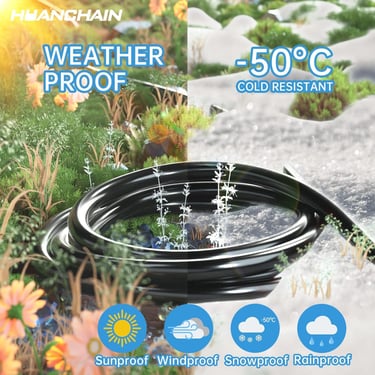
Heavy‑Gauge Outdoor Extension Cord (12‑Gauge / 10‑Gauge SJTW)
1. What This Product Is
A heavy‑gauge, outdoor‑rated extension cord designed for powering inflatables, spotlights, and other holiday décor safely and efficiently. Built with SJTW cold‑weather jackets, these cords remain flexible in freezing temperatures and resist moisture, abrasion, and UV exposure. Available in 12‑gauge and 10‑gauge options, they minimize voltage drop and keep blowers running at full strength.
2. Why It Fits This Section
Extension cords are the backbone of every inflatable display. Using the wrong gauge can cause blower strain, sagging inflatables, warm cords, or even breaker trips. A heavy‑gauge cord ensures stable power delivery across long runs, wet conditions, and cold climates—directly supporting the pillar’s focus on energy efficiency and safety.
3. Who It’s For
Homeowners running medium to large inflatables
People with long yard runs (25–100 ft)
Operators in cold, wet, or windy climates
Anyone who has experienced weak blowers or GFCI trips
Users who want a long‑term, durable power solution
4. Why This Product Was Selected
Heavy‑gauge cords solve the most common power issues in inflatable displays. They reduce voltage drop, stay flexible in freezing temperatures, and handle higher loads safely. SJTW‑rated jackets are ideal for Halloween rain, Christmas snow, Easter mud, and Valentine’s freeze cycles.
5. Problems It Solves
Weak or sagging inflatables caused by voltage drop
Warm cords from overloaded or thin‑gauge lines
Breaker trips due to moisture or resistance
Blower slowdowns in cold weather
Flickering LEDs from unstable power delivery
6. Limitations
Heavier and bulkier than standard cords
More expensive than 14‑gauge options
Must still be elevated and weatherproofed at connection points
Not ideal for powering multiple high‑draw items on a single run
7. Discovery Fingerprint
“12‑gauge outdoor extension cord”
“10‑gauge heavy‑duty extension cord”
“SJTW cold‑weather extension cord”
“Extension cord for inflatables”
“Outdoor power cord for Christmas lights”
SECTION 9 — Outdoor Extension Cords & Power Setups for Spring Inflatables
Why spring setups need different power planning
Spring inflatables face a unique mix of moisture, thawing ground, and unpredictable storms. Unlike the dry cold of winter or the crisp evenings of fall, spring brings puddles, soft soil, and early‑season humidity that can affect both cords and blowers. A safe, efficient power setup ensures your Easter bunnies, St. Patrick’s Day shamrocks, and Mother’s Day décor stay upright and running smoothly.
For warm‑weather power setup tips, see Outdoor Extension Cords & Power Setups for Spring Inflatables (Beginner Safe Guide).
Managing moisture and GFCI sensitivity
Spring is the season where GFCI outlets work overtime. Even a small amount of moisture in a cord joint can cause nuisance trips.
Key practices:
Use weatherproof cord covers for every connection.
Elevate plugs using stakes or risers to avoid puddles.
Keep cords away from downspouts, gutters, and low‑lying areas.
Avoid running cords through early‑season mud or soft soil.
Cord routing around early‑season landscaping
Spring yards often have fresh mulch, new plantings, and soft ground.
Smart routing tips:
Run cords along hard edges (driveways, walkways) when possible.
Avoid burying cords under mulch—it traps moisture.
Use bright‑colored cords for visibility during setup and teardown.
Keep cords loose enough to accommodate shifting soil after rain.
Holiday‑specific examples
Easter: Medium inflatables (6–8 ft) often sit on damp grass; elevate blowers slightly to prevent moisture intrusion.
St. Patrick’s Day: Smaller inflatables near walkways benefit from short, heavy‑gauge cords to avoid voltage drop.
Mother’s Day: Evening displays pair well with LED spotlights and short cord runs.
Troubleshooting spring power issues
Repeated GFCI trips: moisture in a connection or cord jacket.
Blower slowdowns: pollen buildup or voltage drop from long runs.
Flickering LEDs: damaged cord or poor connection.
Warm cords: gauge too light for the load.
Safety notes
Always plug into GFCI‑protected outlets.
Keep all connections off the ground.
Avoid routing cords through flower beds or fresh mulch.
Use SJTW‑rated cords for cold‑to‑warm temperature swings.
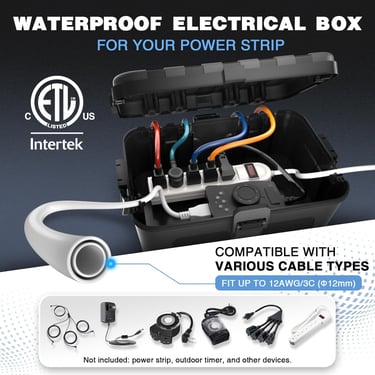
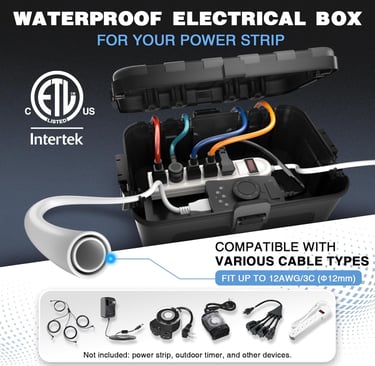
Weatherproof Outdoor Cord Cover (Connection Protector)
1. What This Product Is
A weatherproof outdoor cord cover designed to protect plug‑to‑plug connections from rain, snow, puddles, wet leaves, and freeze cycles. These covers snap or latch shut around the joint between two cords, creating a sealed barrier that prevents moisture intrusion—the #1 cause of GFCI trips and inflatable shutdowns across all seasons.
2. Why It Fits This Section
Cord covers directly support the pillar’s core themes: energy efficiency, safety, and climate‑resilient setups. They prevent nuisance GFCI trips, reduce the risk of short circuits, and keep inflatables running consistently in wet or unpredictable weather. They’re essential for Halloween rain, Christmas snow, Easter mud, and Valentine’s freeze‑thaw cycles.
3. Who It’s For
Homeowners in wet or freeze‑prone climates
Anyone who has experienced GFCI trips
Operators running multiple inflatables with several cord joints
People who want set‑and‑forget reliability during storms
Beginners who need a simple, high‑impact safety upgrade
4. Why This Product Was Selected
Weatherproof cord covers solve the most common failure point in inflatable displays: moisture entering the plug connection. They’re durable, easy to install, and compatible with all major cord types. Their sealed design keeps connections dry even during heavy rain, snowmelt, or early‑season mud.
5. Problems It Solves
Repeated GFCI trips caused by moisture
Inflatables shutting off during storms
Corrosion at plug joints
Voltage instability from wet or partially exposed connections
Safety hazards from cords sitting in puddles or wet grass
6. Limitations
Must be fully latched to work properly
Not a substitute for elevating cords off the ground
Bulky on very short cord runs
Some models may not fit oversized holiday light plugs
7. Discovery Fingerprint
“Weatherproof cord cover outdoor”
“Extension cord connection protector”
“Outdoor plug cover for Christmas lights”
“Cord joint waterproof box”
“GFCI trip prevention cord cover”
SECTION 10 — Ultimate Guide to Powering Your Easter Inflatables Safely (Holiday‑Specific Safety)
Why Easter setups need special attention
Easter inflatables often go up during a season of rapid weather changes—warm afternoons, cold nights, sudden rain, and early‑season storms. These conditions can stress blowers, cords, and GFCI outlets. A safe Easter setup focuses on moisture control, stable power distribution, and proper anchoring.
For spring‑specific power usage and cost breakdowns, see How Much Electricity Do Spring Inflatables Use? Real Costs & Easy Ways to Save.
Multi‑inflatable power distribution
If you’re running multiple Easter inflatables—bunnies, eggs, chicks, or spring animals—spread the load across circuits when possible.
Best practices:
Keep large inflatables on their own line.
Group small inflatables together on a single heavy‑gauge cord.
Avoid daisy‑chaining multiple cords.
Use outdoor‑rated splitters only when necessary and always elevated.
GFCI best practices for spring weather
Spring moisture is the #1 cause of Easter display failures.
To prevent issues:
Use weatherproof plug covers on every connection.
Elevate cords using stakes or cord risers.
Keep blowers away from puddles and soft soil.
Inspect cords after every storm for moisture intrusion.
Weatherproofing connections
Wrap plug joints in weatherproof cord boots.
Use drip loops to prevent water from running into connections.
Keep all connections at least 6 inches off the ground.
Avoid placing inflatables directly under gutters or roof edges.
Example: A 5 ft. inflatable Easter setup with safe load balancing
A homeowner runs two medium inflatables on a 12‑gauge cord, two small inflatables on a short 14‑gauge cord, and a large centerpiece bunny on its own dedicated line. All connections are elevated and weather‑sealed. The display runs flawlessly through rain and temperature swings.
For Easter‑specific power safety and setup tips, read the Ultimate Guide to Powering Your Easter Inflatables Safely.
Troubleshooting Easter power issues
Inflatable won’t stay inflated: check for wet blower intake or clogged pollen.
Breaker trips after rain: inspect cord joints for moisture.
Blower slows at night: cold vinyl stiffening; elevate blower or shorten cord run.
LED accents flicker: voltage drop or damaged cord jacket.
Safety notes
Always use GFCI outlets for Easter displays.
Keep cords away from children’s play areas during egg hunts.
Avoid placing inflatables on steep slopes where water can pool.
Inspect all cords weekly during the season.
SECTION 11 — Why You Should Add Smart Tech to Your Outdoor Holiday Setup (Smart‑Home Rationale)
Smart tech makes inflatables cheaper, safer, and easier to run
Smart plugs, timers, and automation tools aren’t just conveniences—they’re some of the most effective ways to cut energy usage across every holiday season. By controlling run‑time, adjusting schedules automatically, and responding to weather conditions, smart tech helps you get the most visual impact with the least wasted power. For homeowners who run multiple inflatables, the savings add up quickly.
Energy savings through automation
Smart plugs allow you to:
Run inflatables only during peak viewing hours
Create different schedules for weekdays vs. weekends
Shut down displays automatically during storms
Reduce overnight run‑time without lifting a finger
Even a simple 4‑hour reduction per night can cut energy usage by 30–50% depending on your display size.
For smart‑tech upgrades that make your display easier to manage, see Why You Should Add Smart Tech to Your Outdoor Holiday Setup.
Convenience benefits across all holidays
Halloween: Schedule inflatables to activate at dusk and shut off after trick‑or‑treat hours.
Christmas: Use sunrise/sunset automation to match changing daylight.
Easter: Automatically shut off during heavy rain to prevent GFCI trips.
Valentine’s Day: Trigger soft lighting and inflatables for a timed “reveal” moment.
Smart tech removes the guesswork and keeps your display consistent.
Safety improvements
Smart plugs and timers reduce the risk of:
Overheating cords
Overloaded circuits
Forgotten overnight run‑time
Running inflatables during high winds or storms
Some smart plugs even allow remote shutoff, which is invaluable during sudden weather changes.
Climate‑based benefits
Cold regions: Automate warm‑up cycles to prevent blower strain.
Rain‑heavy regions: Auto‑off triggers during moisture spikes.
Windy regions: Pair with smart weather alerts to shut down tall inflatables.
Troubleshooting smart tech issues
Wi‑Fi dropouts: Use outdoor‑rated plugs with stronger antennas.
Timer drift: Sync schedules weekly or use sunrise/sunset mode.
Cold‑weather failures: Choose plugs rated for freezing temperatures.
Safety notes
Only use outdoor‑rated smart plugs.
Keep all smart devices elevated and weather‑protected.
Avoid overloading a single smart plug with multiple large inflatables.
Outdoor Smart Plug (Dual‑Outlet, Weather‑Rated)
1. What This Product Is
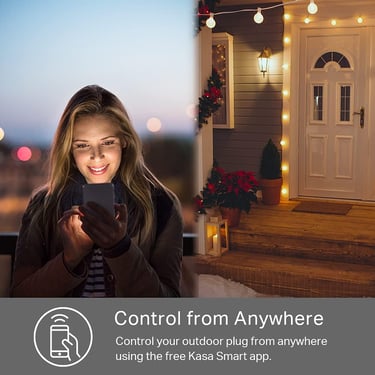
An outdoor‑rated smart plug designed to control one or two inflatables, LED spotlights, or accent décor items. It connects to your home Wi‑Fi and allows you to automate run‑times, set schedules, and remotely turn your display on or off. Built for rain, snow, and freeze cycles, it’s a foundational tool for any energy‑efficient holiday setup.
2. Why It Fits This Section
This module supports the pillar’s core theme: reducing energy usage without reducing visual impact. Smart plugs are the single most effective way to cut run‑time, prevent overnight operation, and automate schedules across all holidays—Halloween, Christmas, Easter, Valentine’s Day, and more.
3. Who It’s For
Homeowners running 1–4 inflatables
Anyone wanting hands‑off automation
People in wet or freeze‑prone climates
Users who want remote control during storms or wind events
Beginners who want a simple, plug‑and‑play upgrade
4. Why This Product Was Selected
Outdoor smart plugs offer the best balance of durability, weather resistance, and automation features. They’re reliable in rain, snow, and temperature swings, and they integrate easily with Alexa, Google Home, or app‑based controls. They also support sunrise/sunset automation, which is ideal for shifting daylight across seasons.
5. Problems It Solves
Eliminates wasted energy from all‑night operation
Prevents inflatables from running during storms
Reduces breaker trips by staggering start times
Fixes timer drift caused by power outages
Allows remote shutoff during high winds or freeze cycles
6. Limitations
Requires strong Wi‑Fi coverage outdoors
Some models struggle in extreme cold (below 0°F)
Not ideal for powering multiple large inflatables on one plug
Needs weatherproofing at the cord connection point
7. Discovery Fingerprint
“Outdoor smart plug”
“Dual‑outlet Wi‑Fi smart plug”
“Weatherproof smart plug for Christmas lights”
“Smart plug for inflatables”
“Outdoor smart timer for holiday décor”
SECTION 12 — Simple Smart Tech Ideas for a Valentine’s Day Outdoor Date
Why Valentine’s Day is perfect for smart‑enhanced décor
Valentine’s Day displays are usually smaller, more intimate, and more focused on ambiance than spectacle. Smart tech lets you create a romantic, low‑energy setup that feels intentional and polished. With just a couple of inflatables, some accent lighting, and a few automated cues, you can transform a front yard or patio into a cozy Valentine’s scene.
Smart pathway lighting for romantic ambiance
LED pathway lights paired with smart dimmers create a warm, inviting glow.
Great uses:
Soft pink or red lighting leading to a porch or patio
Timed lighting that activates only during evening hours
Color‑changing LEDs that shift hues throughout the night
These lights use minimal energy and pair beautifully with Valentine’s inflatables.
Timed inflatables for a “reveal” moment
Smart plugs allow you to:
Turn on a heart‑themed inflatable at the exact moment your partner arrives
Sync inflatables with soft music or lighting
Run short, efficient schedules that keep energy usage low
This creates a memorable moment without running the display all night.
Low‑draw accent lighting
LED spotlights to highlight a heart or Cupid inflatable
Solar lanterns for soft, flickering light
Smart string lights for color‑coordinated themes
All of these options use very little power and work well in February’s early sunsets.
Example: A 2 ft. inflatable Valentine’s setup with smart dimming
A homeowner places a heart arch inflatable near the walkway and a small Cupid inflatable on the porch. Smart pathway lights dim to 40% as the inflatables turn on, creating a warm, romantic glow. A smart plug shuts everything off automatically at 10 PM.
For holiday‑specific smart tech inspiration, check out Simple Smart Tech Ideas for a Valentine’s Day Outdoor Date.
Troubleshooting Valentine’s setups
Lights not syncing: ensure all devices are on the same Wi‑Fi band.
Inflatables slow to rise: cold vinyl; elevate blower or shorten cord run.
Smart plug not responding: check for moisture intrusion or low temperatures.
Safety notes
February freeze cycles can stiffen vinyl—avoid forcing inflatables upright.
Keep cords off icy walkways.
Use outdoor‑rated smart plugs and weatherproof covers.
Outdoor Smart Pathway Lights (Color‑Changing / Low‑Draw)
1. What This Product Is
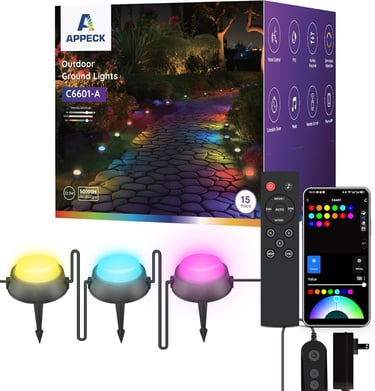
A set of outdoor‑rated smart pathway lights that provide color‑changing, dimmable illumination for walkways, patios, and inflatable scenes. These lights use LED technology for extremely low energy consumption.
2. Why It Fits This Section
Pathway lights enhance holiday displays while using minimal power. Their smart features support automation, color themes, and timed ambiance—perfect for Valentine’s Day, Easter, Halloween, and Christmas.
3. Who It’s For
Homeowners wanting romantic or festive ambiance
Operators who want color‑coordinated scenes
People who prefer hands‑off automation
Users with small or medium yards
4. Why This Product Was Selected
Smart pathway lights offer unmatched versatility: dimming, color changes, schedules, and holiday‑specific presets. They’re durable, weather‑rated, and ideal for low‑energy accent lighting.
5. Problems It Solves
Dark walkways
Inconsistent lighting themes
High‑draw incandescent pathway lights
Manual on/off routines
6. Limitations
Requires Wi‑Fi or Bluetooth
Some models need hubs
Not ideal for very large yards
Must be weatherproofed at connectors
7. Discovery Fingerprint
“Smart pathway lights outdoor”
“Color‑changing LED walkway lights”
“Valentine’s Day pathway lights”
“Holiday smart lighting outdoor”
SECTION 13 — Smart Plugs, Timers & Automation Tools
Why smart control gear matters for inflatable displays
Smart plugs and timers are the backbone of an efficient, low‑maintenance holiday setup. They let you automate run‑times, respond to weather changes, and keep your inflatables running only when they’re actually needed. For homeowners with multiple inflatables across different holidays, these tools can cut energy usage dramatically while improving reliability.
Smart plugs: Wi‑Fi vs. outdoor‑rated models
Indoor smart plugs: great for testing but not safe outdoors.
Outdoor‑rated smart plugs: weather‑sealed, cold‑resistant, and designed for rain, snow, and freeze cycles.
Dual‑outlet smart plugs: ideal for powering two small inflatables on one schedule.
Wi‑Fi range considerations: outdoor plugs need strong signal; mesh systems help in large yards.
Mechanical vs. digital timers
Mechanical timers: simple, reliable, but can drift after storms or power outages.
Digital timers: more precise, often include battery backups, and allow multiple on/off cycles.
Smart timers: combine scheduling with remote control and weather‑responsive automation.
Load limits and weatherproofing
Always check the amp rating of your smart plug or timer.
Outdoor plugs should have IP44 or higher weather resistance.
Use weatherproof cord covers for all joints, even if the plug is outdoor‑rated.
Avoid overloading a single smart plug with multiple large inflatables.
Example setups for different yard sizes
Small yard: one outdoor smart plug controlling a single inflatable + LED spotlight.
Medium yard: two smart plugs—one for inflatables, one for accent lighting.
Large yard: a mix of smart plugs and digital timers to stagger start times and reduce circuit load.
Troubleshooting smart gear
Wi‑Fi dropouts: move router closer or use an outdoor extender.
Timer drift: switch to sunrise/sunset mode for automatic correction.
Cold‑weather failures: choose plugs rated for freezing temperatures.
Moisture issues: ensure all connections are elevated and sealed.
Safety notes
Only use outdoor‑rated smart plugs and timers.
Keep all smart devices off the ground and protected from puddles.
Avoid stacking multiple inflatables on a single smart plug unless load‑tested.
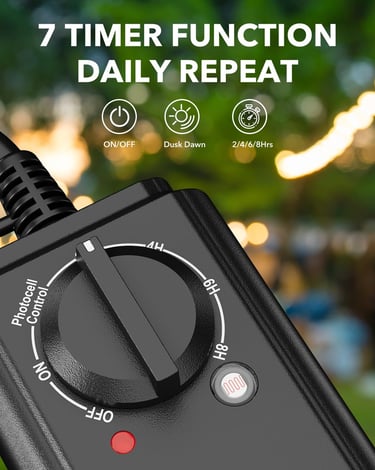
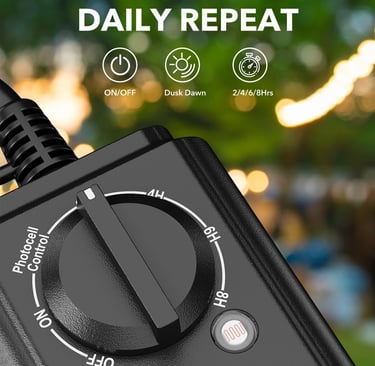
Outdoor Weatherproof Timer (Digital or Mechanical)
1. What This Product Is
A weatherproof outdoor timer designed to automate on/off cycles for inflatables, LED lighting, and accent décor. Available in both mechanical and digital versions, these timers are built to withstand rain, snow, freeze cycles, and high humidity—making them ideal for year‑round holiday displays.
2. Why It Fits This Section
Timers are one of the simplest, most reliable ways to reduce energy usage without sacrificing display quality. They ensure inflatables run only during peak viewing hours and prevent accidental all‑night operation. This directly supports the pillar’s focus on energy efficiency, safety, and smart scheduling.
3. Who It’s For
Homeowners who prefer set‑and‑forget automation
Users who don’t need Wi‑Fi control
People in wet or freeze‑prone climates
Anyone running multiple inflatables on predictable schedules
Operators who want a backup to smart plugs during storms or outages
4. Why This Product Was Selected
Outdoor timers are dependable, affordable, and require no Wi‑Fi. They continue working even during router outages or weak signal conditions. Digital models offer precise scheduling and battery backups, while mechanical timers provide rugged simplicity that works in any climate.
5. Problems It Solves
Prevents inflatables from running overnight
Eliminates timer drift caused by power outages (digital models with backup)
Reduces energy usage by limiting run‑time
Ensures consistent display activation across holidays
Helps stagger start times to avoid breaker trips
6. Limitations
Mechanical timers can drift slightly over long periods
Digital timers require setup and occasional reprogramming
Not ideal for complex automation or weather‑responsive control
Must be weatherproofed at the cord connection point
7. Discovery Fingerprint
“Outdoor digital timer”
“Weatherproof mechanical timer”
“Holiday light timer outdoor”
“Timer for Christmas inflatables”
“Programmable outdoor timer for decorations”
SECTION 14 — Building a Safe, Efficient Power Layout for Any Holiday (Universal Setup Guide)
Why power layout matters more than people realize
A well‑planned power layout prevents overloads, reduces voltage drop, and keeps your inflatables running at full strength. Whether it’s Halloween, Christmas, Easter, or Valentine’s Day, the principles remain the same: balance your circuits, shorten your cord runs, and protect every connection from the elements.
Mapping your circuits
Before plugging in a single inflatable, identify which outlets belong to which circuits.
Best practices:
Spread large inflatables across multiple circuits.
Keep projectors, fog machines, and animated props off the same circuit as inflatables.
Use dedicated lines for giant inflatables (12–20 ft).
Label cords during setup to simplify troubleshooting later.
Avoiding overloads
Check the amp rating of each circuit (usually 15A or 20A).
Add up the wattage of all items on the circuit.
Keep total load at 80% or less of the circuit’s capacity.
Avoid daisy‑chaining multiple extension cords.
Managing long runs
Long cord runs cause voltage drop, which weakens blower performance.
To minimize issues:
Use heavier gauge cords (12‑ or 10‑gauge) for long distances.
Keep cords as short as possible.
Avoid running cords through wet grass, mulch, or snowbanks.
Elevate connections to prevent moisture intrusion.
Climate‑specific routing
Snow belt regions: route cords along shoveled paths or elevated stakes.
Coastal humidity: use weatherproof covers and avoid low‑lying areas.
Desert climates: secure cords against wind and shifting sand.
Rain‑heavy regions: avoid dips in the yard where water collects.
Example: A 10 ft. inflatable Christmas yard with balanced circuits
A homeowner places three large inflatables on separate circuits, groups four medium inflatables on two heavy‑gauge cords, and runs three small inflatables on a single smart plug. All connections are elevated, weather‑sealed, and routed along hard edges. The display runs smoothly through snow, wind, and freezing temperatures.
Troubleshooting layout issues
Breaker trips: overloaded circuit or moisture in a connection.
Inflatables sagging: voltage drop from long cord runs.
LED flicker: poor connection or damaged cord jacket.
GFCI resets: moisture intrusion or improper routing.
Safety notes
Always use GFCI‑protected outlets.
Keep cords away from walkways, driveways, and snowblower paths.
Inspect all cords weekly during the season.
Replace any cord showing cracks, stiffness, or exposed wiring.
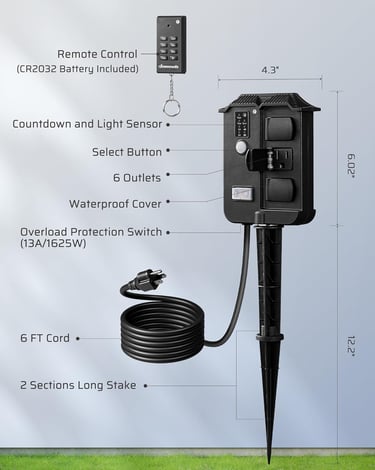
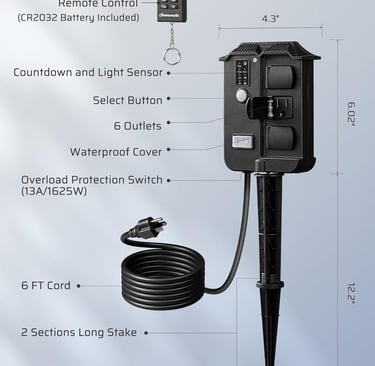
Outdoor Multi‑Tap Power Stake (Weather‑Rated Power Hub)
1. What This Product Is
A weather‑rated outdoor power stake with multiple grounded outlets, designed to distribute power safely across inflatables, spotlights, and holiday décor. Stakes elevate outlets above wet ground and reduce cord clutter.
2. Why It Fits This Section
Power stakes support safe, efficient layouts by preventing cords from lying in puddles, snow, or mud. They help balance circuits and reduce the risk of moisture‑related shutdowns.
3. Who It’s For
Homeowners running 3–10 inflatables
Operators who need organized power distribution
People in wet or freeze‑prone climates
Anyone who wants clean, elevated cord management
4. Why This Product Was Selected
Power stakes solve multiple problems at once: moisture, clutter, unsafe ground‑level connections, and circuit balancing. They’re durable, weather‑rated, and ideal for multi‑inflatable setups.
5. Problems It Solves
Cords lying in puddles
Overloaded single outlets
Unsafe ground‑level plug clusters
Difficult troubleshooting during storms
GFCI trips from wet connections
6. Limitations
Must be placed on stable ground
Not ideal for extremely rocky soil
Some models have short built‑in cords
Still requires weatherproof covers for plug joints
7. Discovery Fingerprint
“Outdoor power stake”
“Weatherproof yard power hub”
“Multi‑outlet stake for Christmas lights”
“Inflatable power distribution stake”
SECTION 15 — Climate, Location & Seasonal Factors That Affect Energy Usage
Why climate matters more than most people realize
Holiday inflatables behave differently depending on temperature, humidity, wind, and soil conditions. A blower that runs effortlessly in mild spring weather may struggle in freezing December air. Likewise, a cord that stays dry in the Southwest may sit in puddles for days in the Pacific Northwest. Understanding how your region affects energy usage helps you build a display that’s efficient, safe, and reliable across all holidays.
Cold‑weather blower strain (Northern U.S., Canada, mountain regions)
Cold vinyl stiffens, forcing blowers to work harder to maintain shape.
Effects:
Slightly higher wattage draw
Slower inflation times
Increased risk of sagging during temperature drops
Mitigation:
Elevate blowers off snow and ice
Use shorter, heavier‑gauge cords
Allow a few extra minutes for warm‑up cycles
High‑humidity motor resistance (Southeast, Gulf Coast, coastal regions)
Moisture increases resistance inside blower housings and can trigger GFCI outlets.
Mitigation:
Use weatherproof cord covers
Elevate all connections
Keep blowers away from wet mulch or standing water
High‑wind power spikes (Plains states, desert regions, coastal zones)
Wind forces blowers to maintain pressure more aggressively.
Mitigation:
Use dual‑point anchoring
Add sandbags for tall inflatables
Shorten cord runs to maintain blower strength
Regional examples
Northeast: freeze‑thaw cycles cause nightly blower strain and morning condensation.
South: humidity and warm nights keep wattage stable but increase GFCI sensitivity.
Midwest: strong winds require extra anchoring and heavier cords.
Pacific Northwest: constant moisture demands elevated connections and weatherproofing.
Southwest: dry air is ideal for blowers, but wind and dust require intake cleaning.
Troubleshooting climate‑related issues
Inflatable sags at night: cold vinyl; shorten cord run or elevate blower.
Repeated GFCI trips: moisture intrusion; inspect cord joints.
Blower sounds louder than usual: wind resistance or clogged intake.
Inflatable won’t stay upright: anchor points too loose for regional wind patterns.
Safety notes
Always match your setup to your climate.
Inspect cords weekly in wet or freeze‑prone regions.
Keep blowers clear of snowbanks, puddles, and drifting sand.
SECTION 16 — Troubleshooting Energy Spikes, Tripped Breakers & Blower Issues
Why troubleshooting matters for energy efficiency
Even the most efficient inflatable setup can run into problems—breaker trips, blower slowdowns, or unexpected energy spikes. Most issues come down to moisture, voltage drop, overloaded circuits, or weather conditions. With a simple diagnostic flow, you can fix most problems in minutes and keep your display running smoothly.
Step‑by‑step diagnostic flow
Check the outlet:
Is the GFCI tripped?
Is the outlet shared with high‑draw items?
Inspect the cords:
Any warm spots?
Any visible moisture or damage?
Check the blower intake:
Leaves, snow, pollen, or debris blocking airflow?
Evaluate the weather:
Cold snap? Heavy rain? High winds?
Test the inflatable on a different outlet:
Helps isolate circuit vs. device issues.
Common causes of energy spikes
Incandescent lighting hidden in your décor bins
Fog machines cycling their heating elements
Projectors running longer than intended
Long extension cord runs causing voltage drop
Cold‑weather blower strain during freeze cycles
Quick fixes
Replace long, thin cords with shorter, heavier‑gauge ones
Elevate all connections to avoid moisture
Clean blower intakes weekly
Move high‑draw items to separate circuits
Use smart plugs to limit run‑time and prevent overnight operation
When to replace cords, plugs, or blowers
Replace immediately if you see:
Cracked insulation
Exposed wiring
Warm or soft spots on cords
Blower housings that rattle or grind
Persistent GFCI trips even after drying connections
Example: A Christmas display that trips nightly at 7 PM
A homeowner notices their display shuts down every evening. The cause? A long 14‑gauge cord powering three medium inflatables. After switching to a single 12‑gauge cord and separating one inflatable onto another circuit, the issue disappears.
Safety notes
Never ignore warm cords or repeated breaker trips.
Keep all connections off the ground.
Use GFCI outlets for every outdoor display.
Replace any blower that emits burning smells or grinding noises.
SECTION 17 — Décor Ideas That Look Great but Use Less Power (Creative + Practical)
Why low‑power décor matters for big visual impact
You don’t need high‑draw props or massive lighting rigs to create a standout holiday display. With the right combination of inflatables, LEDs, and smart tech, you can build scenes that look polished and intentional while keeping energy usage extremely low. This section focuses on creative pairings that work across all holidays—from Halloween to Christmas to Easter to Valentine’s Day.
Low‑draw lighting pairings
LED spotlights: Highlight inflatables with minimal wattage.
Solar pathway lights: Perfect for spring and summer holidays.
LED rope lights: Great for outlining walkways or framing inflatables.
Smart string lights: Allow dimming and color changes without extra power draw.
These lighting choices add depth and dimension without spiking your energy bill.
Inflatable + LED hybrid displays
Pairing inflatables with LED accents creates a layered look:
A tall Halloween ghost with a purple LED spotlight
A Christmas Santa framed by warm‑white LED pathway lights
A giant Easter bunny with pastel LED accents
A Valentine’s heart arch paired with soft pink LEDs
These combinations use very little power but dramatically enhance your display.
Smart‑tech‑enhanced scenes
Smart plugs and timers let you:
Stagger start times for dramatic reveals
Dim lights automatically as inflatables turn on
Run short, efficient schedules that reduce total wattage
Sync lighting colors with holiday themes
This creates a polished, professional look with minimal effort.
Holiday‑by‑holiday examples
Halloween: Use LED spotlights and motion‑triggered lighting for eerie effects.
Christmas: Combine inflatables with warm LED string lights for a cozy glow.
Easter: Use pastel LEDs and small inflatables for a soft, springtime feel.
Valentine’s Day: Pair heart inflatables with dimmable pink LEDs for ambiance.
Troubleshooting décor setups
Lights flicker: check for voltage drop or damaged cords.
Inflatables look dim: blower strain or long cord runs.
Colors look washed out: reposition spotlights or adjust angles.
Safety notes
Keep all lighting connections weatherproofed.
Avoid mixing incandescent and LED strings on the same plug.
Use GFCI outlets for all outdoor lighting.
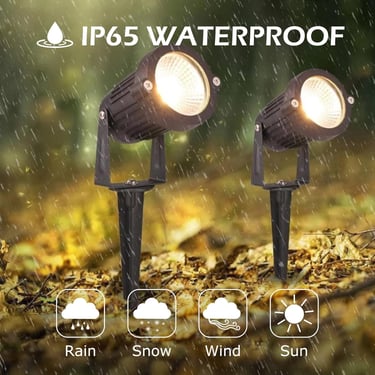
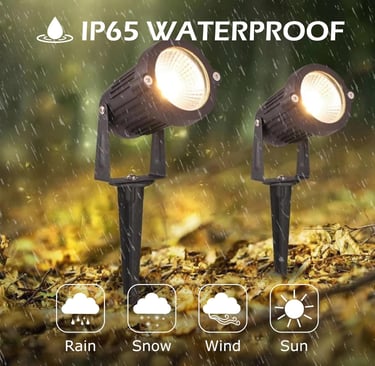
Outdoor LED Spotlight (Low‑Draw Accent Lighting)
1. What This Product Is
A weather‑rated LED spotlight designed to illuminate inflatables, pathways, or accent décor with minimal energy usage. These lights produce strong, focused beams while drawing only a fraction of the wattage of halogen models.
2. Why It Fits This Section
Spotlights dramatically enhance inflatable displays without adding significant power consumption. They support the pillar’s emphasis on low‑draw décor, energy efficiency, and multi‑holiday versatility.
3. Who It’s For
Homeowners wanting dramatic nighttime visibility
Operators who want low‑energy lighting
People in rain, snow, or freeze‑prone climates
Anyone building layered displays across holidays
4. Why This Product Was Selected
LED spotlights offer the best balance of brightness, durability, and efficiency. They work in all climates, pair well with inflatables, and create professional‑looking scenes with almost no added wattage.
5. Problems It Solves
Inflatables disappearing into the dark
High‑draw halogen floods overheating or tripping circuits
Poor visibility during storms or early sunsets
Washed‑out colors from weak lighting
6. Limitations
Beam angle may require repositioning
Some models need ground stakes on soft soil
Color‑changing models may require app control
Not ideal for extremely large yards without multiple units
7. Discovery Fingerprint
“Outdoor LED spotlight”
“Low‑watt landscape spotlight”
“LED floodlight for inflatables”
“Holiday spotlight outdoor”
FAQ: Energy, Power & Smart Tech for Holiday Inflatables
How much electricity do inflatables really use?
Most inflatables use 25–200 watts, depending on size. Even large ones typically cost only a few dollars per month to run.
Do inflatables use more power in cold weather?
Slightly. Cold vinyl stiffens, causing blowers to work harder. Shorter, heavier‑gauge cords help maintain performance.
Why does my GFCI keep tripping?
Moisture intrusion is the most common cause. Elevate connections, use weatherproof covers, and avoid low‑lying areas.
Can I run multiple inflatables on one smart plug?
Yes—if the combined wattage stays within the plug’s amp rating. Outdoor‑rated smart plugs are required.
What’s the safest extension cord for outdoor inflatables?
Use SJTW‑rated, 12‑gauge cords for medium to long runs. Avoid daisy‑chaining cords.
Do projectors use more power than inflatables?
Often yes. Many projectors draw 100–300 watts, which can exceed the wattage of a medium or large inflatable.
How can I reduce energy usage without shrinking my display?
Use smart plugs or timers
Switch to LED lighting
Shorten cord runs
Clean blower intakes
Run displays only during peak viewing hours
Are smart plugs safe in winter?
Yes—if they’re outdoor‑rated and weatherproofed. Keep them elevated and protected from snow and ice.
Can I use solar lighting with inflatables?
Absolutely. Solar pathway lights and accent lights pair well with inflatables and add zero energy cost.
Why does my inflatable look weak at night?
Likely voltage drop from long cord runs or cold‑weather stiffening. Use heavier‑gauge cords and elevate blowers.