
Halloween Inflatable Emergency Repair Guide: Quick Fixes, Repair Kits and When to Stop
Halloween inflatable failing at the worst time? Diagnose air loss, blower and power problems, make safe quick repairs and know when to stop.
By Frank "Frosty" Adminei
10/3/202511 min read
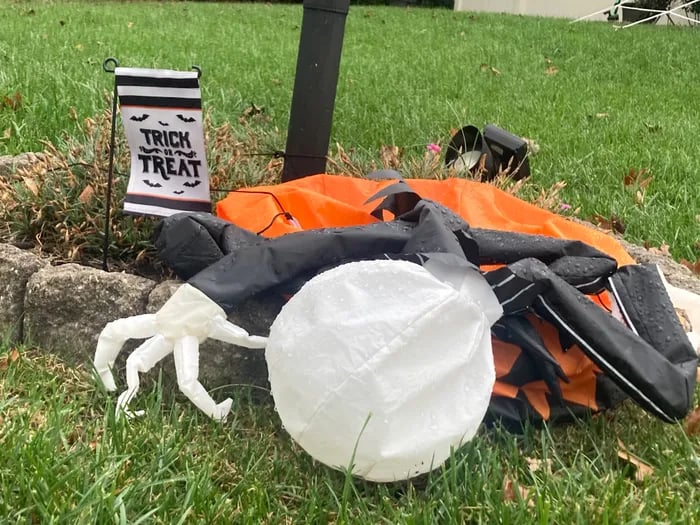
Your Halloween inflatable worked perfectly yesterday. Now trick-or-treaters are coming in a few hours and the giant ghost is sagging, the pumpkin will not stand upright or your favorite inflatable has developed a small tear.
The temptation is to grab tape, glue or an inflatable repair kit and start patching.
Before you do, figure out what is actually wrong.
A weak or collapsing Halloween inflatable does not always have a hole. The problem could be air loss, restricted airflow, a struggling blower or even the way power is reaching the blower through your extension cords and electrical setup.
If Halloween is tonight, the goal is not to attempt the biggest repair possible. It is to identify the problem quickly, determine what can reasonably and safely be handled now, and recognize when the inflatable should stay down until you have time to repair it properly.
Table of Contents
· Quick Answer: Can You Fix Your Halloween Inflatable Tonight?
· Before You Look for a Tear: Is It Air Loss, Airflow or Power?
· What Counts as a Reasonable Halloween-Night Quick Fix?
· Repairs You Should Not Rush Just Because It's Halloween
· Even an Emergency Repair Needs a Clean, Dry Surface
· If Halloween Is This Afternoon: A Quick Patch Option
· Build Your Halloween Inflatable Emergency Repair Kit Before You Need It
· If You Have 24-48 Hours Instead of 30 Minutes
· When the Blower Is the Problem
· When Extension Cords or Power May Be the Problem
· When a Seam or High-Stress Area Is Failing
· When the Decoration May Be Beyond Another Repair
Quick Answer: Can You Fix Your Halloween Inflatable Tonight?
Some problems are reasonable candidates for a Halloween-night fix. Others are not.
A small, dry hole or short tear in a low-stress area may be repairable if you can identify the material, properly prepare the surface and use a compatible repair product.
A weak inflatable with no obvious damage needs diagnosis before repair. Check closures, airflow, the blower and power delivery before assuming the fabric has a leak.
A separating structural seam, damaged tether attachment or large high-stress tear should not be treated like a simple puncture.
If the problem involves wet or visibly damaged electrical equipment, disconnect the decoration and leave it out of service rather than rushing an electrical repair because Halloween is tonight.
The amount of time available changes what is practical. It does not change what constitutes a safe or appropriate repair.
Before You Look for a Tear: Is It Air Loss, Airflow or Power?
Air Loss
Air may be escaping faster than the blower can replace it. Check for obvious:
· holes and punctures
· tears
· separating seams
· open zippers or other closures
· damaged areas around tether attachment points
Also consider the condition of the fabric itself. An older inflatable can sometimes become increasingly porous or deteriorated without developing one dramatic hole that explains the problem.
If you find a damaged structural seam or high-stress area, use How to Fix Seams, Tears and Holes in Holiday Inflatables: Beginner to Pro Repairs before assuming a piece of tape or stronger adhesive is the answer.
Airflow
Sometimes the air is not escaping. The blower simply is not moving enough of it.
With the inflatable safely disconnected when appropriate, inspect the blower intake and surrounding area for leaves, fabric or debris that may be restricting airflow. Also make sure collapsed inflatable fabric is not being drawn against the intake.
If the intake is clear but the blower sounds unusual, runs inconsistently or cannot produce its normal airflow, use How to Fix an Inflatable Decoration Fan for blower-specific troubleshooting.
Power Delivery
This is an easy problem to overlook because the blower may still be running.
If your inflatable worked normally when tested by itself but became weak after you connected the rest of the Halloween display, changed the extension-cord arrangement or moved it farther from the outlet, do not immediately start searching the fabric for a hole.
Long or inappropriate extension-cord runs, voltage drop, overloaded circuits and poor electrical connections can contribute to weak blower performance.
If more than one decoration becomes weak, intermittent or unreliable after you change the display's electrical setup, that is an especially strong clue to investigate the shared power setup before assuming several decorations developed fabric problems at once.
Use Outdoor Holiday Power Troubleshooting Guide: Why Decorations Fail and How to Fix Them for the electrical side of the diagnosis.
What Counts as a Reasonable Halloween-Night Quick Fix?
A reasonable emergency fabric repair should be dry, non-electrical, in a relatively low-stress area and surrounded by material that is still healthy enough to hold a repair.
You should also be able to identify the material well enough to select a compatible repair product.
A small puncture in otherwise sound woven fabric is very different from a long split running through a stressed seam. The first may be a reasonable candidate for a quick repair. The second is a reason to stop improvising.
Temporary Does Not Mean Careless
Even when you only need the inflatable to survive Halloween night, the basic repair requirements still matter.
Do not stick a patch over wet grass residue. Do not assume any product containing the words "inflatable repair" is appropriate for the material. Do not apply an adhesive that requires hours of curing and then immediately inflate the decoration. And do not treat a temporary patch as permission to ignore a larger structural problem.
If you need help choosing between repair tape, a patch or flexible adhesive, Best Holiday Inflatable Repair Kits, Patches, Tape and Adhesives: What to Use for Each Repair explains the material and product differences.
Repairs You Should Not Rush Just Because It's Halloween
Sometimes the best Halloween-night repair decision is to take one decoration out of the display. That is disappointing, but preferable to turning a manageable problem into a larger one.
Wet or Damaged Electrical Equipment
Do not rush work on wet plugs, damaged wiring, compromised electrical components or other electrical problems simply to get a decoration operating for the evening. Disconnect it and deal with the problem properly.
Structural Seam Failure
A separating high-stress seam is not the same as a pinhole in the middle of a body panel. The forces acting on that area can make a simple surface patch inadequate.
Torn Tether or Anchor Attachment Areas
Tether points experience repeated loads from wind and movement. A repair that appears fine on a workbench may behave very differently once the decoration is standing outside.
Badly Deteriorated Fabric
If patches will not hold because the surrounding material is brittle, weak or deteriorating, another patch may not solve the underlying problem.
Unknown Blower Replacements
A blower that physically fits is not automatically the correct replacement. Do not make an improvised electrical or blower substitution simply because stores are closing.
Repairs That Need More Cure Time Than You Have
If the manufacturer's instructions require the repair to cure for several hours, Halloween being tonight does not shorten that requirement.
Even an Emergency Repair Needs a Clean, Dry Surface
Outdoor Halloween inflatables collect dust, lawn debris, pollen, moisture, dried mud and sometimes mildew or residue from previous repair attempts.
A highly rated patch applied to a contaminated surface can still fail.
Bring the damaged area somewhere clean and workable when possible. Remove loose debris without damaging the material and allow the area to dry completely.
If an old patch has failed, do not automatically stick the new one over loose adhesive and peeling repair material.
Follow the preparation instructions for the specific product you intend to use. A useful emergency sequence is:
Stop -> Clean -> Dry -> Check compatibility -> Repair -> Allow required bond/cure time -> Test
If Halloween Is This Afternoon: A Quick Patch Option
For a small tear or puncture in compatible non-vinyl material such as many nylon or fabric applications, TEAR-AID Type A Repair Patch Kit is the quick-fix option we would keep in mind.
Type A is a peel-and-stick patch rather than a liquid adhesive that needs an overnight cure. The manufacturer says Type A reaches approximately 90 percent adhesion on initial application and full adhesion after one hour.
That does not make it universal. TEAR-AID Type B is the version intended for vinyl and vinyl-coated materials, so confirm the damaged material before choosing a patch.
Clean and dry the surface, follow the manufacturer's application instructions, give the patch adequate overlap around the damage and allow the bond time the instructions require before returning the inflatable to normal use.
Build Your Halloween Inflatable Emergency Repair Kit Before You Need It
The best time to assemble an emergency repair kit is not 5:30 p.m. on October 31.
For someone who owns a few Halloween inflatables, the GEAR AID Seam Grip WP Essential Repair Kit is a practical compact preparedness option.
It combines Seam Grip WP flexible adhesive with black nylon and clear PVC Tenacious Tape patches. Before using either patch or adhesive, confirm that the specific repair material is compatible with the damaged surface.
The kit is useful because it gives you both patch and adhesive options, but the Seam Grip WP adhesive itself requires an 8- to 12-hour cure under normal conditions. If Halloween is only an hour away, do not treat the adhesive as an instant repair.
What Else Should You Keep With It?
· clean lint-free cloths
· small scissors
· disposable gloves
· a flashlight or headlamp
· surface-preparation supplies appropriate to your repair products
· a simple way to mark a small damaged area once you locate it
· spare stakes or tether hardware appropriate for your decorations
Owners who need a larger tape roll, another patch type, flexible adhesive or a PVC-specific solution should use Best Holiday Inflatable Repair Kits, Patches, Tape and Adhesives: What to Use for Each Repair rather than buying supplies blindly.
If You Have 24-48 Hours Instead of 30 Minutes
A day or two changes your options considerably. You have time to identify the material instead of guessing, clean the repair area thoroughly, let it dry and use an appropriate adhesive that requires a longer cure time.
You can also inspect around the original damage for secondary problems and test the repaired inflatable before Halloween night.
For detailed fabric repair techniques, use How to Fix Seams, Tears and Holes in Holiday Inflatables: Beginner to Pro Repairs.
For repair-product selection, use Best Holiday Inflatable Repair Kits, Patches, Tape and Adhesives: What to Use for Each Repair.
If you still do not know what is causing the problem, start with Complete Guide to Repairing and Troubleshooting Holiday Inflatables.
When the Blower Is the Problem
If the intake is clear, the electrical setup appears normal and the blower still sounds wrong, starts intermittently or does not move its normal amount of air, stop looking for increasingly tiny holes in the fabric.
Use How to Fix an Inflatable Decoration Fan for blower-specific troubleshooting rather than turning an emergency Halloween repair into an improvised motor repair.
When Extension Cords or Power May Be the Problem
Pay particular attention to the timing of the failure. If the inflatable worked correctly earlier and became weak after you added more decorations, moved it farther from the house, changed extension cords, added connections or rearranged the electrical setup, investigate power delivery before assuming the inflatable developed a leak.
Use Outdoor Holiday Power Troubleshooting Guide: Why Decorations Fail and How to Fix Them for extension-cord, voltage-drop, circuit and related power issues.
When a Seam or High-Stress Area Is Failing
A seam failure can tempt you into a cycle of increasingly aggressive quick fixes. Structural and high-stress repairs need the right technique, not simply the strongest adhesive you can find.
Use How to Fix Seams, Tears and Holes in Holiday Inflatables: Beginner to Pro Repairs for the repair method rather than treating the problem like an ordinary puncture.
When the Decoration May Be Beyond Another Repair
Some older Halloween inflatables reach the point where the surrounding fabric is deteriorating, multiple previous repairs are failing or structural damage keeps spreading.
If another repair no longer makes practical sense, Innovative Repair and Upcycling Methods for Inflatable Decorations explores options besides simply throwing the decoration away.
Halloween Repair Mistakes That Make a Bad Night Worse
Assuming Sagging Automatically Means a Hole
Check air loss, airflow and power before deciding what needs repair.
Adding More Extension Cord Without Considering Power Delivery
If the problem appeared after changing the display, consider the electrical setup, not just the inflatable.
Patching Wet or Dirty Fabric
Surface preparation can matter as much as the patch itself.
Buying Anything Labeled "Inflatable Repair"
Pool floats, air mattresses and holiday yard decorations can use different materials. Compatibility matters.
Rushing Adhesive Cure Time
A product that requires hours to cure does not become instant because Halloween starts soon.
Treating a Structural Seam Like a Pinhole
The repair technique matters more as the loads on the damaged area increase.
Improvising on Wet or Energized Electrical Equipment
Disconnect the decoration and troubleshoot electrical problems properly.
Testing Too Soon
After the repair has received any required bonding or cure time, test the inflatable while you can observe the repaired area. Watch for lifting patch edges, continued tearing or unusual distortion before returning it to normal unattended display use.
Frequently Asked Questions
Why Is My Halloween Inflatable Suddenly Sagging?
Possible causes include a hole or tear, an open closure, restricted blower airflow, a blower problem, deteriorating fabric or a power-delivery issue. Check the broad cause before assuming you need a patch.
How Do I Find a Small Hole in a Halloween Inflatable?
Start with a careful visual and hands-on inspection of the fabric, seams and common stress areas while following the manufacturer's safe operating guidance. If the inflatable is weak but you cannot find a hole, also investigate closures, airflow, blower performance and power delivery.
Can an Extension Cord Make an Inflatable Blower Run Weakly?
An inappropriate or excessively long cord setup can contribute to voltage drop and poor equipment performance. If the inflatable became weak after changing your display or extension-cord arrangement, investigate power delivery as part of the diagnosis.
Can I Temporarily Patch a Halloween Inflatable for One Night?
Possibly. A small, dry, low-stress fabric problem may be a reasonable candidate for a compatible patch repair. Surface preparation and product instructions still matter, and any required bond or adhesive cure time still applies. Structural seams, tether areas, electrical damage and badly deteriorated fabric should not be treated as simple one-night patch jobs.
Can I Use Duct Tape on a Halloween Inflatable?
Duct tape may be tempting during an emergency, but for an appropriate small woven-fabric repair, a purpose-designed compatible patch such as TEAR-AID Type A is a better option to have available than relying on duct tape. Confirm material compatibility first.
Why Won't My Inflatable Repair Patch Stick?
Common causes include dirt, moisture, incompatible materials, old adhesive residue, insufficient overlap, poor application conditions or stressing the repair before it has properly bonded.
How Long Should Inflatable Repair Adhesive Cure?
Follow the manufacturer's instructions for the specific adhesive. Cure times vary significantly. GEAR AID Seam Grip WP, for example, requires 8 to 12 hours under normal conditions.
When Should I Stop Trying to Repair an Old Halloween Inflatable?
Consider stopping when the surrounding material is brittle or badly deteriorated, repairs repeatedly fail because the underlying fabric is weak, structural damage is spreading or multiple major problems make continued repair impractical.
Final Thoughts
When a favorite Halloween inflatable fails just before the holiday, speed matters. But diagnosis matters more.
Before reaching for a repair kit, determine whether you are dealing with air loss, airflow or power delivery. That one decision can prevent you from wasting Halloween afternoon patching perfectly good fabric while the actual problem is a blocked blower intake or electrical setup.
If you find a small, dry, low-stress tear in compatible material, a purpose-designed quick patch may get the decoration back into the display. If the problem involves a structural seam, damaged tether area, significant deterioration or electrical equipment, Halloween being tonight is a reason to make a careful decision, not a reason to take a bigger risk.
And next year, do yourself a favor:
Test the inflatables early and have a small repair kit ready before October 31.
Continue Reading
Complete Guide to Repairing and Troubleshooting Holiday Inflatables
Diagnose the underlying problem when you are not sure why a decoration is failing.
Best Holiday Inflatable Repair Kits, Patches, Tape and Adhesives: What to Use for Each Repair
Choose repair products based on the actual material and type of damage.
How to Fix Seams, Tears and Holes in Holiday Inflatables: Beginner to Pro Repairs
Learn appropriate techniques for fabric, seam and more difficult structural repairs.
How to Fix an Inflatable Decoration Fan
Troubleshoot blower-specific problems when airflow rather than fabric damage appears to be the issue.
Outdoor Holiday Power Troubleshooting Guide: Why Decorations Fail and How to Fix Them
Diagnose extension-cord, voltage-drop, circuit and other electrical problems affecting your display.
Innovative Repair and Upcycling Methods for Inflatable Decorations
Explore alternatives when an older decoration has reached the end of its practical repair life.